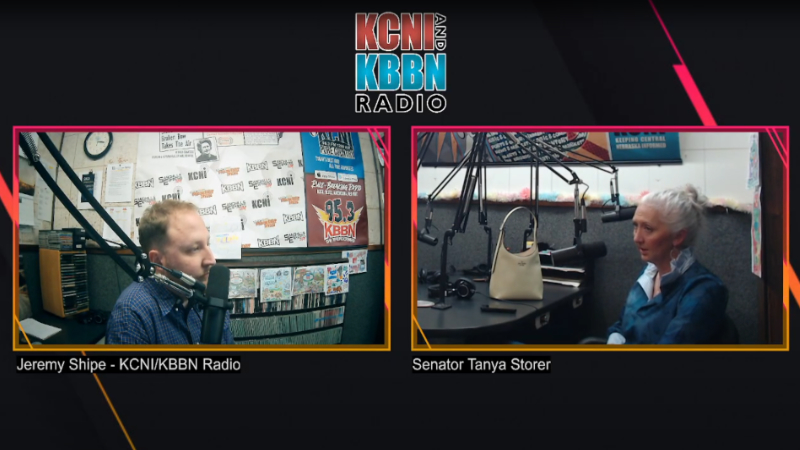
BROKEN BOW, Neb.— As the Nebraska Legislative session wraps up its session, District 43 Senator Tanya Storer says the session was a demanding but productive stretch of time that included fast-moving debates and major policy decisions.
Storer stopped in Broken Bow while traveling back to Lincoln for the end of the session, and during her visit she pointed to a number of bills passed as well as ongoing work needed that her constituents had interest in.
This written story is an overview of the full interview which can be found at the end of this story in video form
Session overview
Storer said the Legislature certainly requires constant adaptability in order to keep up with changing proposals and developments that are unexpected. Despite the overall pace, she said she tries to be intentional about any bills she agrees to introduce and carry.
“The primary question is: is this a fit for my own political philosophies and what I believe in and is this going to be helpful to the people of the 43rd district. Are we making people’s lives better?” said Storer.
Over the two-year biennium, Storer introduced 29 bills with about 20 expected to pass at the time of her visit.
Wildfires prompt questions on recovery and local funding
Wildfires across the state this spring became a major topic of discussion in Lincoln, particularly around emergency response and the financial ripple effects for local governments.
Storer said a lot of conversation was about how fast agencies can respond to disasters and whether communication systems are functioning like they should. The longer term concern was on property tax implications when large amounts of land are damaged.
Current law allows landowners to seek reduced valuations after disasters, but in counties heavily impacted by fire, that could significantly reduce the tax base that supports local services.
“Garden County, which is not in my district, but Garden County was very heavily impacted by the fires recently. Like, if 50% of the land in that county (and I don’t think that’s an exaggeration for Garden County) was damaged by fire and that land gets a significant reduction in valuation, what does the county do for revenue?” Storer explained.
She said those questions remain unsolved, and that state and local officials are continuing to explore how to balance disaster relief with maintaining funding for schools, counties, and natural resource districts.
LB1195: Statewide change comes from local concern
A bill with direct ties to central Nebraska is LB1195, which updates outdated jail staffing requirements that were bringing challenges to counties with smaller staffs.
The issue was brought to the attention of Storer by Custer County Sheriff Dan Osmond. The previous law required jails to have a female correctional officer on duty at all times if a female inmate was present, which Storer said was difficult for smaller facilities to manage.
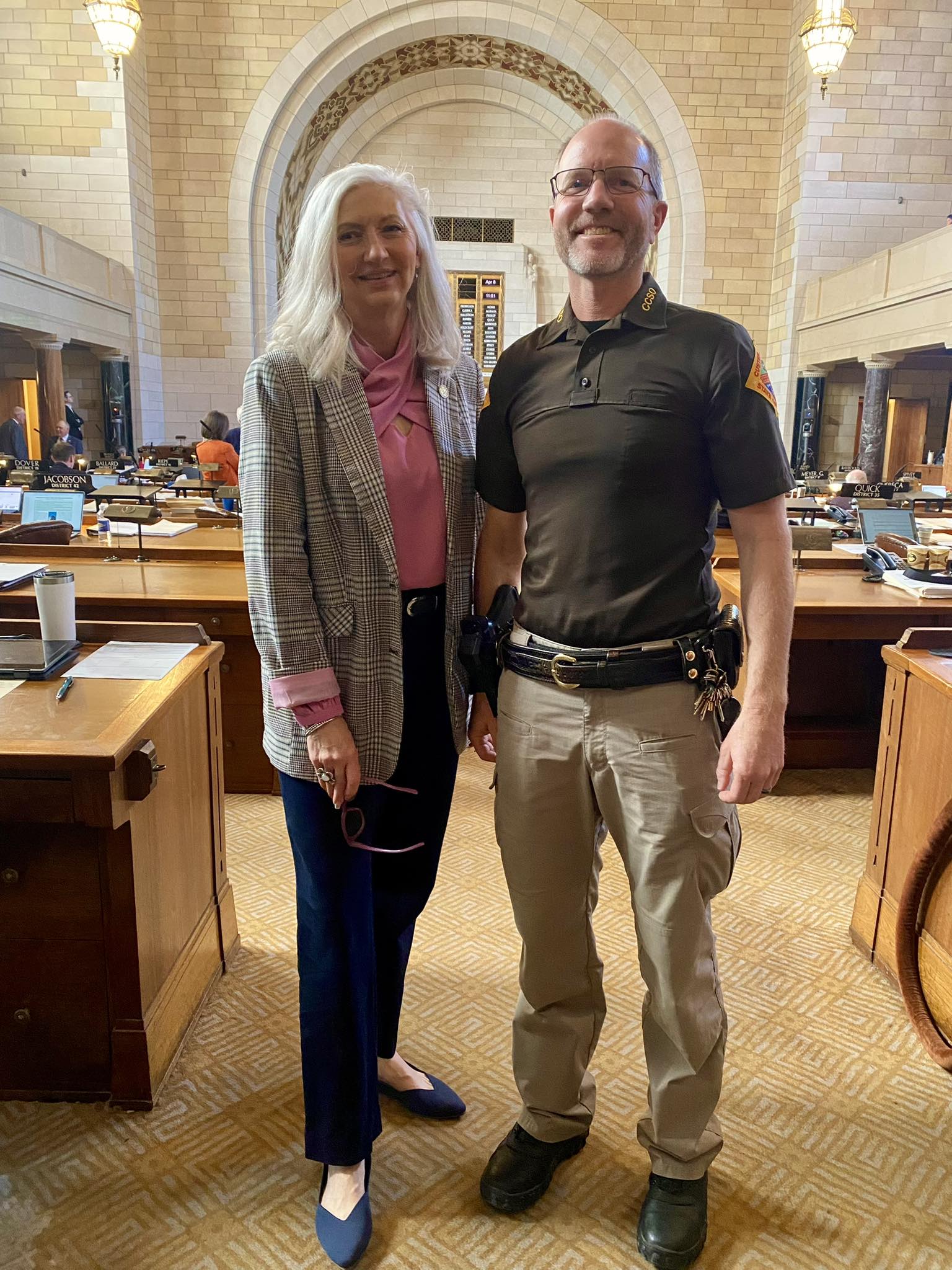
The new law allows more flexibility by only requiring a female correctional officer to be present during searches or supervision during personal activities like showers. Storer said the change is a practical example of how updating outdated statutes can reduce costs.
LB1187: Brand laws in the spotlight
The state’s livestock brand system was a major discussion during the session, particularly with LB1187.
Early proposals ranged from eliminating the brand committee entirely to shifting costs between different sectors of the cattle industry. Those proposals were met with strong opposition, especially from producers concerned about the integrity of the system.
Storer said the final version maintains the core purpose of brand laws (verifying ownership and preventing theft) while making some adjustments to fees and oversight.
“We’re talking about a multi billion dollar industry here in the state of Nebraska that deserves a system that protects and respects that asset,” said Storer.
The end result was a reduction in fees and streamlining audit system for feedlots, while cow-calf producers will see modest fee increases to help balance the system’s funding. Storer acknowledged the process was complex and, at times, difficult to follow, but that the end result preserved the system’s foundation.
Some changes will be made to board structure, but Storer said that the cow-calf sector would still have the majority of seats on the brand committee.
The state budget
The state budget was one of the issues of the session that had the most eyes on it, with disagreements over tax policy and specific funding items slowing progress and pushing the session toward its length limit.
Storer said she and several colleagues entered the session committed to opposing any tax increases that were not offset by reductions elsewhere, shaping how they approached budget negotiations.
Ultimately, the Legislature balanced the budget mostly through spending restraint, Storer said, asking agencies to identify cuts and efficiencies rather than introducing new taxes.
“It was just raining in a lot of expenditures. There were no programs that were cut, but certainly every agency had to take a look at trimming the fat within agency budgets and that was done,” Storer said.
Two issues in particular, childcare funding and private school opportunity scholarships, held up the process. Once those were removed from the main budget bill, it passed quickly, with the child care measure later approved separately.
Storer compared the challenge to the challenge citizens of Nebraska follow when managing their own personal budgets.
“You only have a couple of options. You have to figure out how to either bring more money in if you’re going to continue to spend more money or you have to reduce your spending to match your income,” she said.
Closing thoughts
Storer said the most consistent concern she hears from constituents is affordability, from rising insurance costs to everyday expenses like groceries and fuel.
“I will continue to advocate for households and families and businesses in a way that we are mindful of keeping the cost of doing business and the cost of just living affordable,” Storer said.
She also reaffirmed her focus on agriculture, noting that it remains the state’s leading industry but is often misunderstood by those outside of rural communities.
Although the session is ending, Storer said work is still ahead on issues like property tax reform, budget challenges, and emerging policy areas as she prepares for the next legislative cycle.