BROKEN BOW, Neb.— The Custer County Planning Commission has completed its work on proposed regulations for data centers, unanimously voting Wednesday to recommend the regulations to the Custer County Board of Supervisors for consideration.
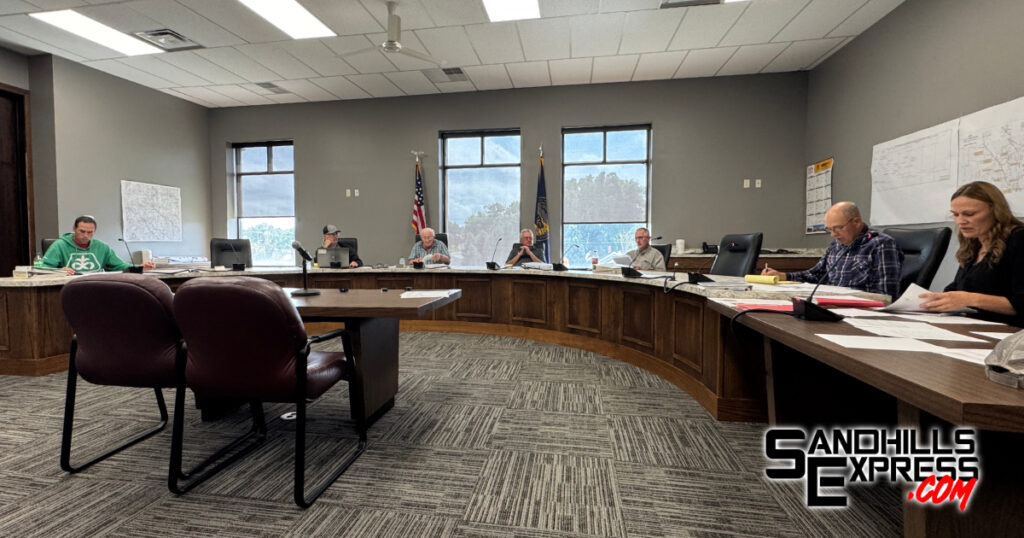
The vote came during a public hearing Wednesday afternoon on the top floor of the Custer County Courthouse. Commission members Mike Kozeal, Neil Ostrand, and Rod Baillie were absent. All other members were present for the meeting.
The regulations are the result of several months of research and discussion during a six month county moratorium on data centers and related facilities that expires at the end of September.
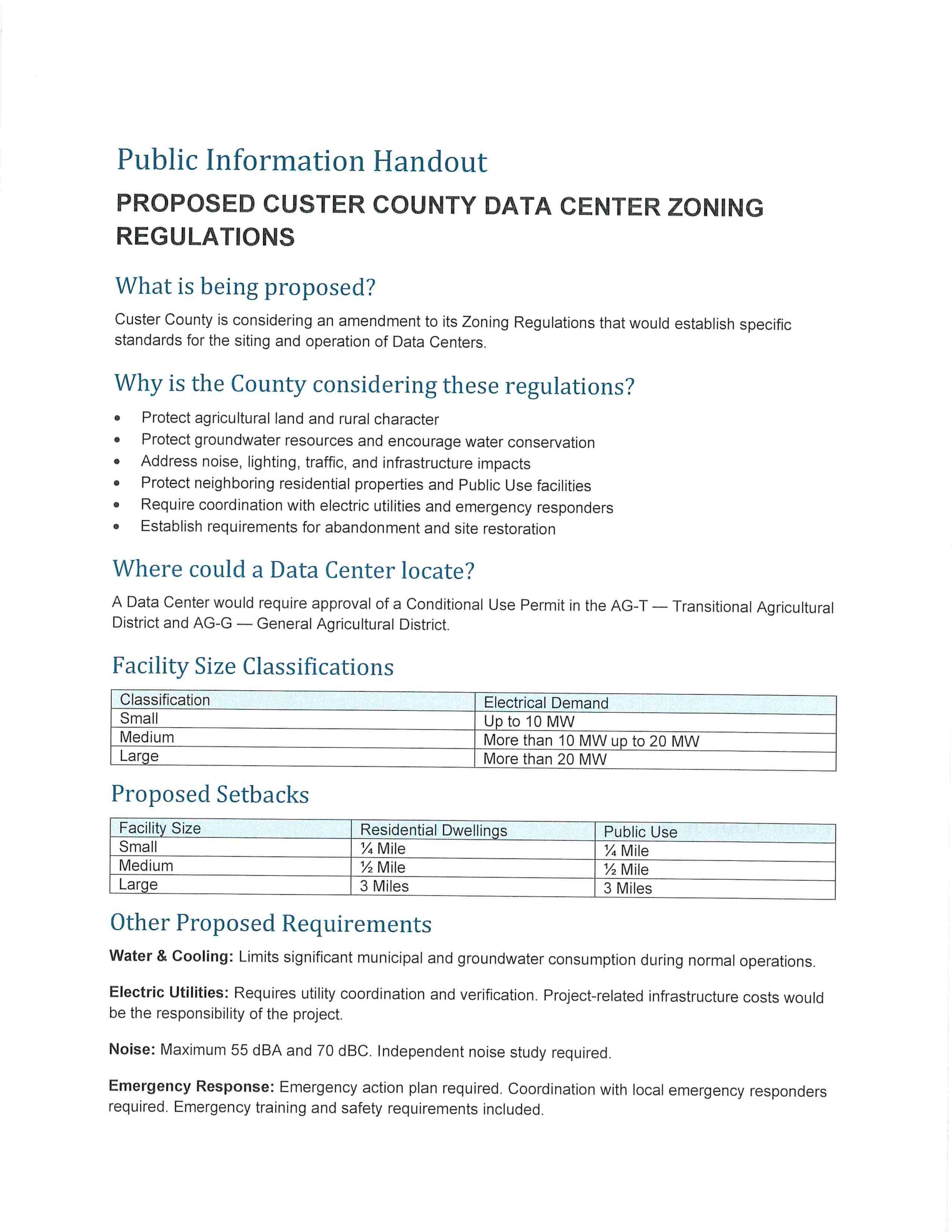
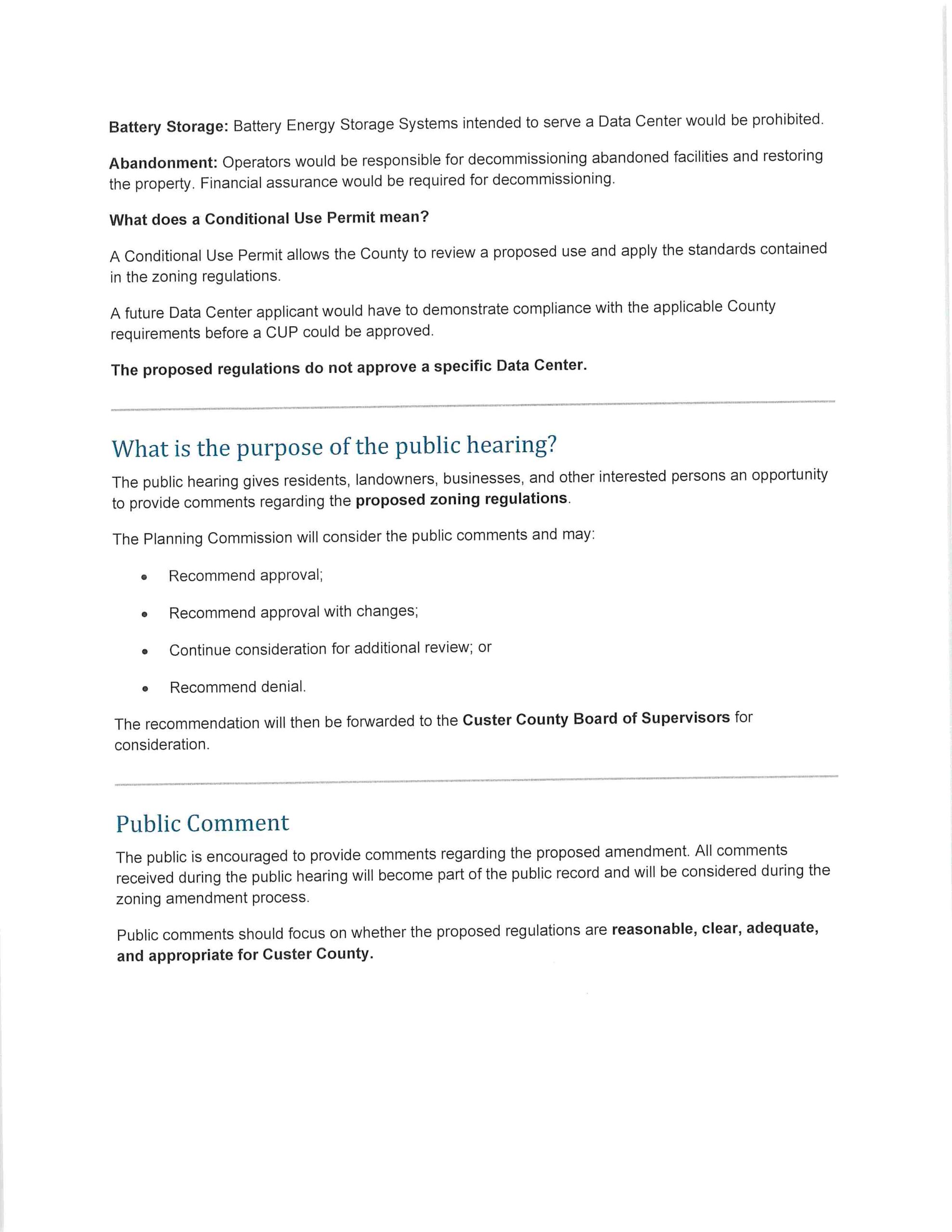
View a ‘public information handout’ on the zoning regulations for data centers at the end of this story. You can also view the full regulations document here: Custer County Data Center Regulations 9.23.26.
Custer County Zoning Administrator Darci Tibbs reviewed the process that led to the proposed regulations, saying the Planning Commission and Board of Supervisors have toured smaller data center facilities using different cooling technologies, heard from people involved in the industry and researched regulations adopted by other communities.
The commission’s work has focused on issues including water use, cooling systems, noise, electrical demand, emergency response, setbacks and what happens if a facility is abandoned.
A couple of final changes
One of the first issues addressed Wednesday was the language dealing with abandonment and decommissioning.
The commission considered three versions of the provision before unanimously selecting language that says a facility would be considered abandoned if data processing operations cease for 12 consecutive months. Temporary, intermittent, testing, maintenance, emergency or nominal operations would not interrupt or reset that 12-month period.
If a facility is abandoned, the site would have to be decommissioned and returned to a compatible state consistent with surrounding property and the approved decommissioning plan.
The commission also unanimously approved removing references to an irrevocable letter of credit in two portions of the decommissioning requirements.
Another addition came as a result of a recently passed state law concerning community benefits agreements for data centers 10 megawatts or larger.
The regulations will now state that data centers with a peak electricity demand of at least 10 megawatts must enter into a community benefits agreement as required by state law. The county could also require such an agreement as a condition of approval for facilities below 10 megawatts.
The agreement could address things such as road and infrastructure improvements, emergency response funding, public safety training, utility impacts, water and wastewater monitoring, environmental monitoring and other project-related impacts.
Public raises concerns
Three members of the public addressed the commission during the hearing.
Cole Tierney said he believes caution is appropriate because of the rapidly changing nature of data center and artificial intelligence technology. He pointed to previous periods of rapid technological and economic growth and said that unintended consequences sometimes do not become apparent until years later.
Tierney also asked the commission to consider a five mile setback from residential dwellings for data centers of any size, to which commission members responded would effectively prevent a data center from locating anywhere in the county. Tierney’s quick confirmation that that was his point brought chuckles across the room from those in attendance.
Kevin Cooksley thanked the commission for its work but raised questions about how liquid from closed loop cooling systems would be handled when expelled. It was stated later in the meeting that a common practice is for the fluid to be pumped into containers and recycled rather than discharged into the ground or nearby bodies of water.
Cooksley expressed concerns about the amount of electricity a data center could require from Custer Public Power or Nebraska Public Power District, particularly during periods when agricultural irrigation already creates significant electrical demand.
The commission noted that the proposed regulations include provisions allowing the local power utility to interrupt or reduce a data center’s electrical service when necessary, with irrigation given priority during load control situations.
Cooksley said the county’s water and electrical resources are among the things making the area attractive to data center developers and that they should be protected as development is considered.
“Our water and our power is something that we should really, really stringently safeguard,” said Cooksley.
Deborah Miller also raised concerns about water use from the Ogallala Aquifer, citing how it is already ‘going down’ and its importance for citizens and irrigation.
Commission members pointed to the difference between closed loop systems and other large water users, including irrigation, as one reason they believe the proposed requirements would substantially limit water consumption by data centers.
Regulations move to supervisors
Following the public comments and additional discussion, the commission unanimously approved a motion to send the recommended regulations to the Custer County Board of Supervisors for consideration.
Click here to view the full data center regulations document
Other items from Wednesday’s meeting
- The commission unanimously recommended the Board of Supervisors adopt a 12 month moratorium on battery energy storage while a similar process of research used on data centers is conducted. It was explained that battery energy storage systems can range from smaller systems serving individual properties to large commercial or utility scale facilities covering multiple acres and connecting directly to the electrical grid. Fire safety, battery disposal, and the combustibility of lithium-ion battery systems were among concerns mentioned.
- Tibbs stated that by the next meeting she would have information to present that would help the board determine if they would like to address updating the comprehensive plan themselves or hire a consultant. It was said that the comprehensive plan had not had changes made to it in some time and that it needed to align better with zoning regulations that had been made since its last revision.
- Going forward the board will look into LB663’s effect on conditional use permits and the language county’s use for them. More specifically, ‘shot clock’ language and definitions on continuing education hours for commission members.
The next Custer County Planning Commission meeting will be held next quarter or as needed. No specific date was set.