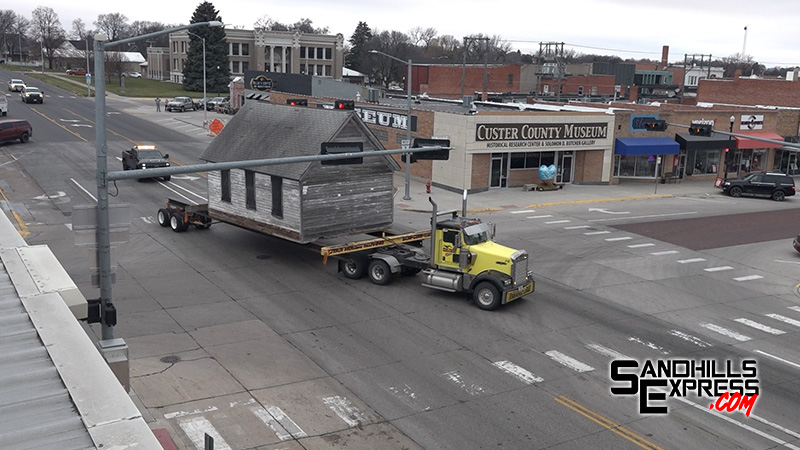
CUSTER COUNTY, Neb.— A building aged more than 140 years traveled to a new home in Custer County on Tuesday. Citizens of all ages made their way to the roadside to watch the District 58 West Dale School go by during its nearly 20 mile trip from northwest of Merna to the Sandhills National Journey Scenic Byway Visitor Center east of Broken Bow.
A video story can be found at the end of this written story
Commonly called the ‘Moroney School’ after a family that lived near the original site, it opened in February 1884 and closed in 1963 ahead of a school consolidation. At one time, it was one of more than 280 schools in Custer County serving as a building of education.
A short time after its closing, the school was sold and moved by Helen McCarty to its most recent home on land now owned by Dave Lamb.
“I lived about a mile away in 1955 from this school My brother went to kindergarten there and then we moved,” said Lamb. “I went in another one east of there, and it was not on our property at that time. But we called it West Dale School and I went to Dale School and we had activities together with some of the kids as I went to country school through fourth grade.”
McCarty’s nephew, Howard Gaffney, attended the school through second grade. It was he who facilitated Lamb’s donation of the building alongside visitor center representatives Mike Evans and Rick Maas.
Lamb said the school had just been used for storage over the years on his property.
“I was glad to see somebody do something with it because we were not taking care of it and it would have gone into total disrepair. This is a good place for it,” said Lamb.
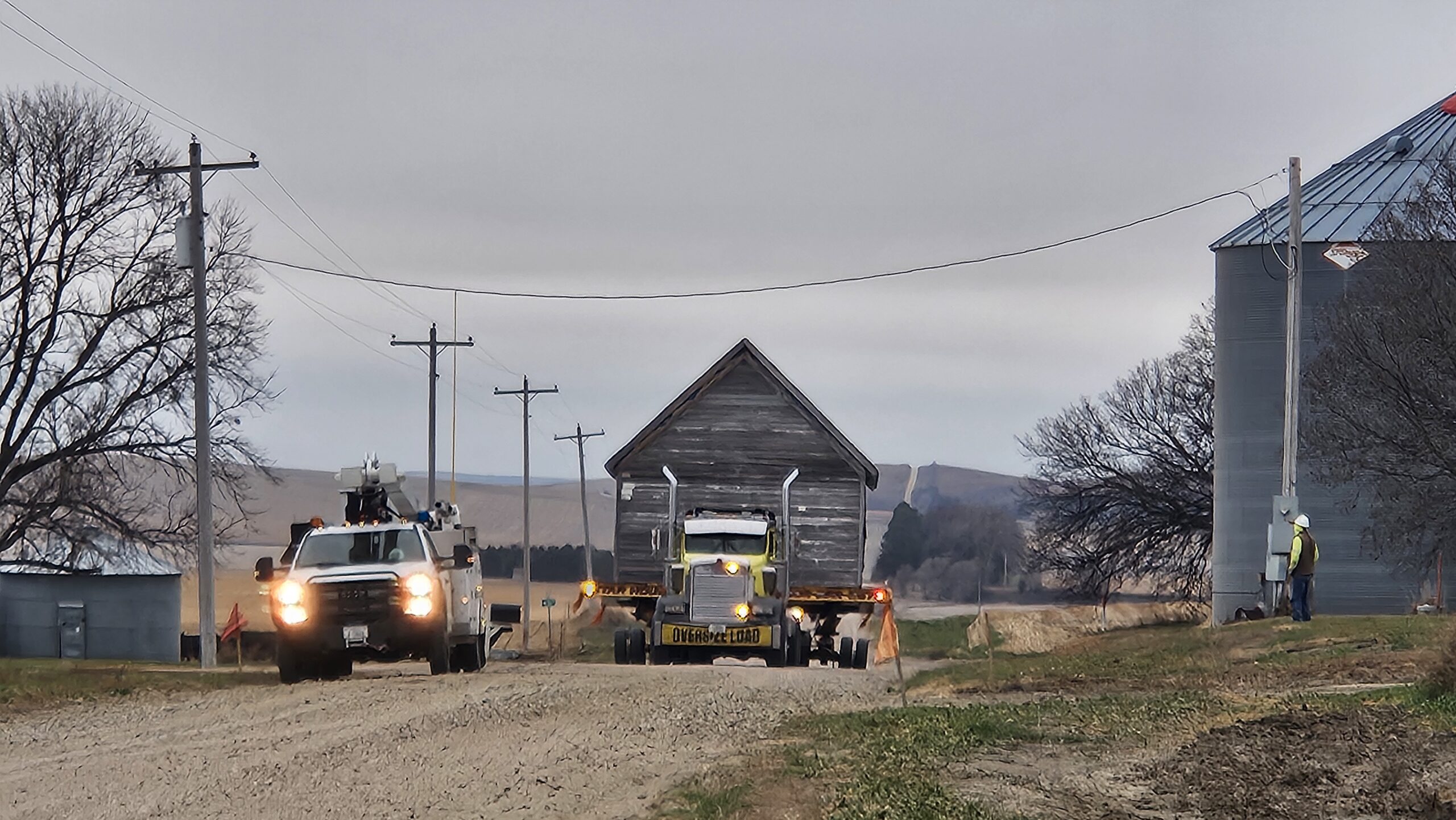
On Tuesday, the schoolhouse stood 22 feet tall on top of steel beams behind a Star House Moving truck as it traveled on the dirt roads of Road 430 and Dale Valley Road and the pavement of Highway 2.
Waiting for the building in Broken Bow was a cement foundation supported by a Custer County Tourism grant. The moving cost was supported by the Custer County Foundation and the Mervin Eighmy Foundation in addition to the search efforts of the Adams family, who have been integral in several projects at the visitor center.
KCNI/KBBN was on the air providing updates on the school’s location for those who wanted to be in position to see it cruise by.
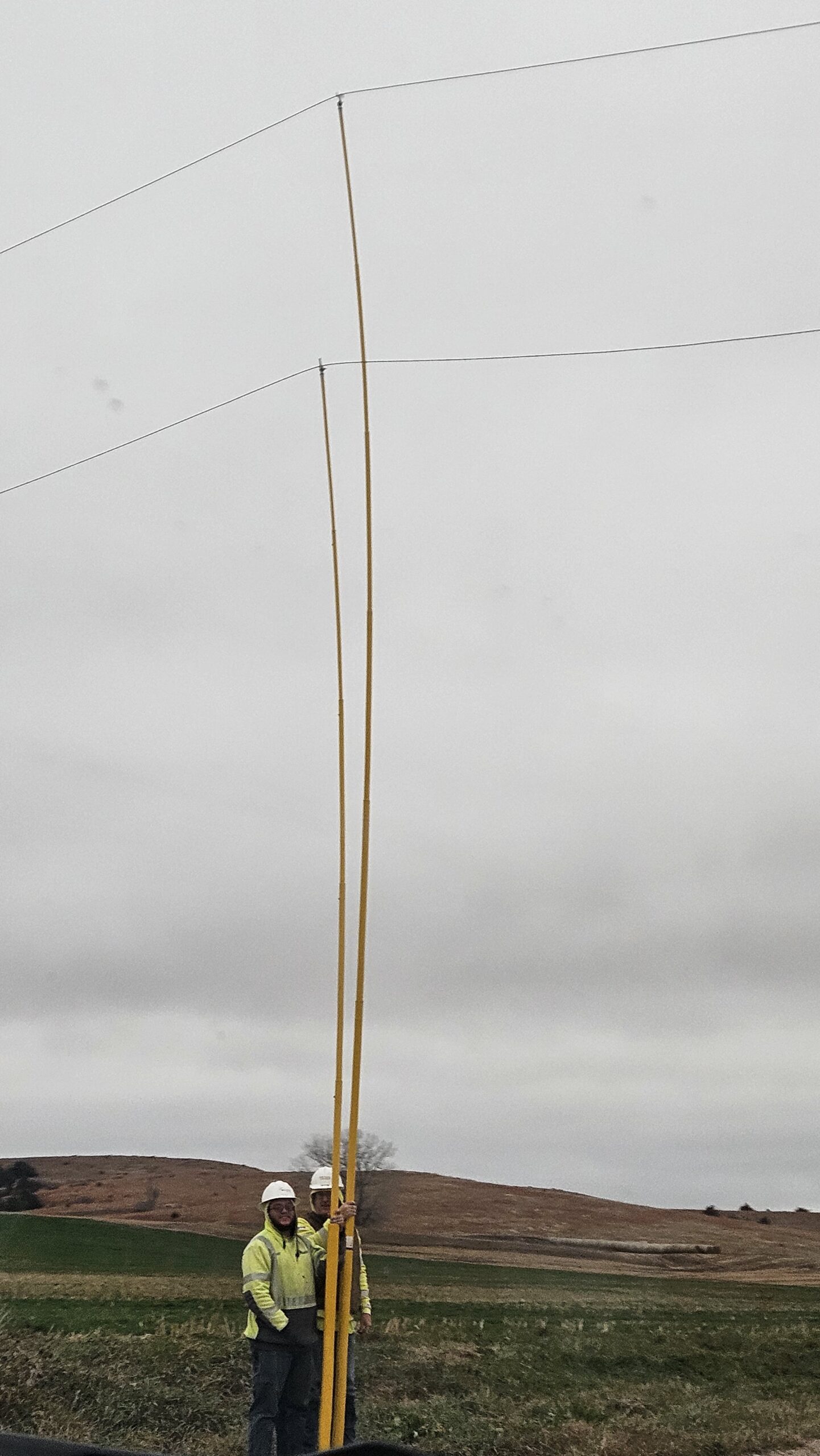
“They’re saying about an hour or so it’s going to take to get this thing down the road into the red barn visitor center,” reported Jeremy Shipe, “We’re still on dirt roads at this point. We’re going under a power line. They’ve got some poles out. They’re holding the power line up in the air so that the house can go underneath it.”
The most difficult part of the journey, although made to look easy by the professional movers, was through Broken Bow as traffic and obstacles rose in numbers.
“The stoplights there downtown in particular are going to be interesting, and it sounds as though the truck driver is going to just weave his way through those stoplights. They’re not going to move the lights or anything like that. So it’ll be a bit of a slalom for him to work his way through those lights,” reported Doug Grafel.
Throughout the school’s journey and certainly as it arrived at its new foundation, memories about the Moroney School and similar one-room schoolhouses floated through the air.
Patty Spanel, now Patty Winchester, taught at the Moroney School for the 1957-1958 and 1958-1959 school years. She reminisced while showing pictures she had taken at the school.
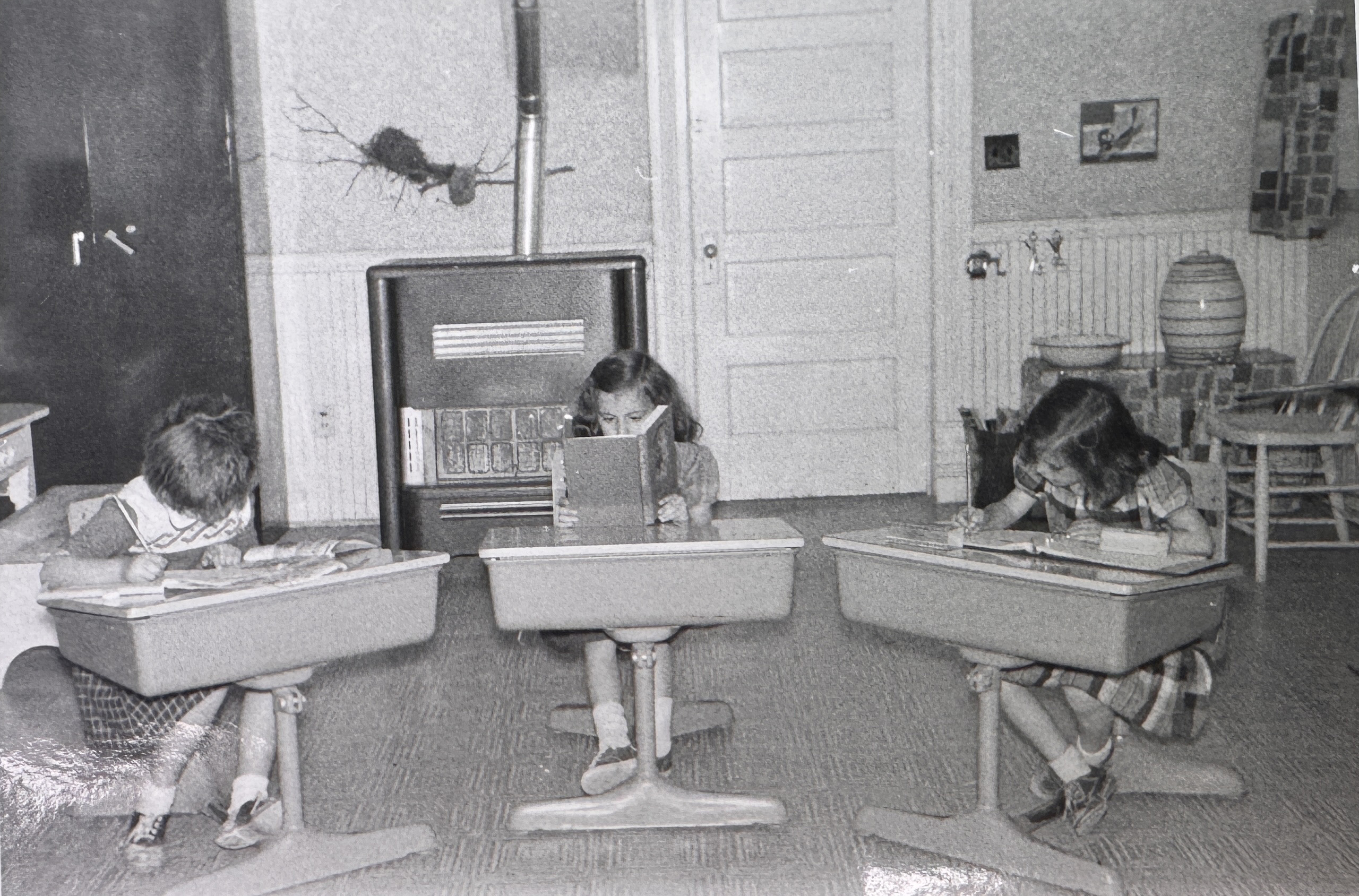
“There’s what the inside of the school looked like and back by the entryway (and the) front door would have been the water cooler and of course they had a place where they hung their towels,” said Winchester.
Among what Winchester brought with her to share while watching the school sit on its new foundation were her two teaching contracts. The first contracted her teaching at a pay rate of $235 a month for nine months. The second indicated a small pay increase to $260 a month, again for nine months of work. Signatures at the bottom of the contract included District President Tom Moroney, District Secretary Frank Fiorelli, and District Treasurers Howard Lamb and Helen Souders.
Winchester’s picture memories are ones that she is looking forward to donating so that visitors to the school can see what the school looked like, down to every table.
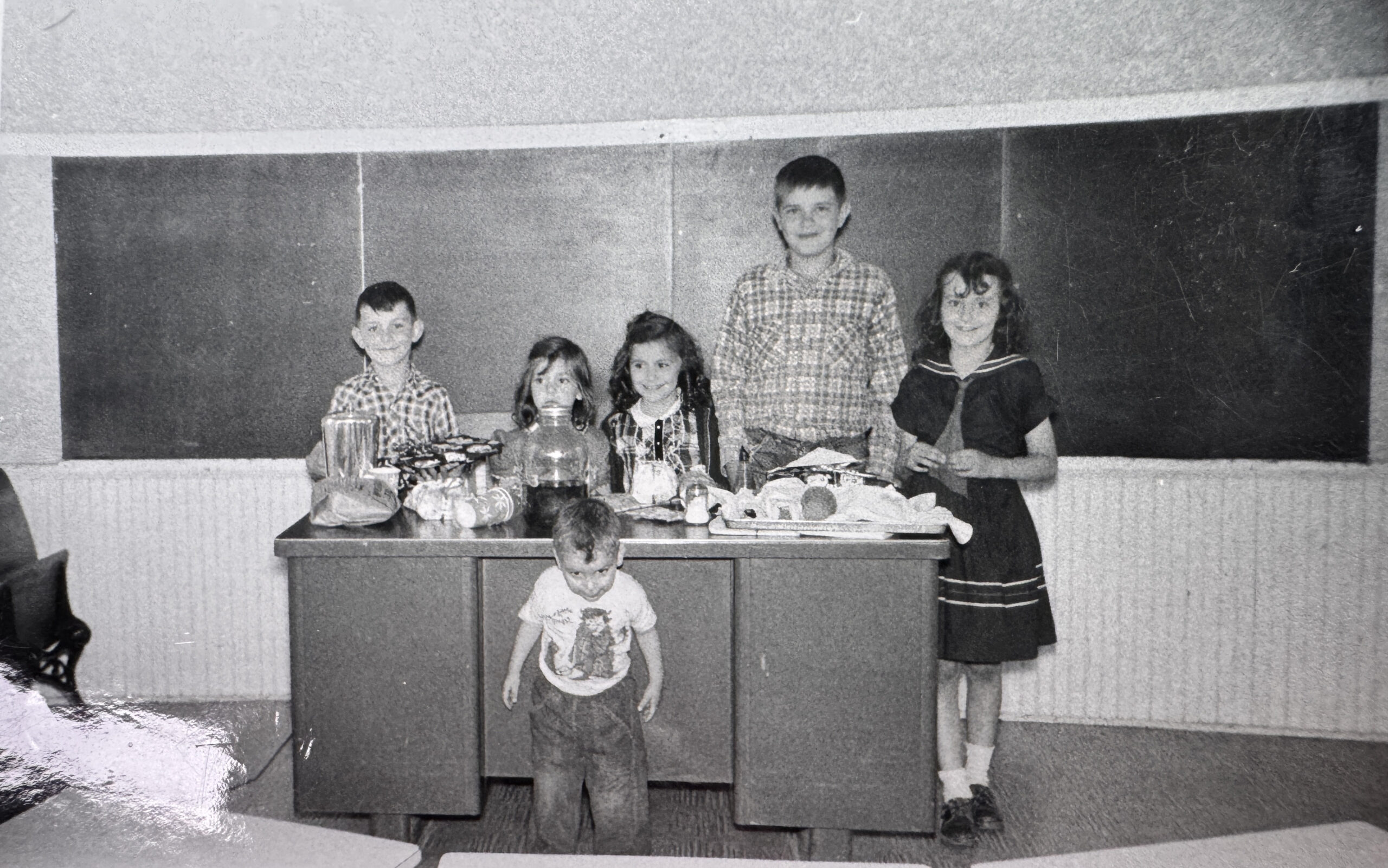
“We had a table that was a reading table and then we’d change it into a science table, and different things depending on what we were having,” Winchester explained, pointing to a picture.
Winchester’s donations will eventually be alongside other items organizers are searching for to furnish the building including desks, cupboards, a chalkboard, and books. On the exterior, shingles and siding are among the school’s eventual cosmetic needs.
Although the school currently appears as it has for many years, it now proudly sits on a sturdy new foundation overlooking a property meant for education and history. The proverbial spotlight that shone on the building during its journey is not expected to turn off anytime soon.