Nebraska’s Smoke Advisory System has been activated for 2025.
The Nebraska Department of Health and Human Services (DHHS) implemented the public smoke advisory system in 2018. Smoke advisories will be issued when conditions make it likely the smoke from prescribed burning or wildfires could significantly affect air quality in parts of the state.
DHHS reminds Nebraskans the prescribed burning season is underway in Kansas, Oklahoma, and other states in the region, including Nebraska. Smoke from wildfires in the west and Canada, which have occurred often in the recent past, also can compromise the air quality in Nebraska.
DHHS issues advisories in partnership with the Nebraska Department of Environment and Energy (NDEE), local health departments and districts, and the National Weather Service using information provided by other sources in the region.
Impacts on air quality may vary based on the type, size, and location of fires. Impacts from prescribed burning may only last a few hours. Wildfire smoke can be persistent over consecutive days. Many factors, including weather conditions, affect the magnitude and duration of air quality impacts.
If state and local agencies determine that smoke is likely to significantly impact the air quality in Nebraska, DHHS and NDEE will issue a joint advisory to share the information with the public.
Smoke can cause health problems, including burning eyes, runny nose, coughing, and illnesses such as bronchitis. Children and older adults as well as individuals with respiratory issues, such as asthma or COPD, pre-existing heart, or lung diseases, may experience more severe symptoms.
How Nebraskans can protect their health on days when smoke is present in their communities:
- Keep doors and windows closed and run air conditioners with high-efficiency particulate air (HEPA) filters.
- Stay hydrated by drinking plenty of water.
- Limit or avoid strenuous outdoor exercise.
- People with respiratory or heart-related illnesses should remain indoors.
- Contact your doctor if you have symptoms such as chest pain, chest tightness, shortness of breath, or severe fatigue.
For current conditions of Nebraska’s air quality, click here. For information on current fires, smoke, and air quality conditions at monitors and sensors throughout the state, click here.
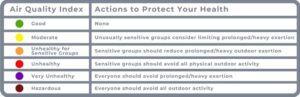
AirNow is a tool that uses the Air Quality Index (AQI) to report air conditions across the country. The AQI uses the following color chart to quickly communicate air quality.
For more information on smoke awareness, click here