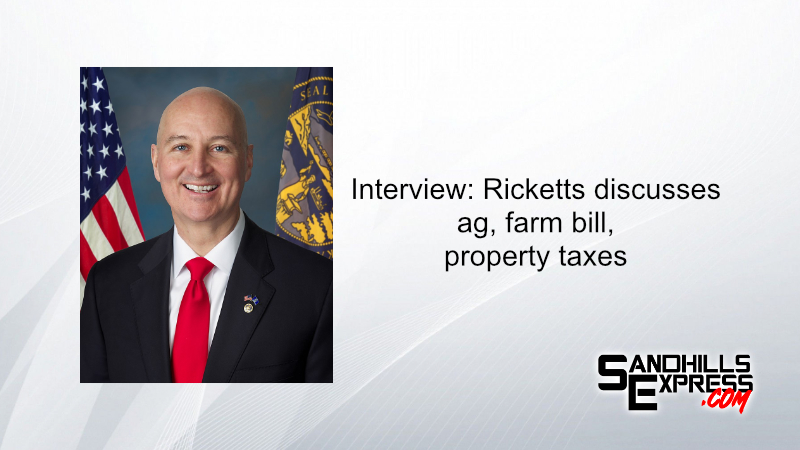
Nebraska U.S. Senator Pete Ricketts discussed a number of issues affecting Nebraska farmers, ranchers and rural communities during an interview with KCNI/KBBN Radio this past Wednesday.
Ricketts said agriculture remains under pressure, particularly for row-crop producers who are facing lower commodity prices along with high input costs. He also pointed to higher diesel and fertilizer costs associated with instability in the Middle East.
While cattle prices remain strong, Ricketts said the nation’s cattle herd is at its lowest level in roughly 75 years. He said efforts to control the spread of New World screwworm are important as the USDA works toward carefully resuming cattle imports from Mexico, including currently piloting live cattle imports through Arizona paired with close monitoring.
He also highlighted provisions of last year’s Working Families Tax Cut that he said could benefit the next generation of farmers and ranchers. Ricketts said the legislation made the federal estate tax exemption permanent, allowing about $200 billion in farm and ranch assets to pass to the next generation rather than the federal government. He also said the program designed to assist new farmers and ranchers was extended from five years to 10 years.
Trade is another priority for Nebraska agriculture, according to Ricketts. He said about 30% of what Nebraska produces is exported, making the expansion of foreign markets particularly important to the state’s producers.
Farm Bill Priorities
Ricketts said one of his top priorities in the next farm bill is making E15 ethanol available year round. He said permanent year round availability would provide another market for Nebraska corn producers while giving consumers another lower cost fuel option.
He also discussed several pieces of legislation he is working to include in the farm bill. The Fence Act would allow producers recovering from wildfires to use virtual fencing technology and potentially receive reimbursement through the Emergency Conservation Program.
Ricketts also cited the AFIDA Improvements Act, which would reform the Agricultural Foreign Investment Disclosure Act of 1978. He said the legislation is intended to address national security concerns surrounding purchases of U.S. farmland by adversarial nations, particularly China, including land located near military installations and critical infrastructure.
Ricketts also mentioned the Organic Imports Verification Act, which is designed to strengthen verification of organic agricultural imports and protect U.S. organic producers from fraudulent foreign products.
Another proposal he highlighted is the Rural Microentrepreneur Assistance Act, which would provide training and assistance to rural microentrepreneurs as they work to grow their businesses and create jobs in rural communities.
Ricketts said one of the major obstacles to completing a new farm bill is disagreement over reforms to the Supplemental Nutrition Assistance Program, or SNAP, which is also known as food stamps. He said about 80% of farm bill spending goes toward SNAP.
Property Taxes and Affordability
Ricketts also addressed property taxes, which remain a major concern for Nebraska residents, encouraging property owners to pay attention to local budgets and to participate in board meetings when it comes to local tax levies.
He expanded by saying that some states have explored assessing property based on its income potential rather than market value, which he said can help stabilize increases in property valuations.
A legislation that Ricketts said he is working on, the Restoring Affordability in Automobile Manufacturing Act (RAAM Act) would permanently eliminate corporate average fuel economy standards that can add to the cost of vehicles.
The 21st Century ROAD to Housing Act is another avenue he said is intended to help reduce housing costs.
Finally, Ricketts highlighted provisions of the Working Families Tax Cut designed to put more money back into Americans’ pockets, including provisions involving tips and overtime. He also cited a bonus deduction for seniors, saying 88% of seniors will not pay federal income tax on their Social Security under the changes.
Ricketts encouraged Nebraskans with questions or concerns to contact his office through his website or one of his Nebraska offices.
Listen to our full interview with Senator Ricketts here: