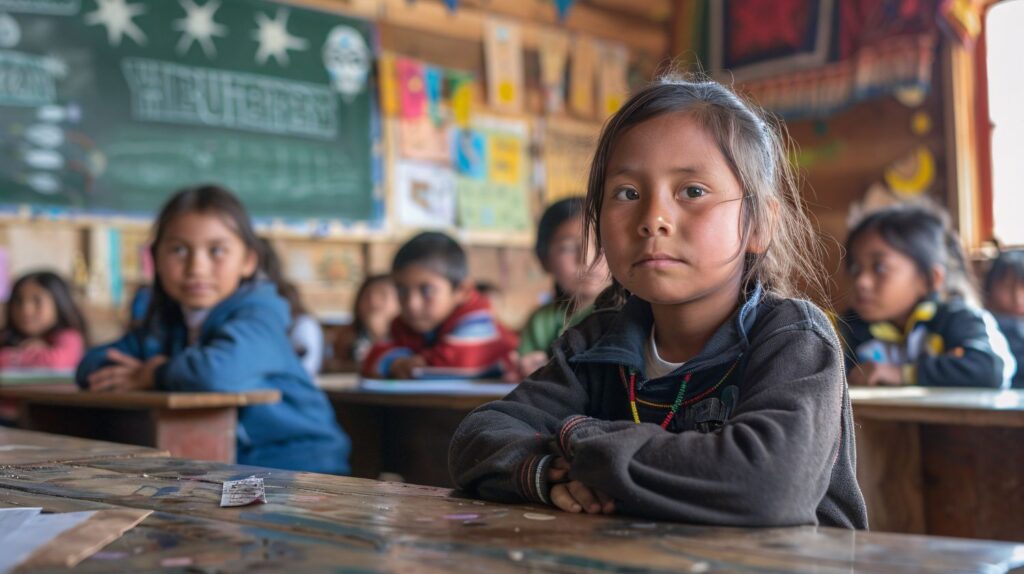
A dual-language program on the Winnebago reservation in Nebraska is working to preserve the disappearing Ho-Chunk Indigenous language. It’s disappearing on the reservation and across the Midwest.
The Winnebago Public Schools Dual Language Immersion Program seeks to keep the Ho-Chunk language alive by teaching elementary school kids about its importance, but not just by teaching them words.
Elementary school teacher Michelle LaMere said classrooms are returning to the way Indigenous kids used to learn.
“It was all relationship-based. They were all raised and taught by family members, By uncles, by aunties, by cousins, even, so that their teachers were people that cared for them, that respected them, that loved them,” she said. “And so we wanted to recreate that as much as possible.”
Fewer than a dozen speakers currently are left in the state, and slightly more than 6,000 members of the Winnebago Tribe of Nebraska.
LeMere said educators are working with kids in elementary school because it’s the best time for them to learn and retain a language.
“And it was also the easiest time because they already had language skills,” she said, “and we would be able to build on that and insert the Ho-Chunk language and have their spongy, little brains absorb as much as possible.”
Winnebago teachers study with other Ho-Chunk teachers in Wisconsin to help develop the skills they need to achieve the best possible outcome in the classroom.