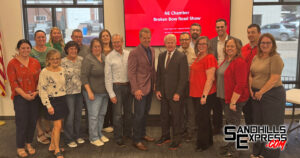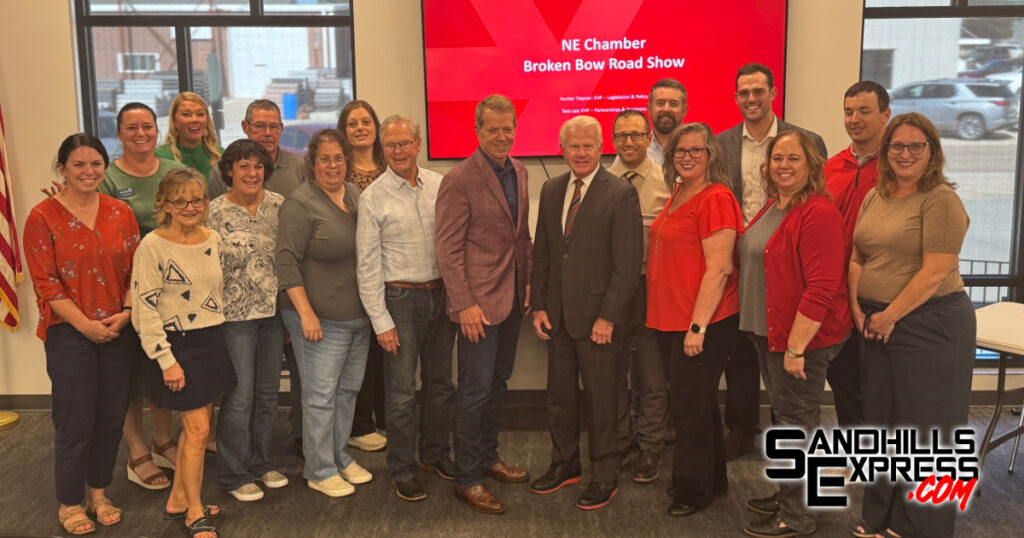
BROKEN BOW, Neb.— The NE Chamber Road Show visited Broken Bow on Monday afternoon, giving updates on the 2026 legislative session, statewide economic development efforts, and priorities for the road ahead.
Monday’s event featured former State Senator and former interim NE Chamber President Matt Williams, Governor Jim Pillen, Emily Wurl of 6 Regions, One Nebraska, and Hunter Traynor, Executive Vice President of Legislation and Policy with the Nebraska Chamber.
Williams opened by discussing the chamber’s Go Big Future initiative, which has brought together business, government, education, agriculture and other stakeholders to look at long term solutions for Nebraska. He identified workforce, energy and manufacturing technology as three major areas of focus, noting that many Nebraska manufacturing facilities are struggling to find enough workers to support continued growth. Williams said greater use of technology and modernization could help businesses increase production while also addressing the state’s workforce shortage.
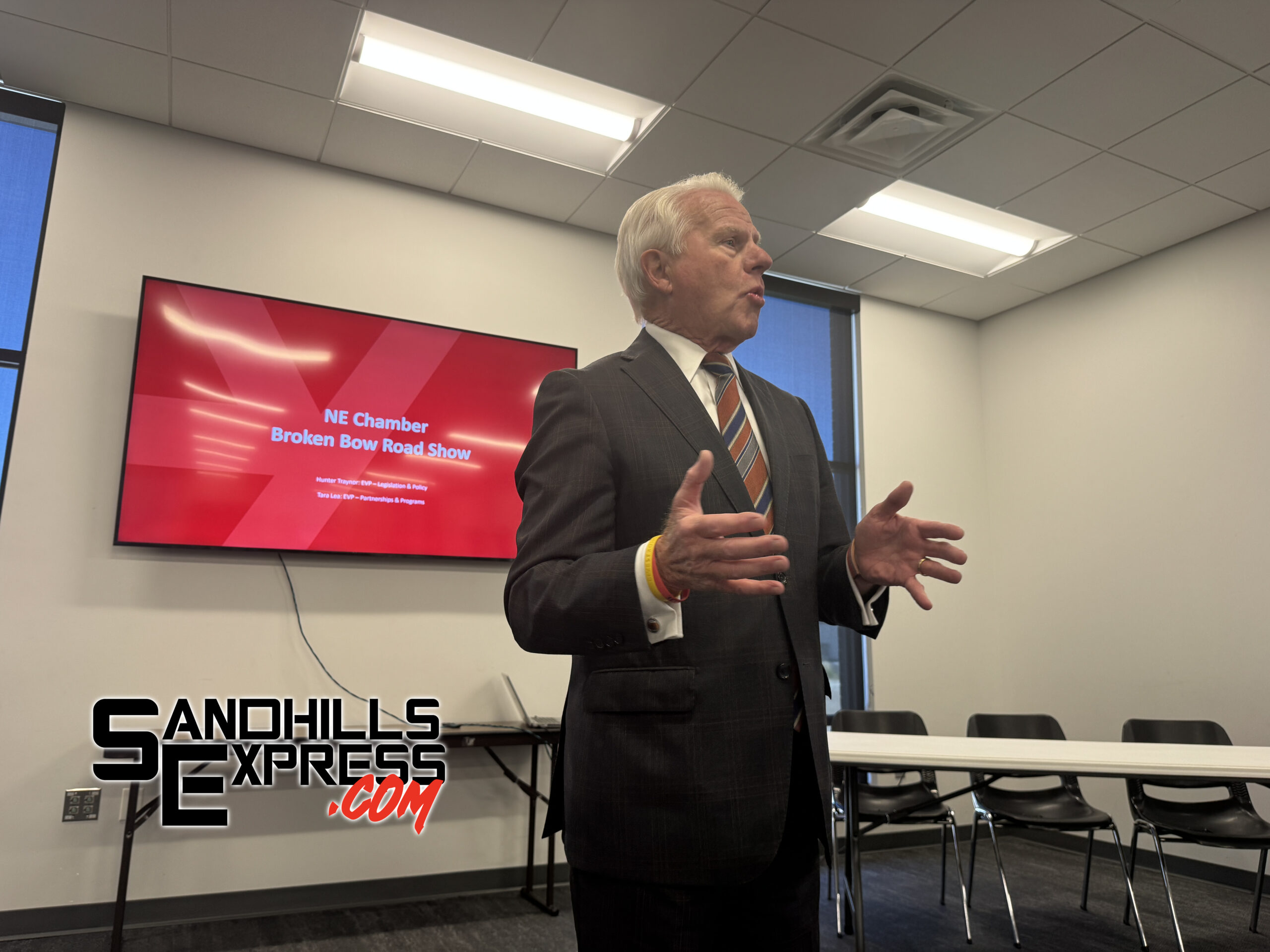
Governor Pillen focused much of his presentation on Nebraska’s economic strengths and the importance of communities taking the lead in their own development. He praised Broken Bow for not waiting on government to solve problems, but instead working locally to improve the community and attract new opportunities. He also pointed to the state’s agriculture, manufacturing and energy industries as examples of how Nebraska’s resources can work together.
“From a kernel of corn, we feed cattle. From a kernel of corn, we make ethanol,” said Pillen. “We’re in the fuel business. And now, from a kernel of corn, by taking the manure from livestock, we’re making renewable natural gas. We’re in the energy business. It’s incredible.”
Electricity was another major part of the governor’s remarks, particularly as Nebraska considers new large scale electrical demands such as data centers. Pillen said the state needs to protect its water resources and make sure existing businesses have access to reliable electricity before taking on additional demand. That discussion connects directly to LB 1261, passed during the 2026 session, which allows large electrical users to build their own generation alongside public power, intended to reduce the financial risk of major new electrical loads.
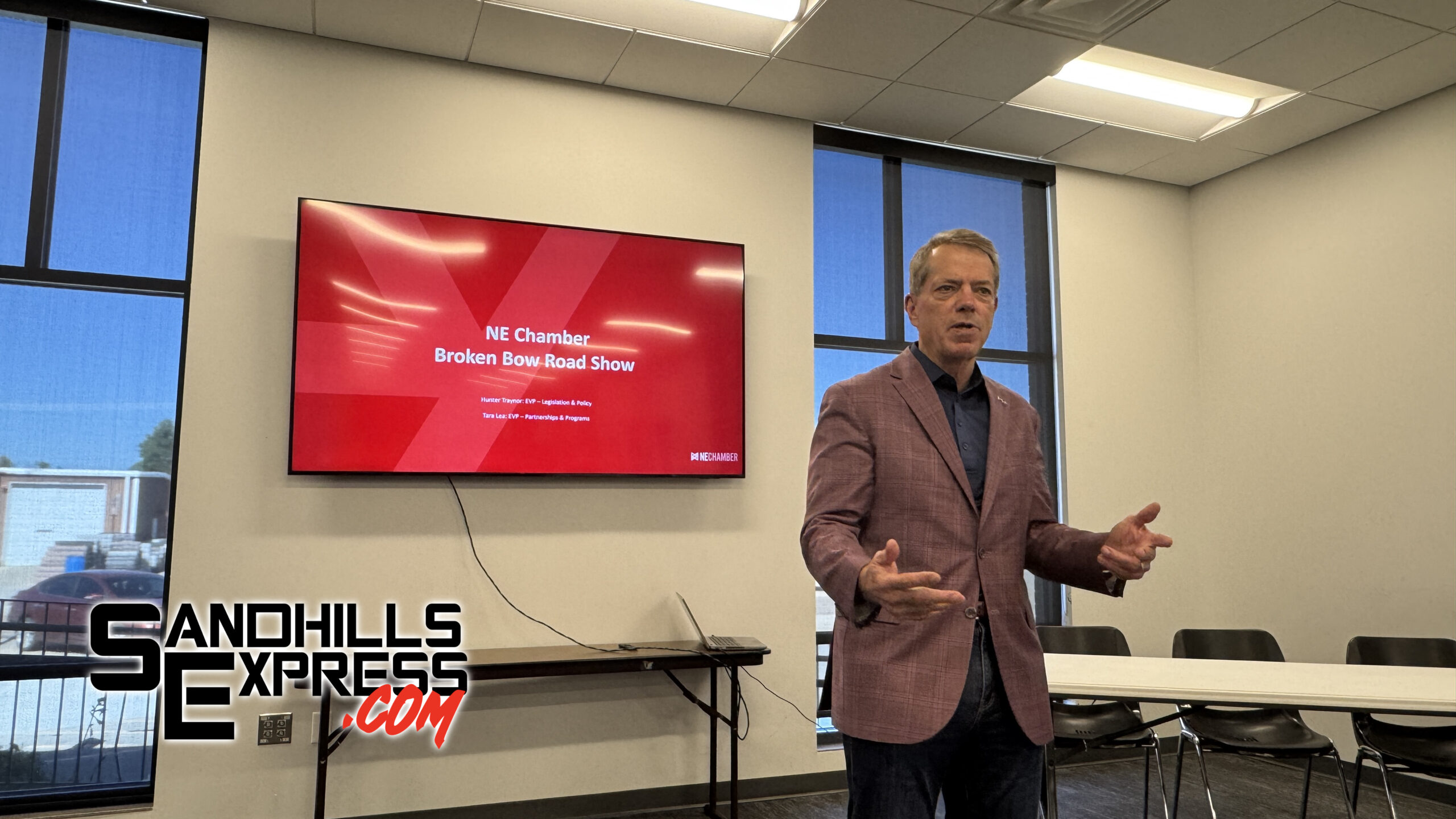
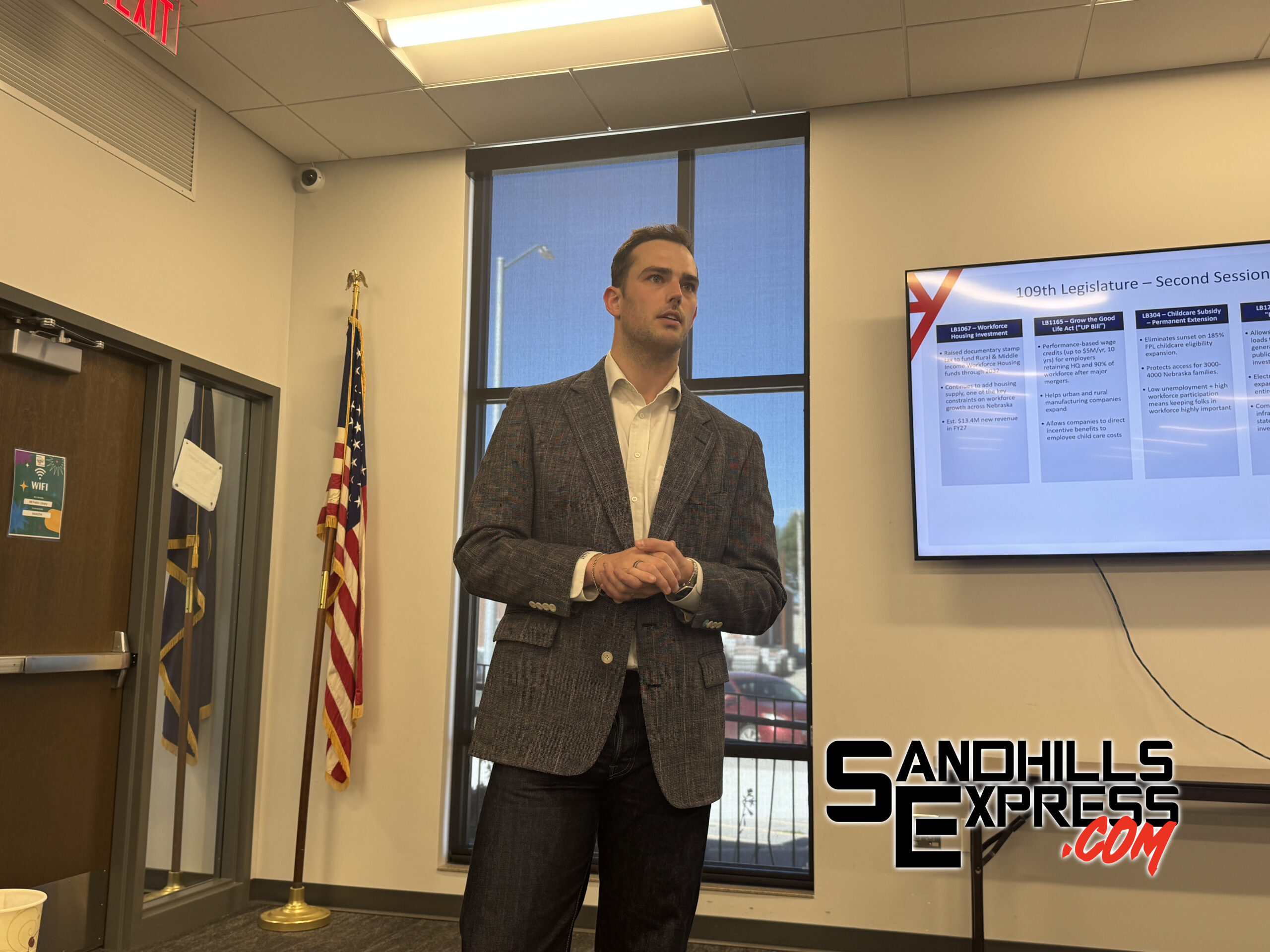
Traynor outlined several pieces of legislation supported by the NE Chamber, with housing emerging as one of the biggest challenges being heard across Nebraska. LB 1067 increased the documentary stamp tax on real estate transactions to provide dedicated funding for the state’s rural and middle income workforce housing programs, with about $13.4 million in new revenue expected in fiscal year 2027 and roughly $100 million projected to flow through the revolving programs over five years. Traynor said the goal is to address the basic problem communities face when businesses grow: having enough homes available for the additional workers.
Workforce development and child care were also highlighted as important pieces of keeping Nebraskans in the workforce. LB 304 permanently extends the expanded child care subsidy eligibility level, protecting access for an estimated 3,000 to 4,000 Nebraska families, while LB 847 made changes to the state’s workforce development structure. Traynor also highlighted the NeMAC Credential, a program developed by the Nebraska Manufacturing Advisory Council, Nebraska’s six community colleges and manufacturers to provide students and workers with industry-specific training that can lead to apprenticeships and employment.
“We cannot talk about workforce development as a business community if we’re not willing to sit down eye to eye with education partners and actually propose and build solutions,” said Traynor.
Wurl with 6 Regions, One Nebraska discussed regional efforts focused on housing, workforce and community development. She highlighted a vacant property project examining the economic impact of bringing empty homes back into use, while also noting that ARPA funding has been directed toward housing efforts throughout the region.
Looking ahead, Traynor said the NE Chamber’s Go Big Future initiative has narrowed its focus to three areas: zoning and siting, automation and site readiness. The chamber is examining ways to make Nebraska’s regulatory environment more predictable, help businesses use technology to address workforce shortages and prepare communities with the infrastructure needed to compete for new investment. Those priorities also tie into a recent executive order from Pillen calling for a more coordinated statewide economic development strategy involving state agencies, chambers and regional economic development organizations.
The Broken Bow visit was one of several planned as part of the NE Chamber Road Show. Ord and Alliance stops happened on Monday as well, with Scottsbluff, Sidney, Ogallala, and Fremont still on the schedule this week and beyond.