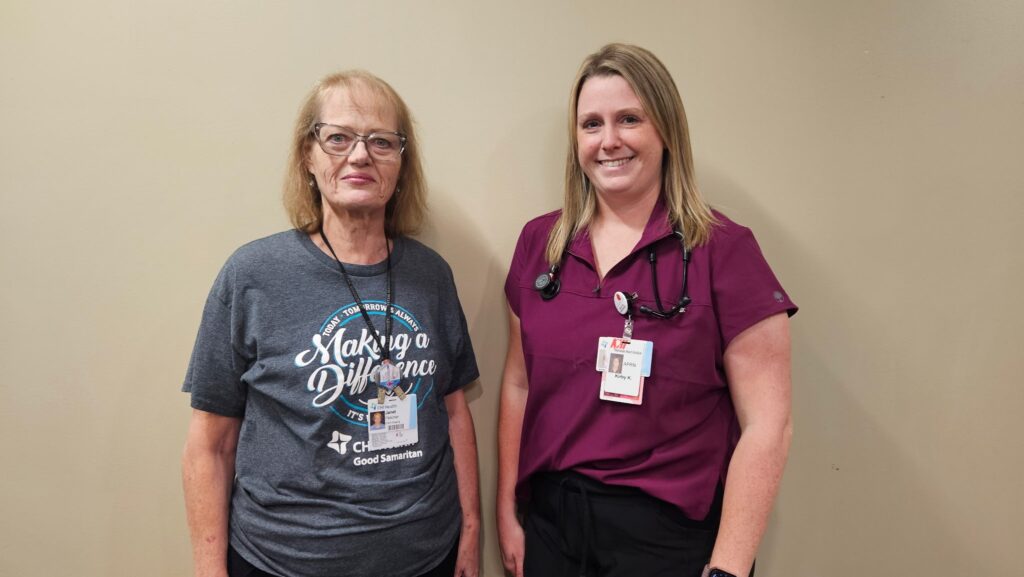
KEARNEY, Neb.— CHI Health Good Samaritan is enhancing cardiac care for the region with the introduction of remote pulmonary artery pressure monitoring, leading-edge technology designed to help patients manage heart failure from the comfort of their own homes.
The hospital’s heart team recently completed its inaugural procedure in the cardiac catheterization lab, with Litchfield resident Janet Fletcher as the first recipient.
“The procedure itself was so quick and easy, and I’m just so thankful. Having this technology locally is going to be life-changing for me. It provides such peace of mind knowing my team is keeping a close eye on my heart failure,” says Fletcher.
The technology uses a sensor roughly the size of a paperclip, which is implanted in the pulmonary artery. Once in place, the device wirelessly transmits daily blood pressure readings to the Fletcher’s clinical team, allowing for proactive, remote management of heart failure symptoms.
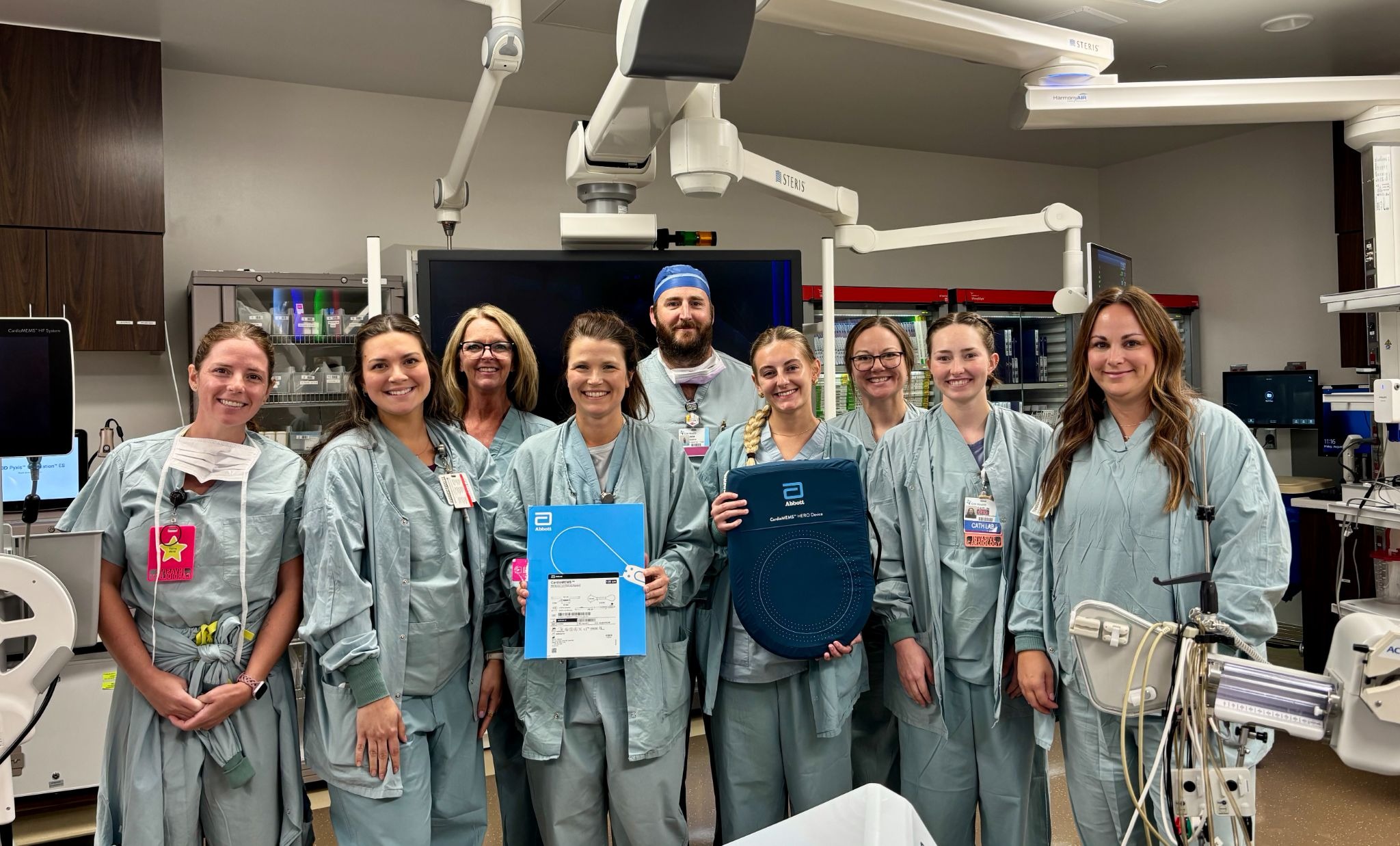
“It’s a game-changer for our patients,” says Kirby Knuth, APRN, CHI Health Clinic Health Institute (Kearney). “By monitoring pressure changes in real-time, we can identify signs of worsening heart failure before the patient decompensates enough to feel symptoms. Catching it early allows us to adjust treatment plans and prevent the need for hospital stays.”
Heart failure impairs the heart’s ability to circulate blood and oxygen effectively, leading to progressive cardiovascular damage and high rates of hospital readmission—with nearly 25% of patients returning to the hospital within 30 days. Standard monitoring methods, such as tracking weight and blood pressure, frequently fail to detect early warnings of worsening health. With remote pulmonary artery pressure monitoring, clinical teams can identify changes in real-time—prior to the onset of physical symptoms like weight gain or shortness of breath—preventing further heart damage, re-hospitalization and improving patient outcomes and quality of life.