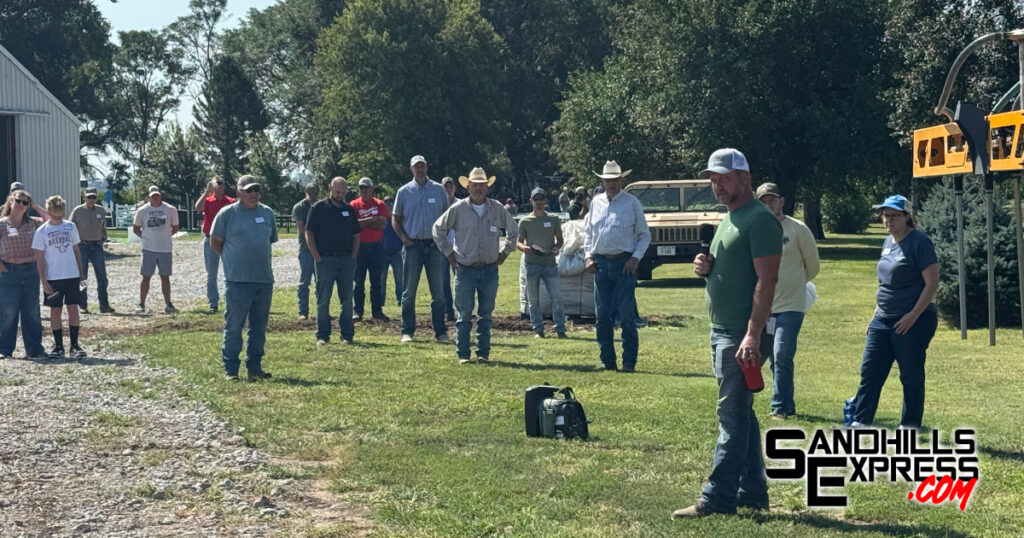
BROKEN BOW, Neb.— A fifth generation farming operation north of Broken Bow continues to work at how changes in soil management, cover crops and other practices can improve the efficiency and resiliency of its farm.
Practical Farmers of Iowa (PFI) hosted a field day Thursday at Govier Farms, where farmers and brothers Clay and Logan Govier shared what they have learned through years of experimenting with different practices on their roughly 3,500-acre operation.
View a video compilation from the event at the end of this story
The event, titled Expanding in Central Nebraska with a Cover Crop Business and On-Farm Trials, brought farmers, ranchers and agriculture professionals to the farm to see trials, equipment and different approaches to soil health and cover cropping.
Clay Govier said the operation has been on what he calls a soil health journey for about a decade, moving toward no till and reduced tillage, experimenting with crop rotations and cover crops, and looking for ways to reduce its reliance on inputs.
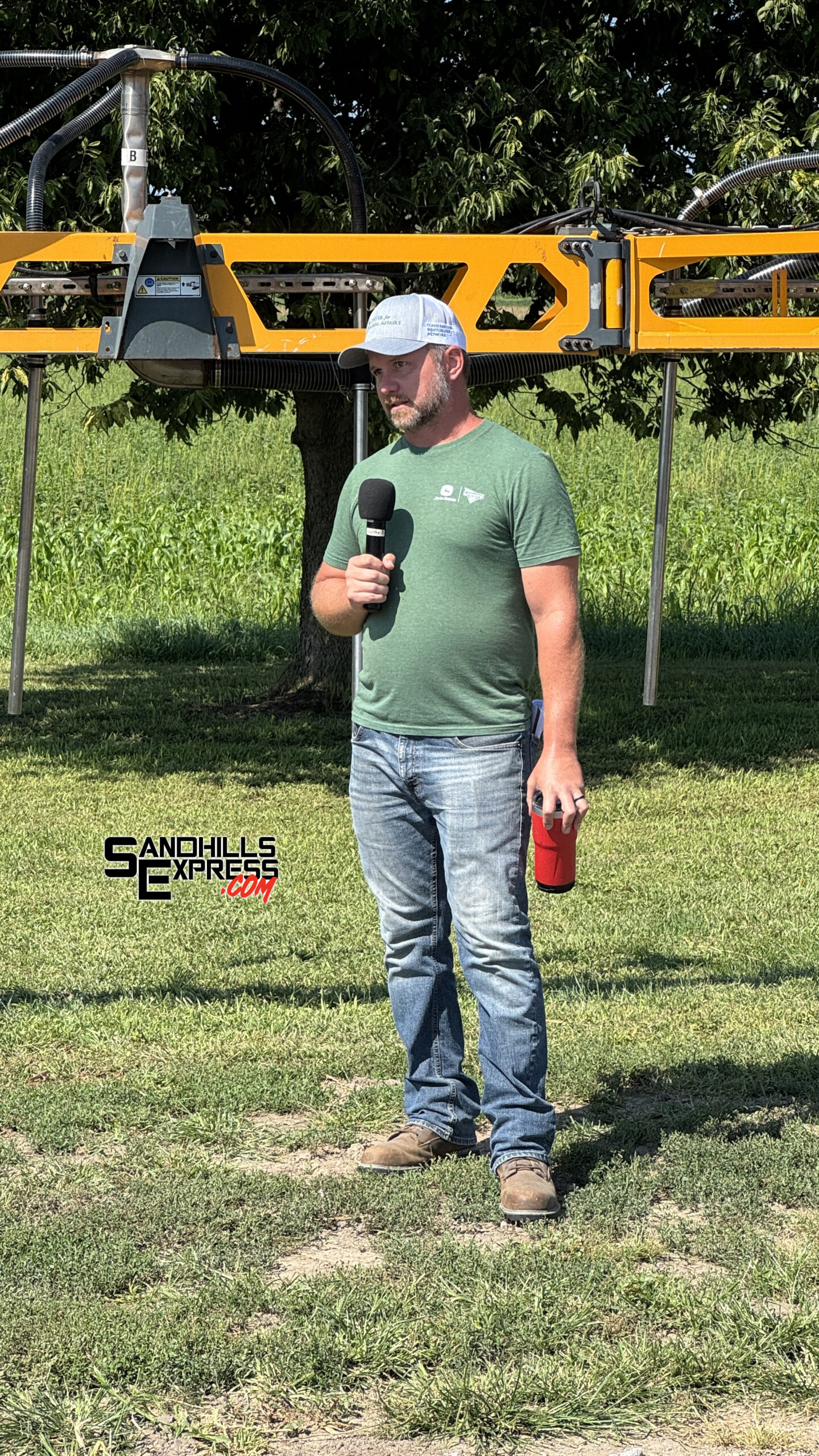
“Very generally, if you have healthy soil, you’re going to have healthy crops. You don’t have to be as dependent on a lot of your inputs, synthetic or otherwise, to grow a healthy crop. So that’s kind of why we’re doing it. It ideally leads to better yields with lower inputs,” explained Govier. “Then with healthy soils, cover crops, things of that nature, it kind of builds resiliency into the farm and the soil and the crop. I think the healthier your soils are, the more resilient you’re going to be when it comes to these kind of extreme weather events.”
He said that finding what works is a process and that the ability to learn from other farmers has been an important part of that process.
PFI’s N Rate Risk Protection Program was discussed at the event, which helps farmers test lower nitrogen rates and determine what works economically for their individual farms while reducing the financial risk involved with lowering fertilizer applications.
The Goviers are enrolled in the program, while also conducting trials involving dried humates and Sea-90.
Cover crops were another major focus of the field day, with those in attendance having an opportunity to walk through a nearby field filled with a large variety of crops. The Goviers have experimented extensively with cereal rye and other cover crops, but Govier said there are management challenges that come with the practice.
“I think four out of five years, I’m pretty happy that we have a cover crop out in some of our fields. It’s that one year where (you’re like) if I would have just no-tilled into corn stubble or bean stubble or whatever, things would probably look a lot better,” Govier said. “I think this is something that most guys that have been dabbling in cover crops would tell you: just don’t go whole hog. Don’t plant every single acre to a full stand of cereal rye, because if the rain shuts off, it can cause a problem. If it doesn’t stop raining, it can just grow to be six foot tall, and that’ll also cause a problem.”
Govier said cover crops can provide several benefits, including weed suppression, nutrient cycling and protection from soil erosion. He said the protection from erosion has become increasingly important as the area experiences more intense rainfall events.
The Goviers are also taking their experience with cover crops into a new business venture, growing and cleaning cereal rye for resale and offering cover crop seed and custom application services.
Govier said the business has been helped by PFI’s Cover Crop Business Accelerator program, which provides business planning assistance and other support to farmers developing cover crop-related businesses.
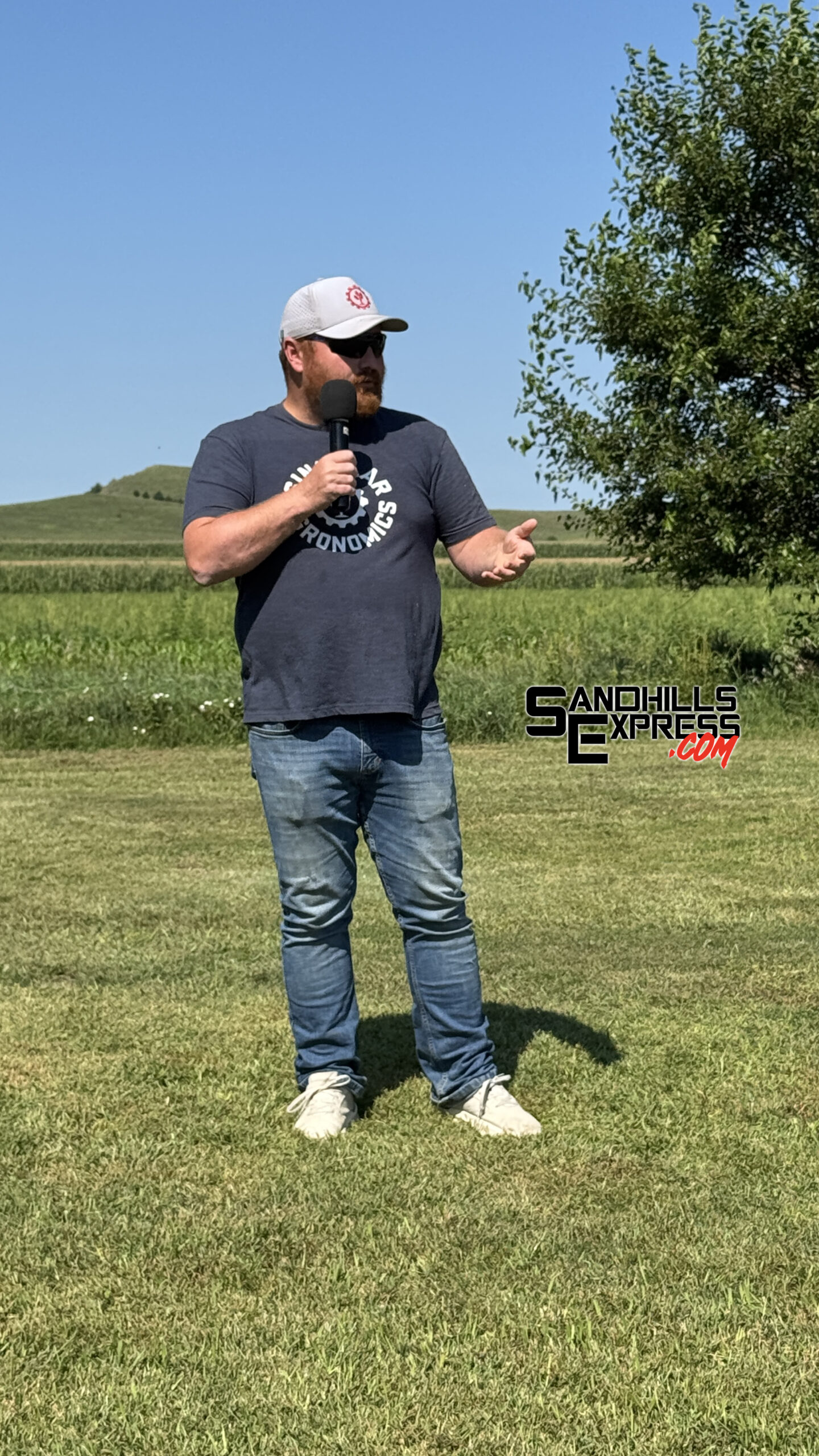
During the field day, attendees also heard from Johnny Ference of Ord, Nebraska, of Ference Agronomy and Singular Agronomics.
Ference focused his presentation on carbon and the different forms it can take in an agricultural system, including dry humates, liquid humic acid, fulvic acid and simple sugars.
Nitrogen management was another significant topic during the event.
Govier said the farm is looking for ways to make its nitrogen applications more efficient rather than simply applying more fertilizer. That includes experimenting with different nitrogen sources, application timing, micronutrients and biological products.
Along with the field demonstrations, attendees could visit information booths from organizations including the Center for Rural Affairs and Green Cover and also tour the Goviers’ geothermal greenhouse, another example of their interest in exploring ideas outside the traditional corn and soybean model.
Inside the greenhouse were plants for tomatoes, peppers, lemons, clementines, bananas, grapes, asparagus and other crops.
The field day concluded with lunch and additional discussion among the farmers, agriculture professionals and organizations in attendance.