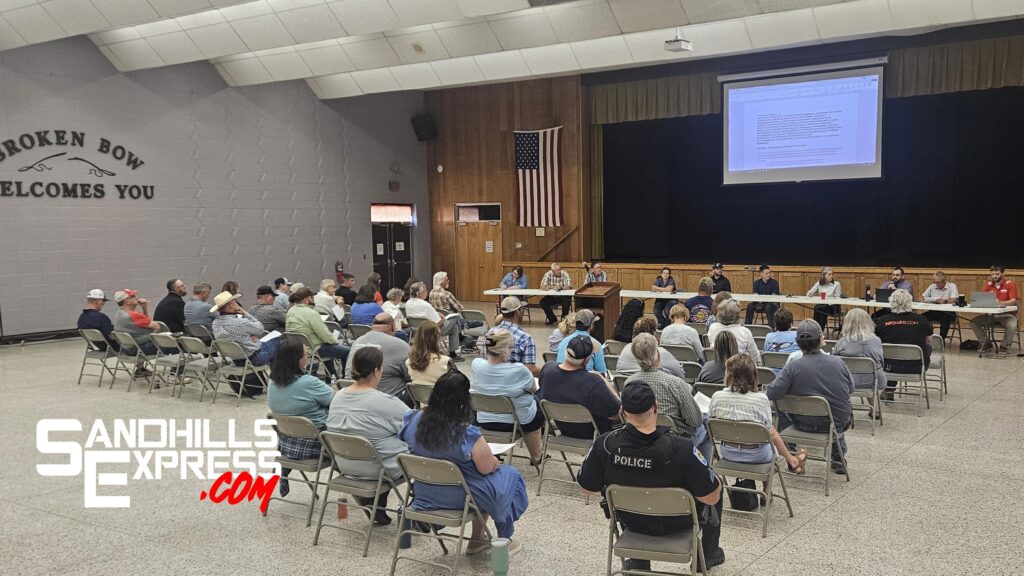
Nearly 50 people were in attendance Tuesday as the Broken Bow Planning Commission took up the question of zoning for data centers at a public hearing. A frequent topic of conversation, City Zoning Administrator Jacob Holcomb told the assembled crowd that the City is working to get out ahead of questions and concerns regarding the resource-intensive installations.
Holcomb and City Administrator Dave Schmidt stressed that in developing a proposed ordinance to regulate how data centers might operate in or around the the city of Broken Bow, they were approaching this not as remote bureaucrats, but as fellow citizens working, living and raising their families in small-town Nebraska.
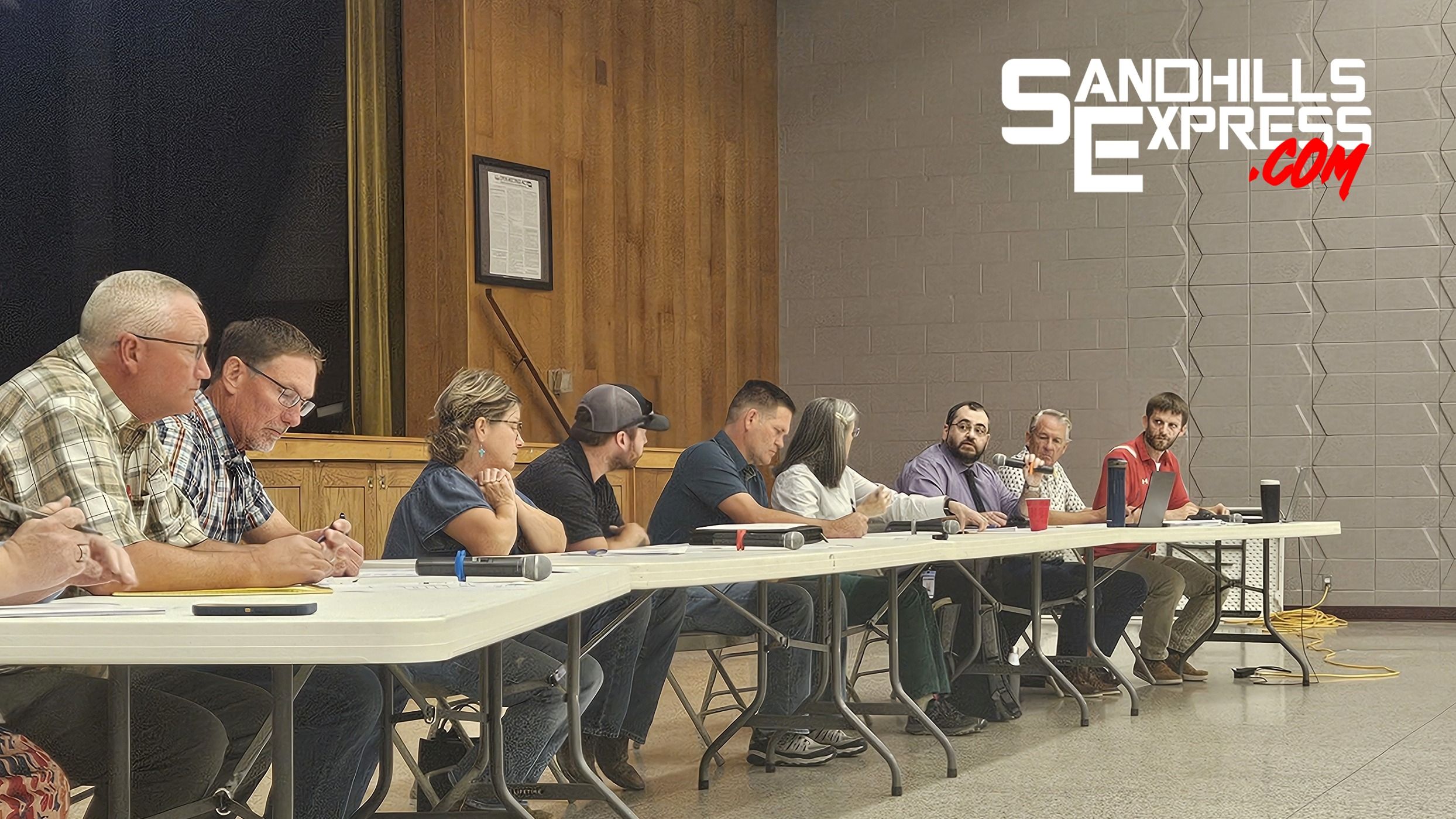
Through the first half of the meeting, Holcomb provided an overview of the text of Data Center Ordinance that has been developed to regulate data center construction in Broken Bow. Starting with definitions of what constitutes a data center, including the amount of power draw that would trigger the requirements of the regulation: any data center proposed to draw more that 65 kilowatts (kW) during peak power demand would be required to meet a number strict requirements before being built.
Holcomb noted that while state law does not allow a jurisdiction to completely outlaw any legitimate business, recent moves by the state legislature have provided cities the ability to closely regulate how data centers operate.
Requirements proposed include a process for application and review of any proposed “High-Density Data Processing Facility”. To obtain a Conditional Use Permit allowing a data center to be built, a company would need to submit:
- A full site plan;
- Comprehensive electrical load analysis prepared by a Nebraska-licensed engineer;
- A noise impact study;
- Cooling and ventilation system engineering specifications;
- Certified fire prevention and suppression plan approved by the local fire authority; and
- Decommissioning plan explicitly acknowledging sole operator liability.
Each of these come with detailed requirements such as limitations on the amount of noise and light emitted from the facility, an absolute ban on water-intensive cooling systems, and the ability for the city to shut down a facility at any time either in case of an emergency, or for failure to continue meeting permit requirements.
Any proposed data center operation will also be required to provide financial assurances to the city to cover utility use and eventual site decommissioning and clean-up in advance. Operators would be liable to cover 100% of any utility upgrades required to provide power to the facility.
Importantly, the proposed city ordinance applies only within the city limits of Broken Bow and a 1-mile extraterritorial jurisdiction around the municipality. Holcomb noted that he is working with a Custer County officials on similar regulation county-wide.
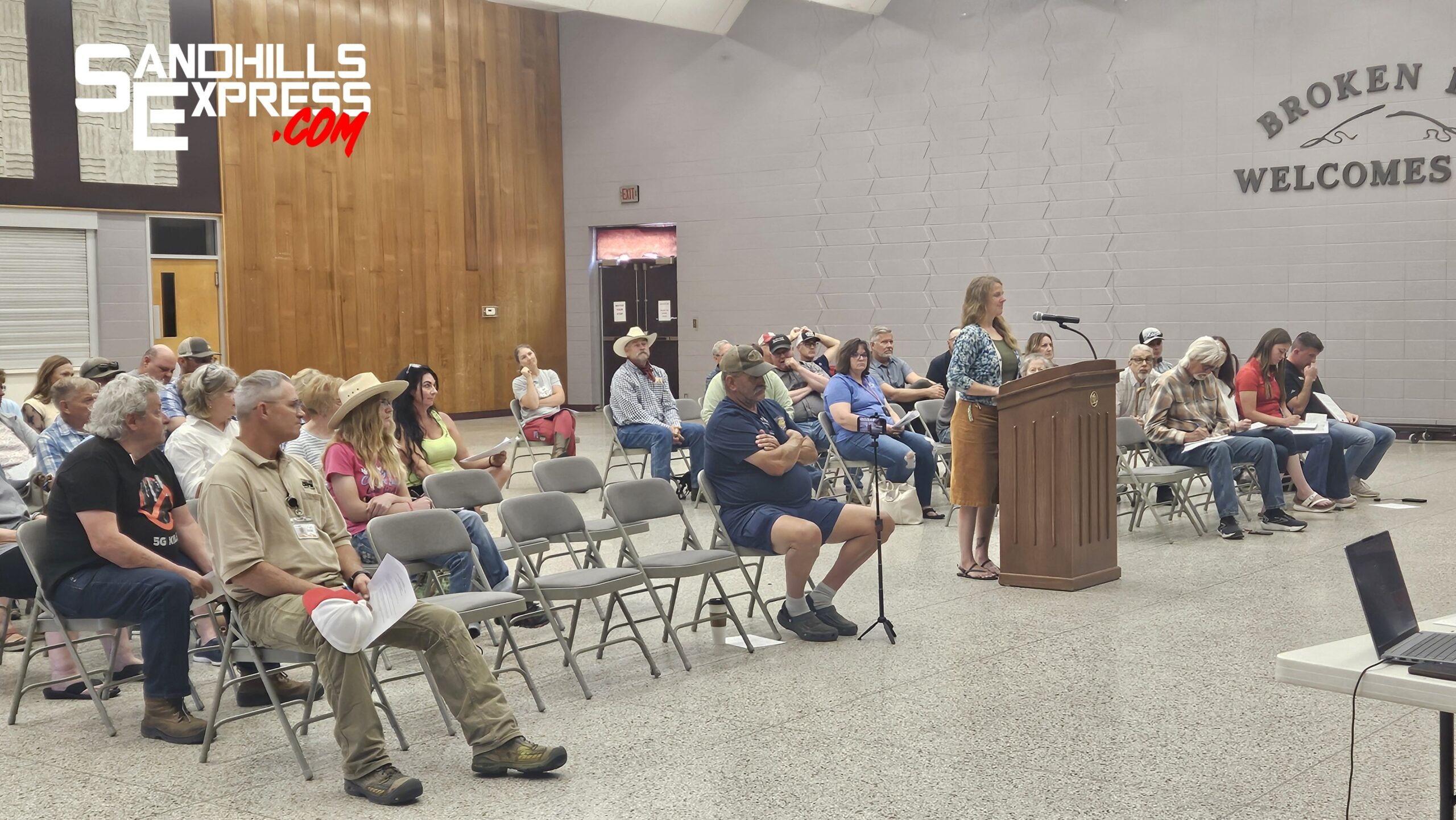
Following the presentation by Holcomb, several members of the audience took the opportunity to make their voices heard in the public forum.
Overall, the discussion reflected broad public skepticism toward data center development and strong support for local officials taking a cautious, proactive approach through restrictive zoning regulations and a moratorium while additional research and ordinance revisions continue.
Residents from Custer County and beyond repeatedly raised concerns about the electrical grid, infrastructure capacity, rising utility costs, water usage, noise, property rights, and the influence of large technology companies.
Several speakers cited examples from other states where they said communities experienced increased power demand, land acquisition issues, and quality-of-life concerns after data centers were constructed.
Trent Loos of Hazard shared his experience, stating, “I’ve been in Ellendale, North Dakota, where they’re building a 1.2 gigawatt, three phase hyperscale closed loop system data center. Ellendale, North Dakota, which is half the size of Broken Bow, by the way, uses exactly what the city of Denver uses on a daily basis. I’ve been to Sterling, Colorado, where they’re proposing a two gigawatt, which is double what the city of Denver uses in electricity.”
Ownership of the data center facilities is also a concern according to Loos. “Who owns this?” asked Loos. “It was owned by a company that’s a subsidiary of China based in Chicago. And why does she China have a subsidiary based in Chicago? Well, because China had a ban on doing any data mining in China at the time because, in their words, it was too resource intense. But they’re very willing to come and use our resources.”
Holcomb noted this may be another item to add to the background check of organizations proposing facilities.
With property taxes already a touchy issue in Custer County, Merna resident Jennifer Sittler noted, “They’re gonna need to purchase land, and already we’re seeing nothing but increases on our property taxes. So when they purchase land at higher than expected prices, and we keep using the same tax system of looking back at the last year’s sales, it’s still gonna be something that the people of the county are gonna have to bear because the sales of land is gonna be sold at an exuberant price.”
Others questioned whether local governments could effectively enforce regulations against billion-dollar corporations and urged officials to consider expanding the proposed six-month moratorium while continuing to strengthen the ordinance.
However, the city drew praise for its forward-thinking approach, something not seen in many communities around the state yet. In the meantime, the Planning Commission is proposing that the Broken Bow City Council establish at minimum the six-month moratorium on the construction of any data center within it jurisdiction while work continues to finalize the local ordinance.
At least two additional Planning Commission meetings are planned to continue seeking public input on the ordinance, with dates to be announced in the future. Once the Planning Commission has an ordinance that it believes will best protect the people and infrastructure of Broken Bow, it will be forwarded to the City Council for additional review and action.
Continue to follow along with KNCI/KBBN and Sandhillsexpress.com as future developments continue to unfold on a story with implications from basic quality of life and the livelihoods of rural Nebraska to potentially billions of dollars spent on technologies that will shape the future of the world around us.