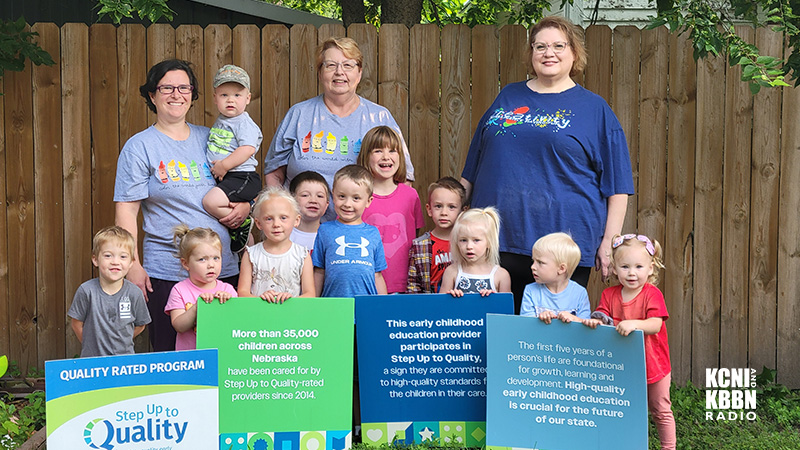
BROKEN BOW – A Broken Bow child care provider recently achieved the top step of the Nebraska Step Up to Quality (SUTQ) program. Love to Learn Playschool was also named the recipient of a $25,000 Restoration Enhancement Program (REP) grant through the Department of Health and Human Services.
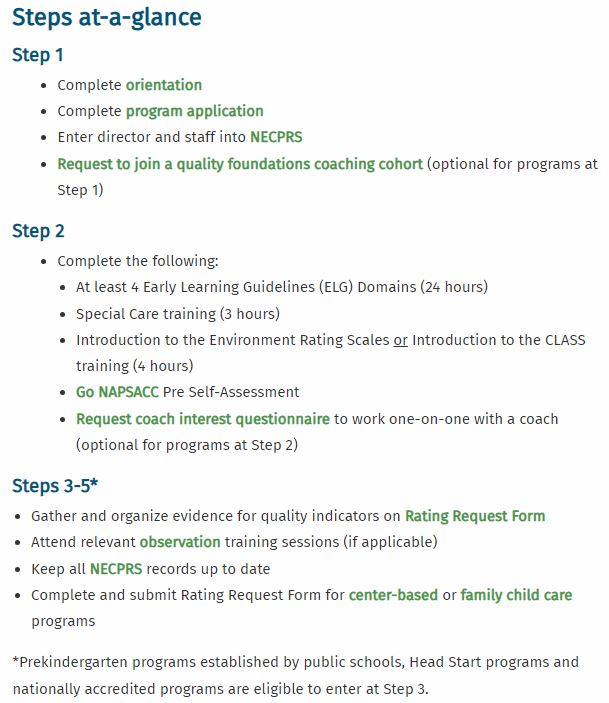
The Step Up to Quality program has five levels, or steps. Love to Learn Playschool owner Heather Schmidt explained to KCNI/KBBN that each level has different requirements including orientations, trainings, self-assessments, coaching, and observations. She herself started orientation in 2016.
After achieving step 4 in 2018, her re-rating time fell in the middle of the COVID pandemic when dates were pushed back. Schmidt allowed her rating to fall back to step 2, knowing that version 2.0 of the program was on the way. After all the hard work had been done, an email was what she was waiting for. The one she received held the news she longed for.
“I was actually in the middle of a meeting, and I was waiting. I just happened to open the email and I really just kind of wanted to squeal and jump up and down and be really excited about it but I had to be very composed and it was really hard,” said Schmidt.
The step 5 rating that Love to Learn Playschool has achieved is good for five years, at which time a re-rating takes place. Schmidt encourages other providers in the state to get involved with the program, stating that a lot of the early steps line up with policies and practices a lot of child care providers are already doing.
Several providers within 30 miles of Broken Bow have achieved SUTQ steps including Leslea’s Daycare in Broken Bow, Precious Angels in Broken Bow, Brandi Piper in Broken Bow, Shelley Sheets Daycare in Sargent, Loup County Elementary School in Taylor, the Arnold Preschool, and Homegrown Kids Childcare Center (Heather Hagler) in Arnold.
Schmidt also learned recently of her business being awarded a $25,000 Restoration Enhancement Program (REP) grant through the Nebraska Department of Health and Human Services. The grant is funded by the American Rescue Plan Act (ARPA) and provided by the federal government for states to invest in child care networks.
Schmidt said she intends to use the funds to remodel a bathroom.
“With my little tiny house I have, I can do things like widen the space between the sink and the shower. For example, if I ever had a child who was in a wheelchair, they would be able to access the bathroom a little bit easier and staff members would be able to be there available to help them,” said Schmidt.
Like any grant, those who weren’t awarded one were left wondering why they weren’t chosen. Schmidt says their disappointment encourages her to continue to be a cheerleader for fellow providers.
“So then I think, okay, what can we do as a community; can we create a fund? So that those who didn’t receive the grant can maybe get some flooring fixed or maybe they need to have pieces of their fence fixed. Maybe they need new toys or new outdoor equipment. Things like this that are very expensive to replace that they don’t have money just in their day-to-day business runnings to be able to replace,” Schmidt added.
A “loud, continuous voice” is what Schmidt vowed to keep using when it comes to solving the child care crisis in the state, saying “We need to stop talking about it and actually start doing something about it.”