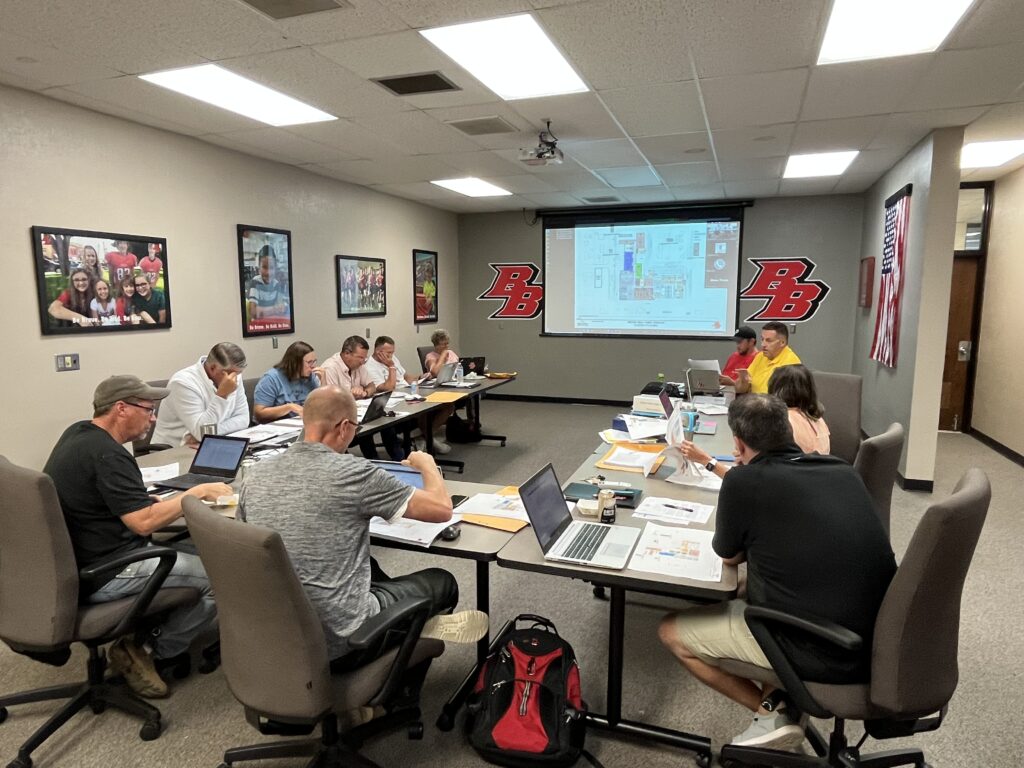
BROKEN BOW – At its July working meeting, the Broken Bow School Board unveiled designs for its ongoing high school renovation project.
The redesign comes after a roughly two-month percolation period for the board, wherein it turned over community input from 4 separate forums and a building tour, established a facilities committee to look at the question from all sides, and reconvened with architects, builders, and designers to examine how best to keep the project afloat within a two-year tsunami of rising costs.
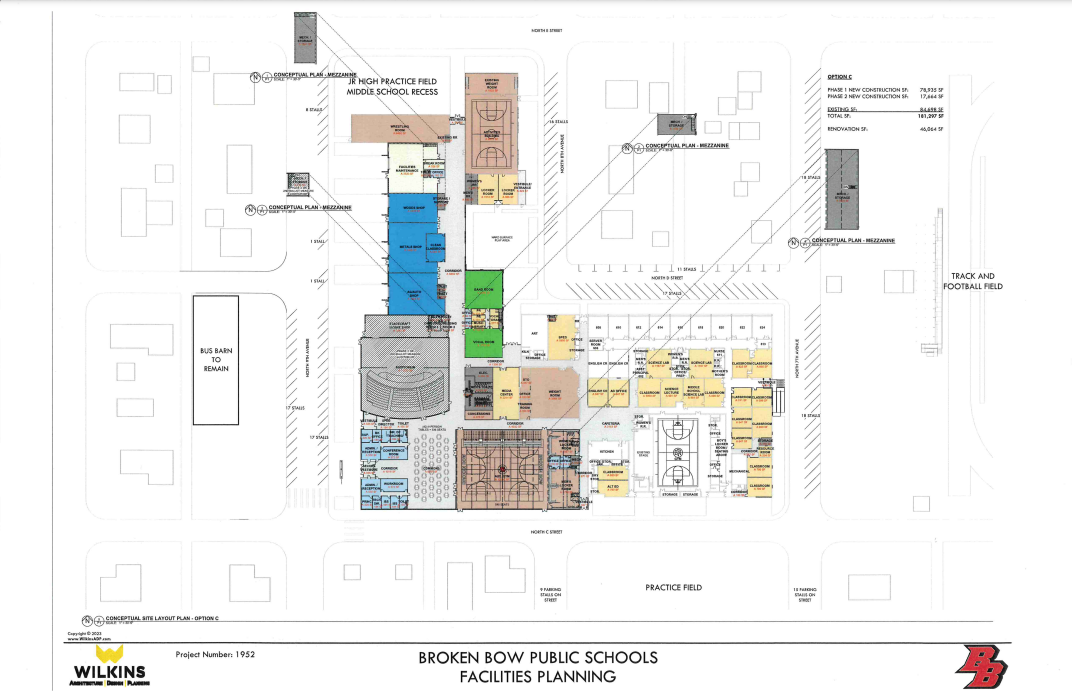
Broken Bow’s administration and school board have expressed a desire to act responsibly on behalf of 2 hugely important groups: its students and taxpayers. Ideally, according to the administration, the final cost of the new design would come in under the previously estimated $40 million mark without forfeiting any of the student body’s needs or wants.
The new design, a work in progress, so far could be mistaken for the 2021 effort’s little brother; not a total inaccuracy, architect Jacob Sertich says. One of the easiest compromises between saving taxpayer dollars without sacrificing facility needs is simply making everything a bit smaller.
“Minus the parking, all the pieces are still there, albeit a little smaller. The major program spaces are still there from 2021.”
The proposed auditorium is expected to seat between 400 and 500, roughly as many as the first floor of the current auditorium. The number is down from an original 600 or so in the 2021 design. Superintendent Darren Tobey said that a slightly smaller auditorium opens up greater possibilities for the reimagined common area, which would be large enough to accommodate 42 eight-person tables.
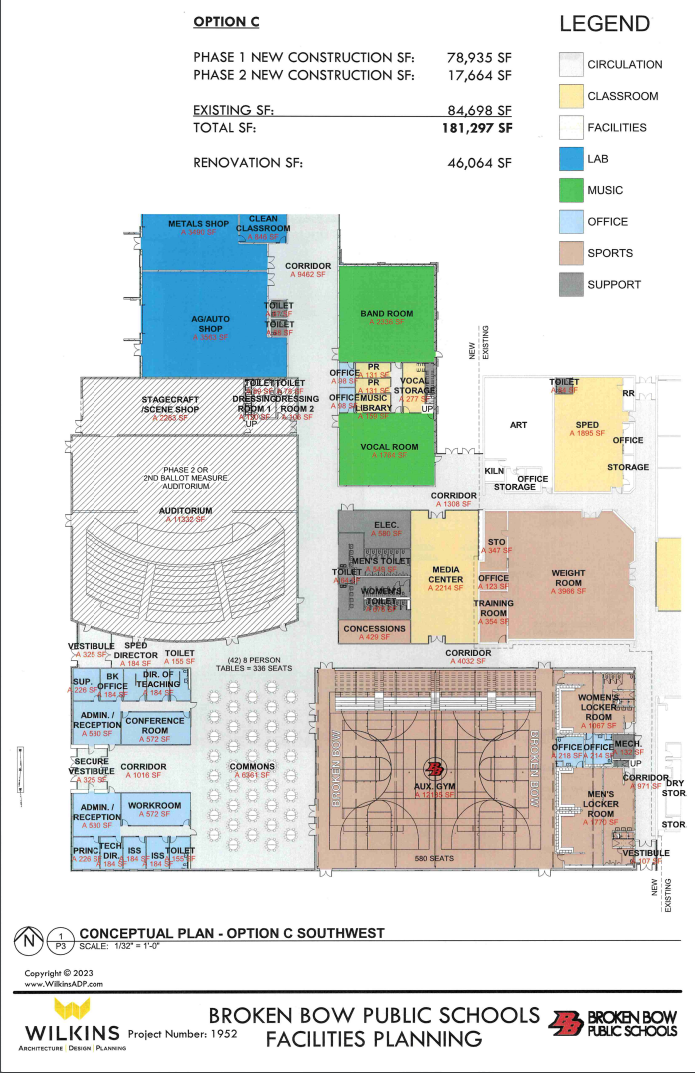
“My vision is that with the commons area, we could host all the events that we currently host at the hotel. We can have a meal at the tables, and then head directly into the auditorium. You think about booster club events, fall and spring awards, all those things we could do ourselves.”
The new auxiliary gym would have seating for 580 on only the north side and only 2 cross courts, down from the 2021 renovation’s 3, and the new designs for the career and technical education classrooms would split just over 9,300 square feet of space between the three branches of woods, metals, and ag and auto.
That isn’t to say that 2023’s plan is merely a scale model of the prior design; there are a few key alterations that architects and administration have implemented to reduce the cost of the project.
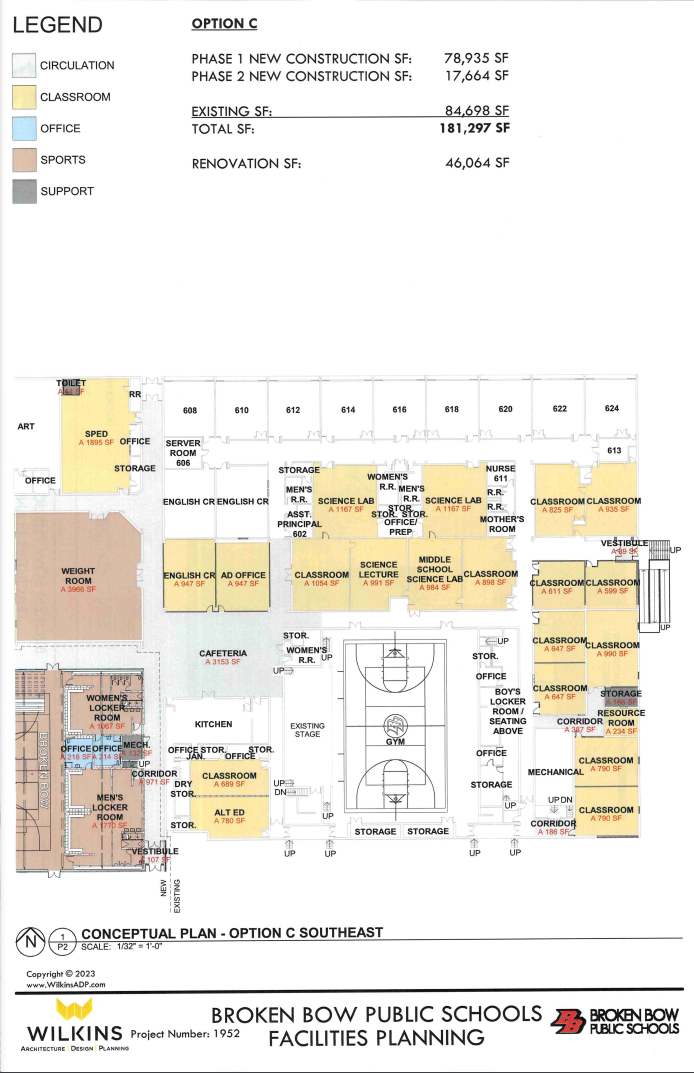
The most prominent comes in the form of the White Album-era science labs. Initially, the idea was to move the whole operation to the high school’s east wing; in the updated model, however, the science labs will remain where they currently stand but will reap the benefits of a total overhaul.
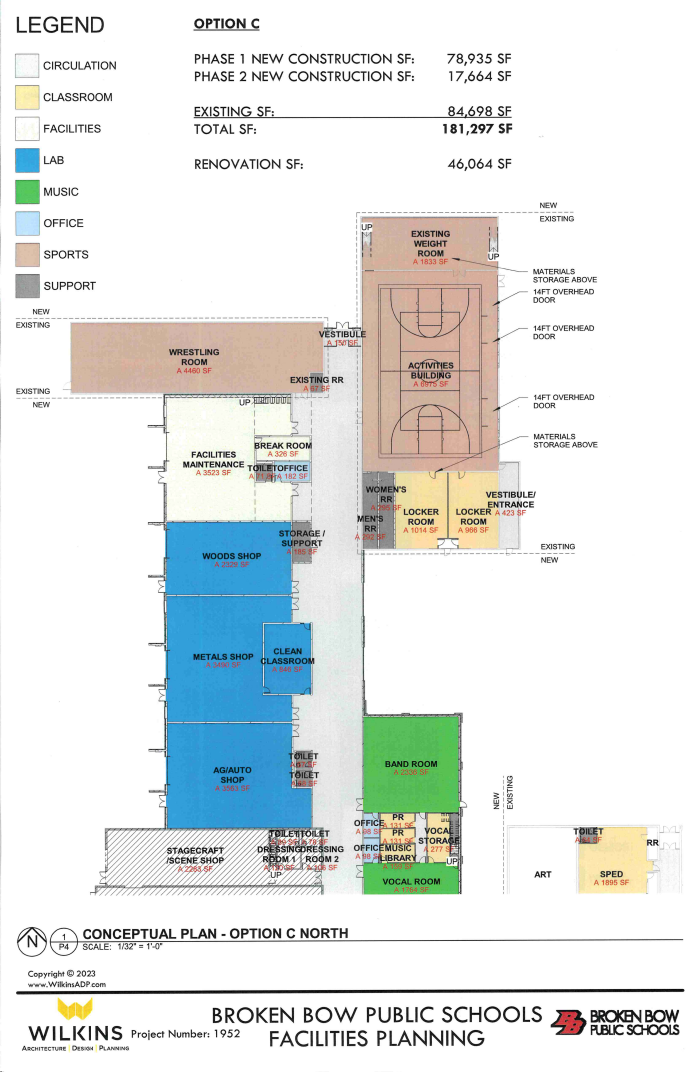
All told, the designs come in at $39.5 million, though are still actively being tweaked to shave even more money from the price tag. Board member Tim Chancellor has proposed consolidating the wood and stagecraft workshop, which could not only save a considerable amount of money but open up the auditorium for a few more rows of seating.
However, Chancellor acknowledged that any possible trimming to the current plan most likely wouldn’t amount to an overly substantial price drop.
“Whatever we do, we’re not going to sit here and pencil out a million dollars, or ten million.”
Treasurer J.B. Atkins agreed, citing the failure of the board’s most recent bond, and a now even more expensive project. The voters, Atkins said, have shown stout opposition to the possibility of a project that cost $10 million less.
“I think you’re going to anger some people, because they feel like they’ve spoken, and now you’re coming with a more expensive option, even though it’s scaled back.”
The proposed design, according to numbers crunched by the administration, could cost the average taxpayer around $44 a month, a tough sell when the board’s prior bond would have cost the taxpayer about $30 per month.
With the question of funding unsettled for the renovation, the board has not made any official decisions as to whether or not to run a bond or find some alternative funding sources.
With the possible implementation of LB 243, the school district would receive a boost courtesy of state education dollars, but it remains to be seen just if and how much would be allocated for the project. The board does expect to move forward in some way by its next meeting.