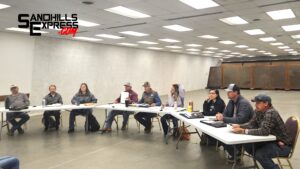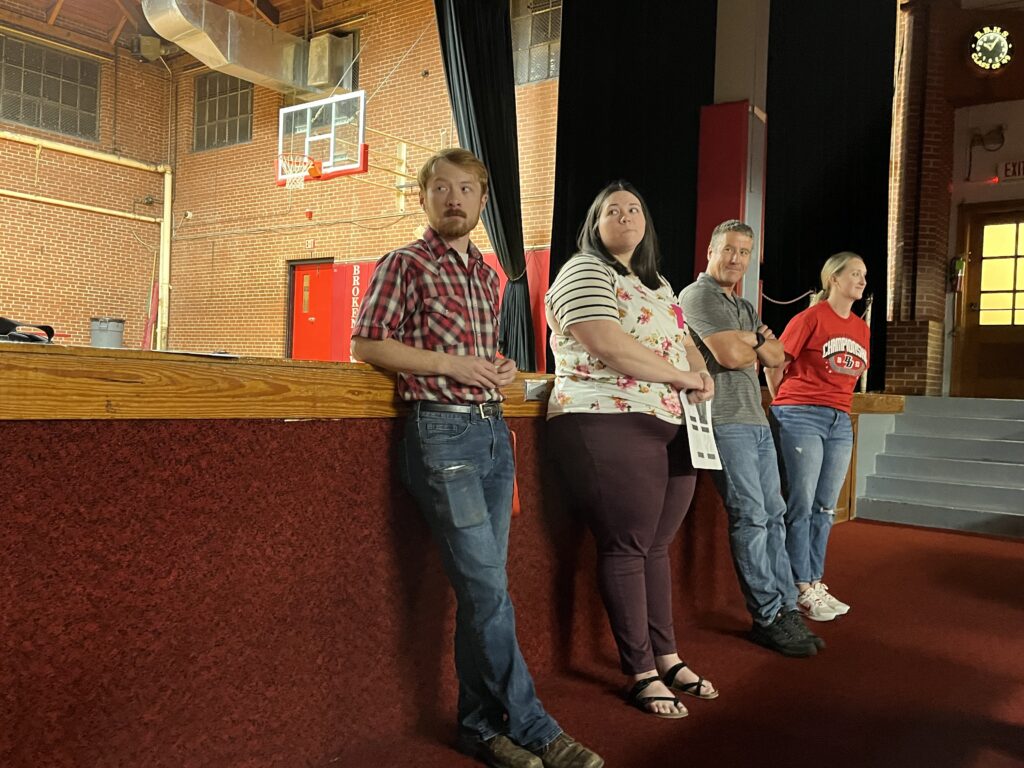
BROKEN BOW – For the 50 or so gathered for the 5-part facilities tour of Broken Bow’s ailing high school on Wednesday, seeing might be disbelieving.
The crowd of community members and alums as far back as the school’s disco days, marveled not so much at the current condition of Broken Bow’s science labs, technical education, fine arts, and athletic spaces, but rather at how little had changed.

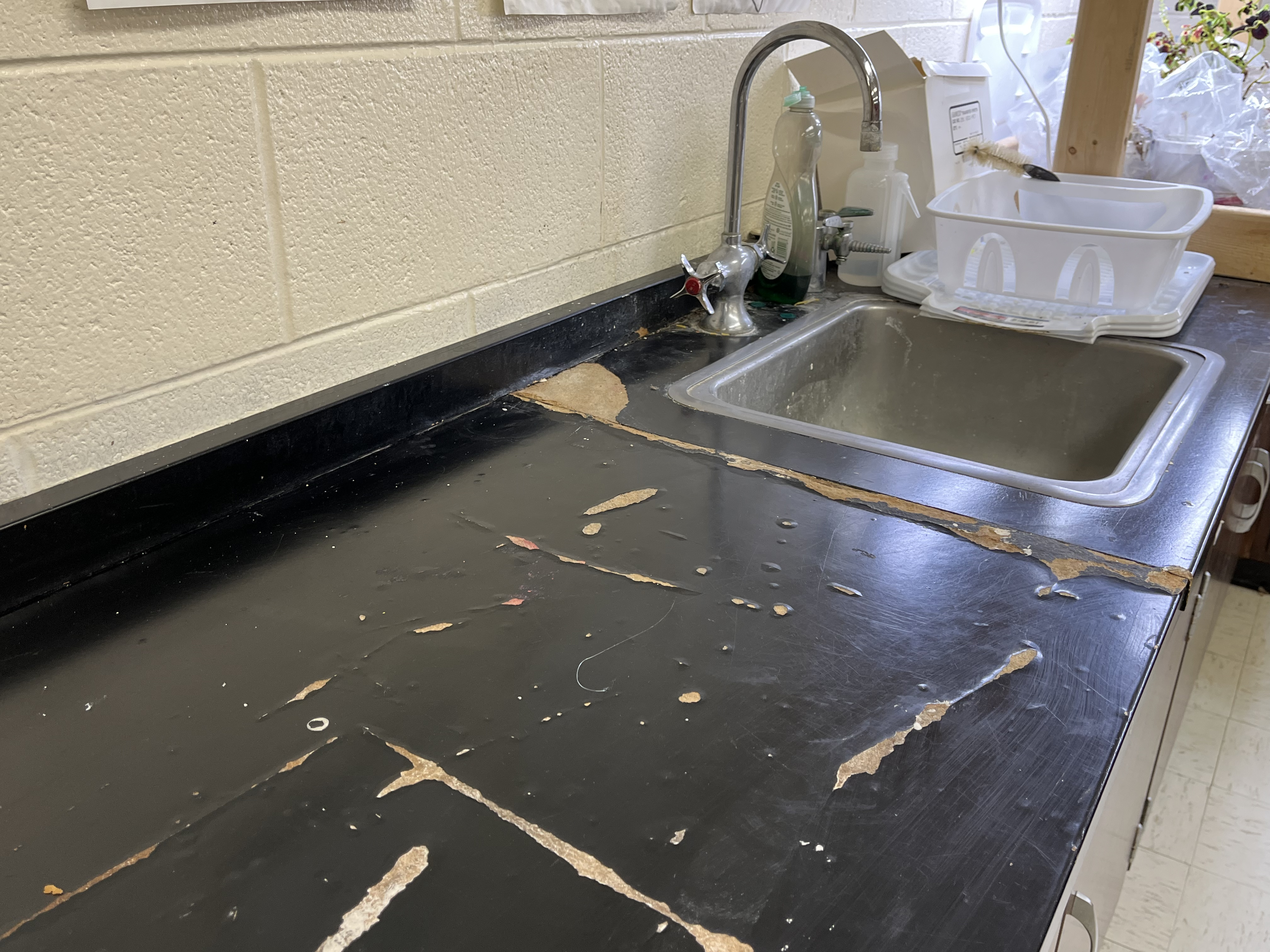
Students from all decades pointed to corners of stone lab tables mottled and scarred by chemicals, a center stage frayed to splinters, and a welding workshop and locker rooms with ventilation to rival the Red October, and said with the confidence of a time traveler: “I was there.”
As High School Science Teacher Suzie Smith leads the group past a closet heaped with ominously-labeled bottles and dark cupboards full of untouched test tubes like stalagmites, she says that a lack of proper storage only amplifies safety hazards for her students.
“There’s stuff everywhere because I don’t have room for it. The stuff I absolutely cannot leave out I put in here, which is definitely not standard chemical storage.”
Additionally, she says, her corrosive and flammable chemical safe had been mishandled, and part of its metal door and frame had been eaten away.
Smith, who teaches earth science, chemistry, and physics to roughly 150 students a day, fits 28 at a time in her lab; there are only 5 available tables and between them all, one or two may be in complete working order. Most of them have trouble with some combination of electricity, water, or gas.
Below: Smith demonstrates the difficulty with the emergency gas shutoff in her lab.
The science labs are towards the interior of the school, which means natural light and proper ventilation are total pipe dreams. Smith says that because of her rooms’ placement, certain lessons are an impossibility, and safety is further compromised.
“There are a lot of things that we can’t, or won’t do, simply because we don’t have any ventilation. If kids get enough chemicals on them and require a safety shower, I have to rush them down to the locker rooms, and you know how far those are. At that point, the chemicals would be on them for a long time.”
In Broken Bow’s career and technical education wing, Caleb tenBensel, High School Ag Teacher, has similar headaches, both about his space and how it’s ventilated. He says that in addition to an 18% increase in enrollment for his programs, 100 students are taking electives in his classroom, and he’s simply run out of real estate.
“What we have to do is merge into my office, or into the spare room just so we have enough space, for those kids to work, so we’re not packed in here like sardines.”
The CTE spaces are part of the original building, and it shows; tenBensel points to cracked floors, leaking walls, and a hole just above one of the tables where a ceiling tile recently decided to plummet.
Out back, the metal storage shed has slouched so severely that its door can no longer do its job, thus leaving valuable student resources vulnerable to rust. tenBensel’s automotive lab currently has space for a single Ford Taurus; the remainder is taken up by the school’s recycling.
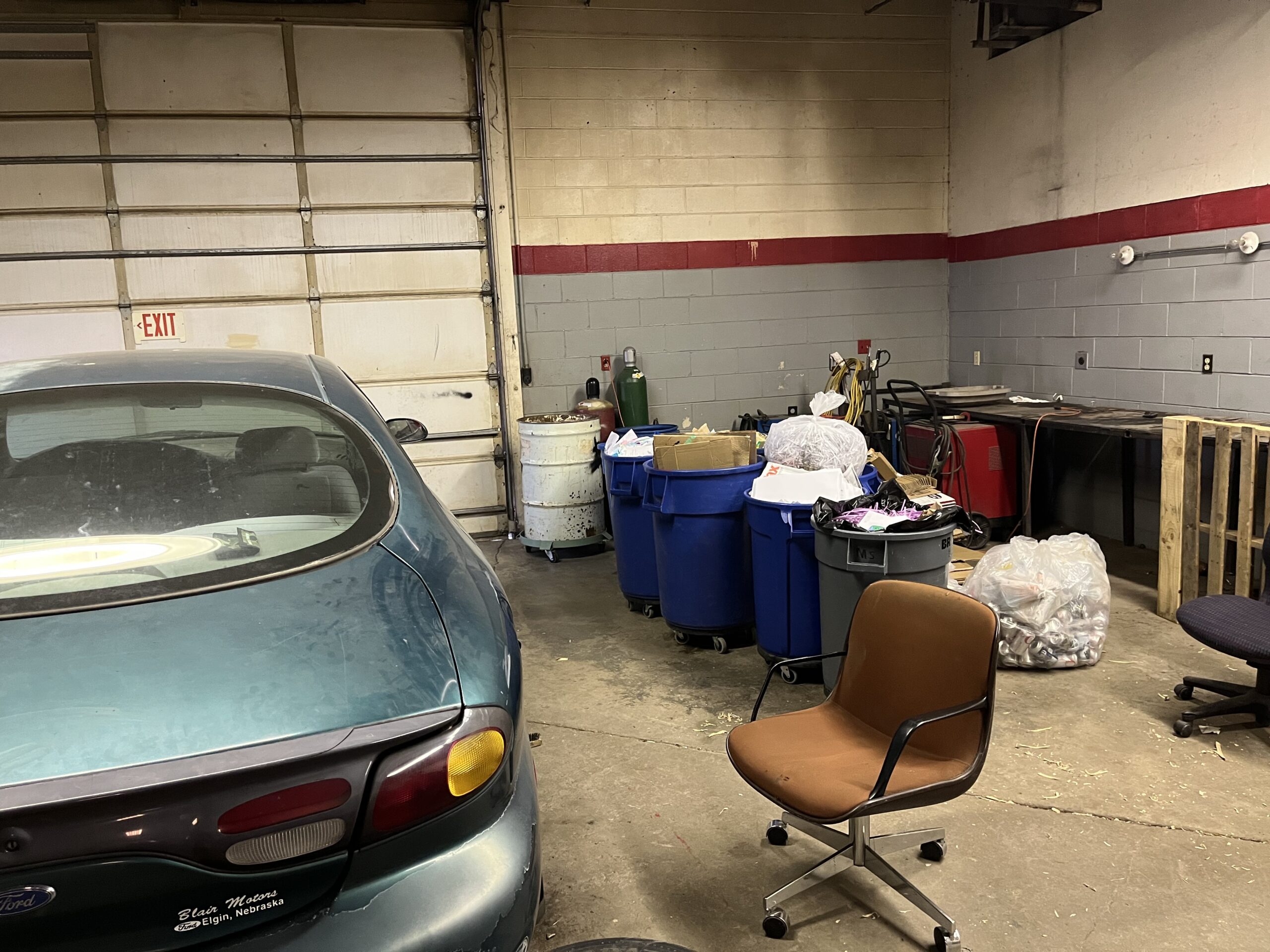
tenBensel teaches all manner of career sciences, from agriculture to welding to food safety, and says that teaching it all together is one thing, but housing it all together is another.
He draws the group deeper, from his classroom to a semi-open area with two stoves, lovingly called the “kitchen.” Through an open partition, the group stares directly into the 11 booths of the welding room.
“The problem with considering this a kitchen is whenever you’re doing welding over there, the dust, the fumes, the grime, is drifting into here. It’s not an enclosed area.”
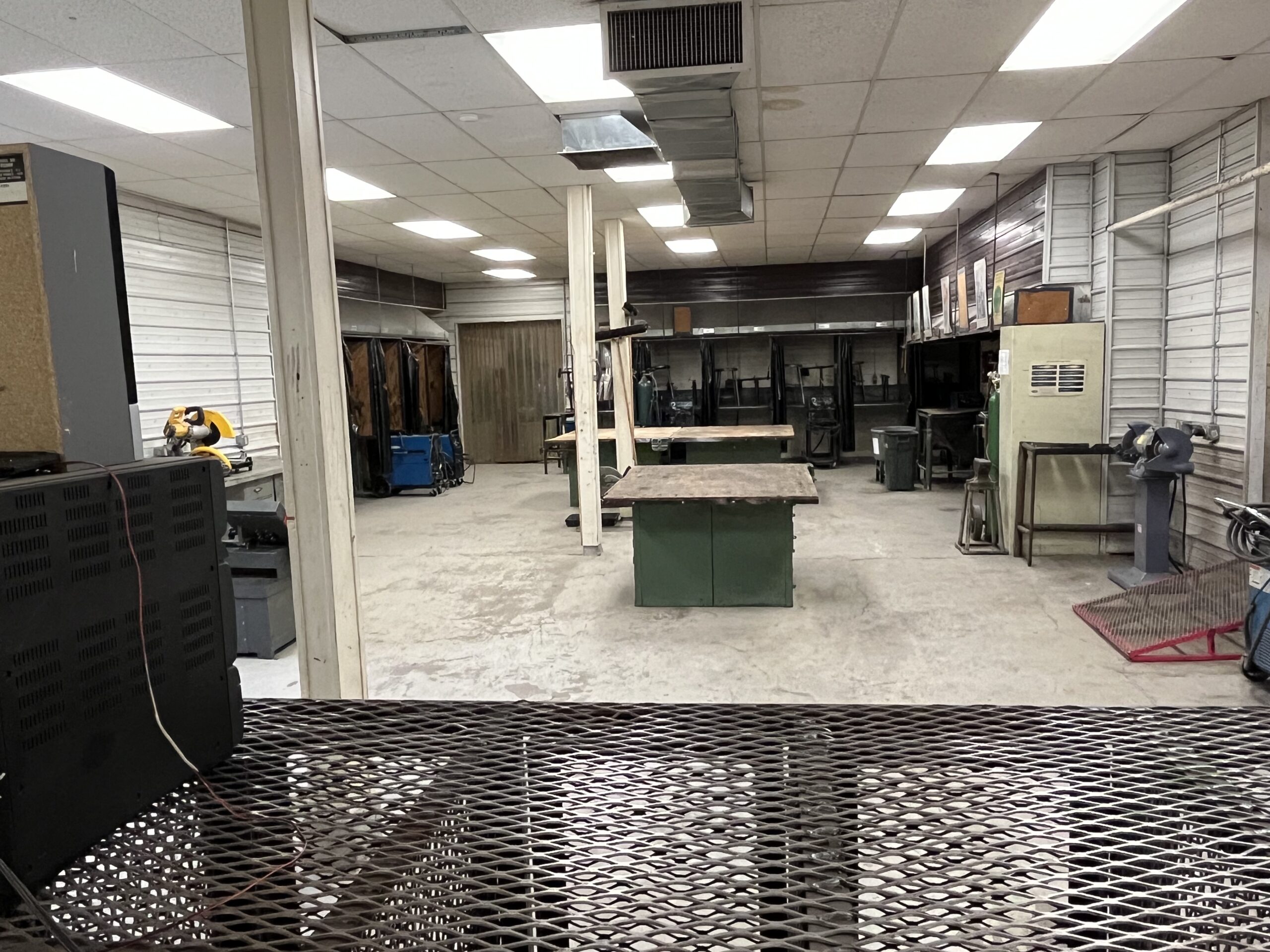
tenBensel says that despite rigorous sanitation, nothing about the setup could be considered truly safe for food preparation.
His welding facility is decently sized, he says; but tenBensel, like his neighboring scientist, worries for student safety due to lack of air circulation.
“When you get kids stick welding, which produces a lot of fumes, you will see a cloud of smoke emerge and flood the classroom, even when the vents are on. I wear a mask some days, and I encourage my students to do the same.”
As far as that ventilation goes, Director of Operations Jim Zlomke says as he brings the group to the school’s underbelly, that the high school’s current layout is as mazelike as wandering unknown halls.
“We don’t have a cohesive plan on how everything works together.”
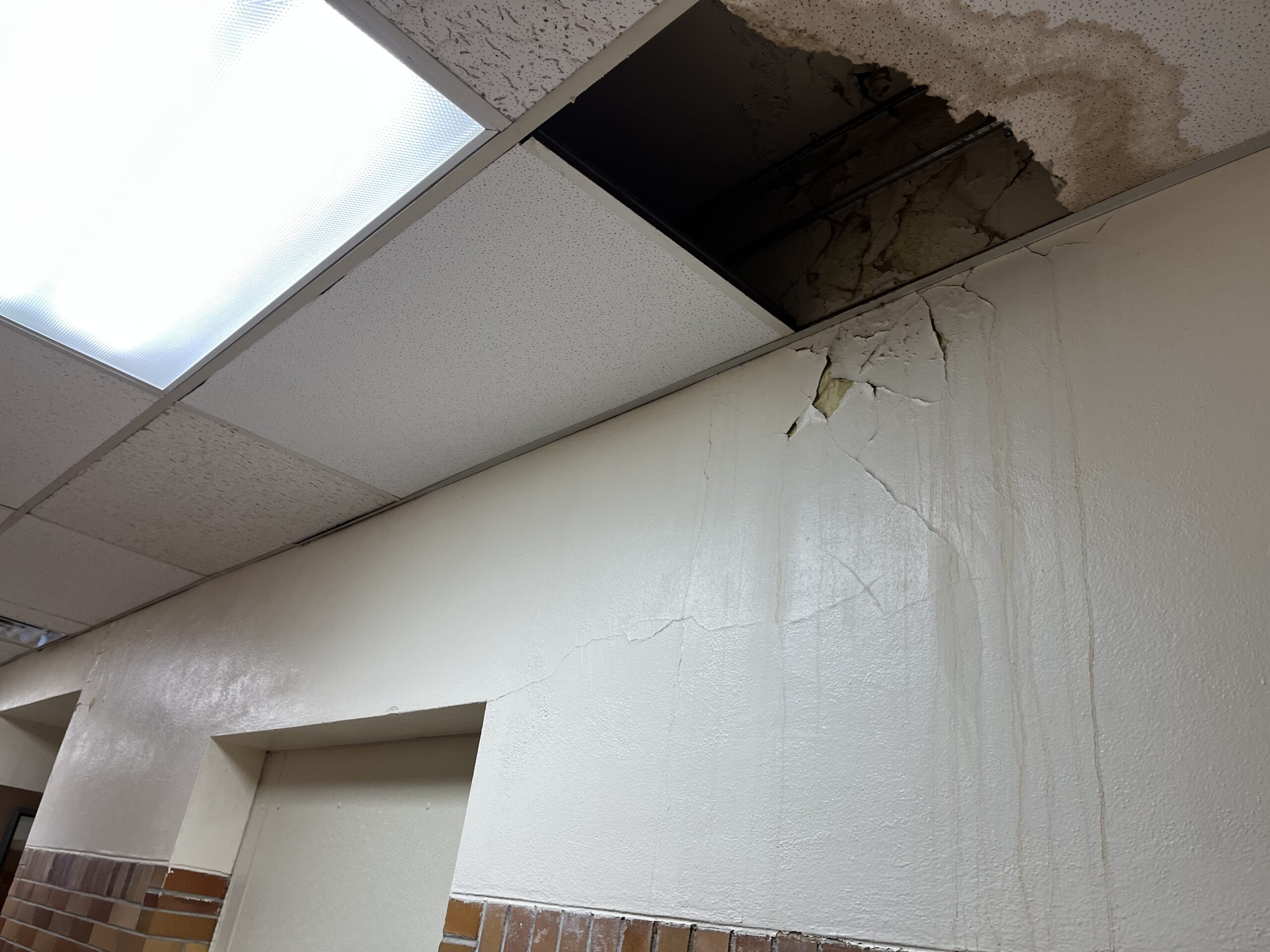
Pieces of the HVAC system, according to Zlomke, had been installed, replaced, or updated as needs arose, which have been many since the building’s late-1960s construction; curiously enough, though, the cafeteria remains without air conditioning, and uncomfortably high CO2 levels are a common refrain heard from regular air quality assessments.
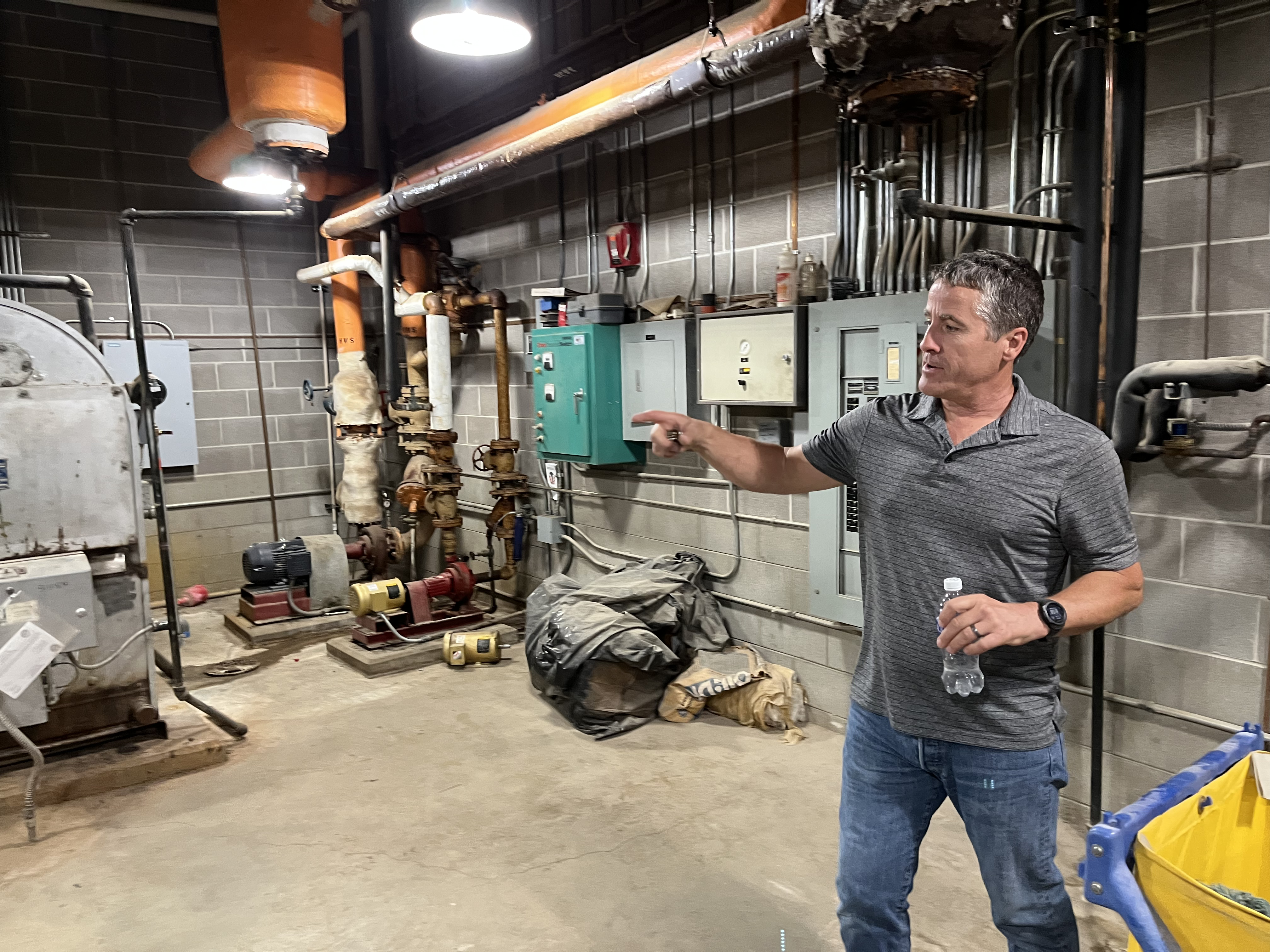
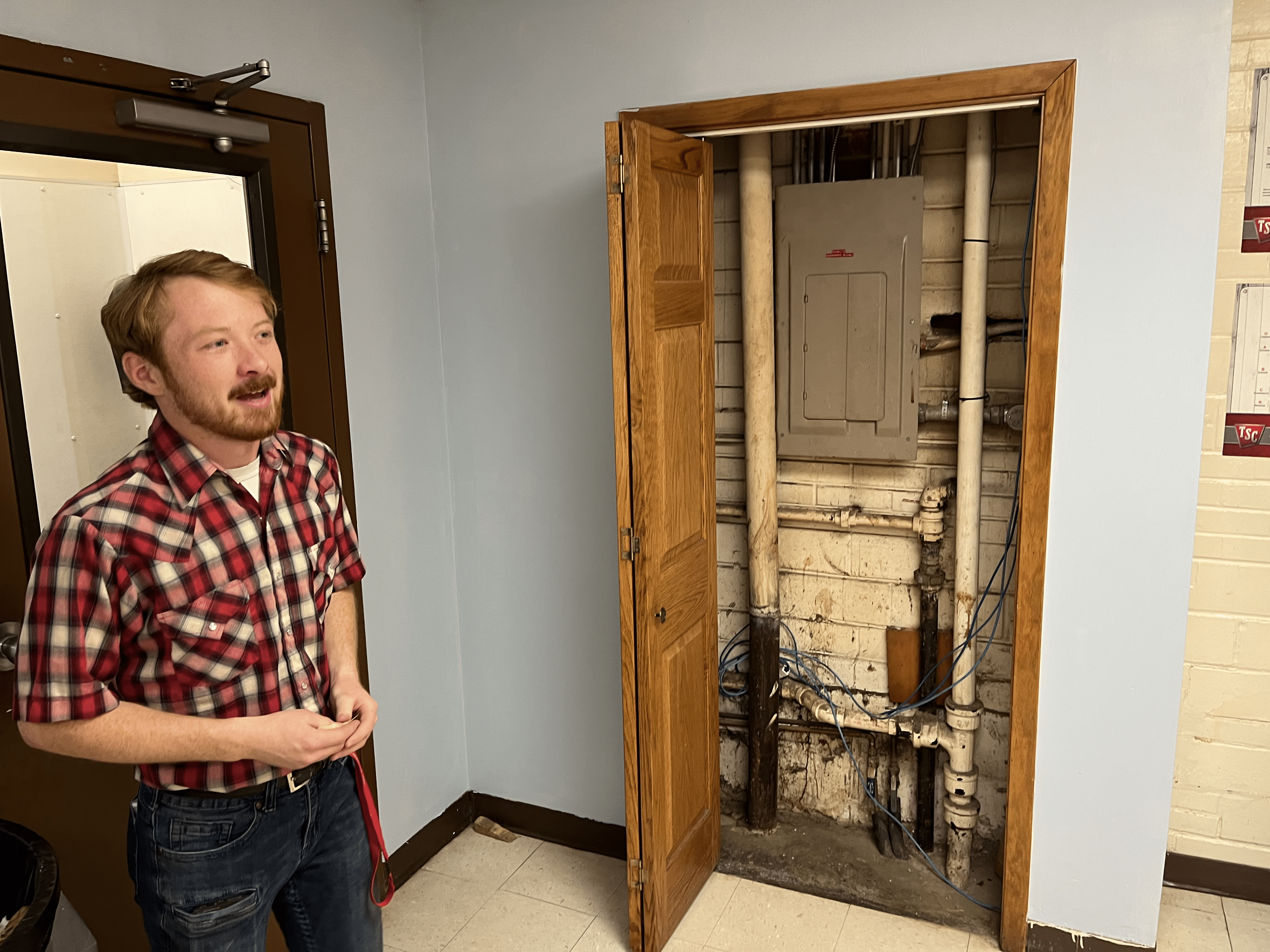
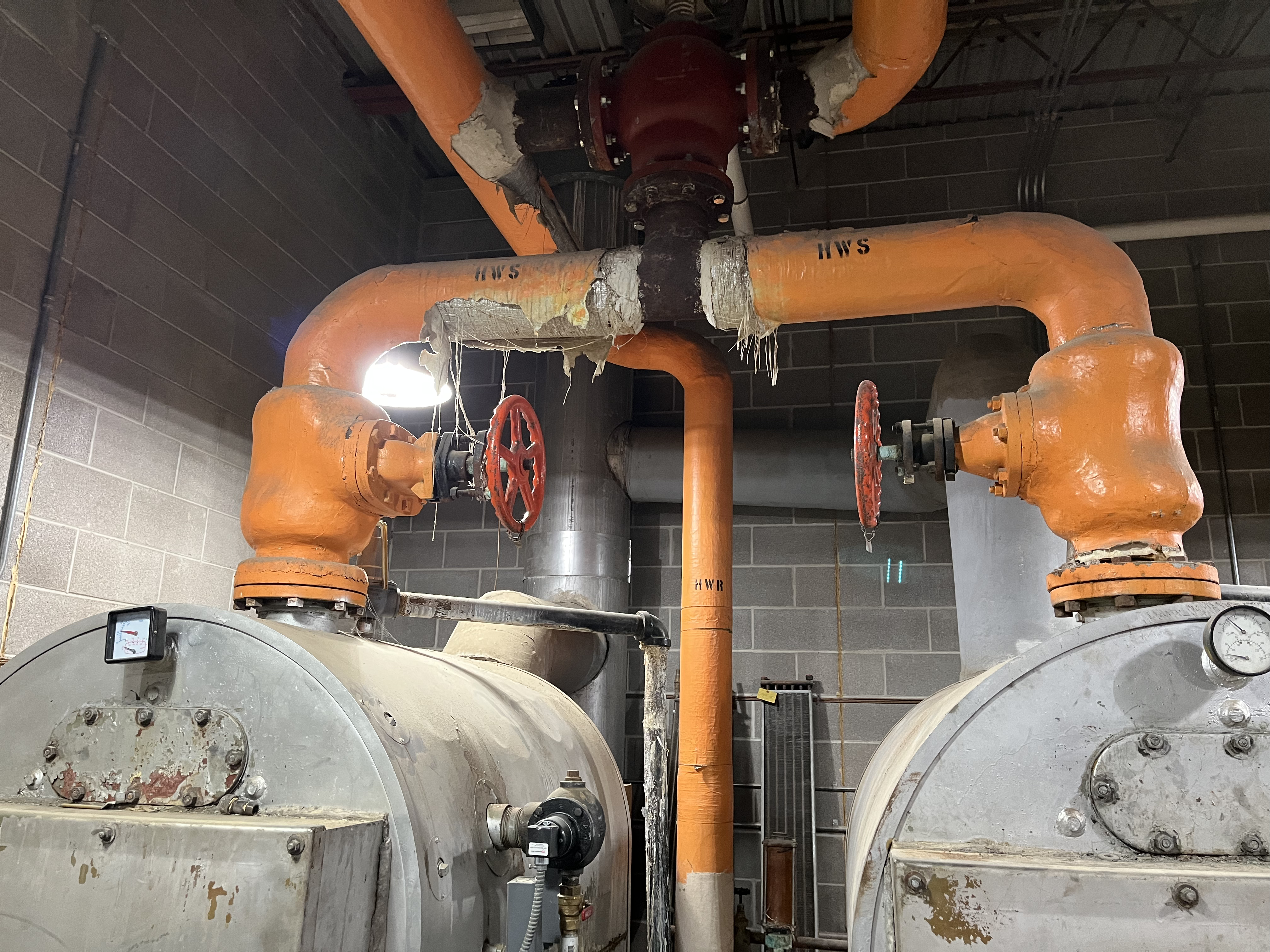
In the basement, Zlomke flicks the lights on two massive, perpetually humming boilers and a water heater as old as the school itself, and waves to the painted orange insulation.
“As you can see, up there around the fittings, is asbestos, which is okay, as long as we don’t rub it, or scratch it, or chip it.”
Zlomke, with the help of the recent HVAC evaluation commissioned by the school, estimates a complete overhaul of the current system would run about $2 million.
In the choir room, Middle and High School Vocal Music Teacher Morgan Harms cites a lack of any real dedicated space for her programs’ woes. She has 2 practice rooms that can house 3 or 4 students at a time; however, as is the theme for Broken Bow staff, these rooms also serve as storage spaces.
With her stage doubling as the middle school gym, expensive instruments and delicate set pieces for music and play productions must be hauled to and from the auditorium between rehearsals.
Even the more static pieces of her department have been dealt damage over time.
“I have had lots of slivers; I almost had a light burst on my head during the pre-contest concert. Our curtain is broken; it is ripped. To fix it is a $2,000, if not a $3,000 expense.”
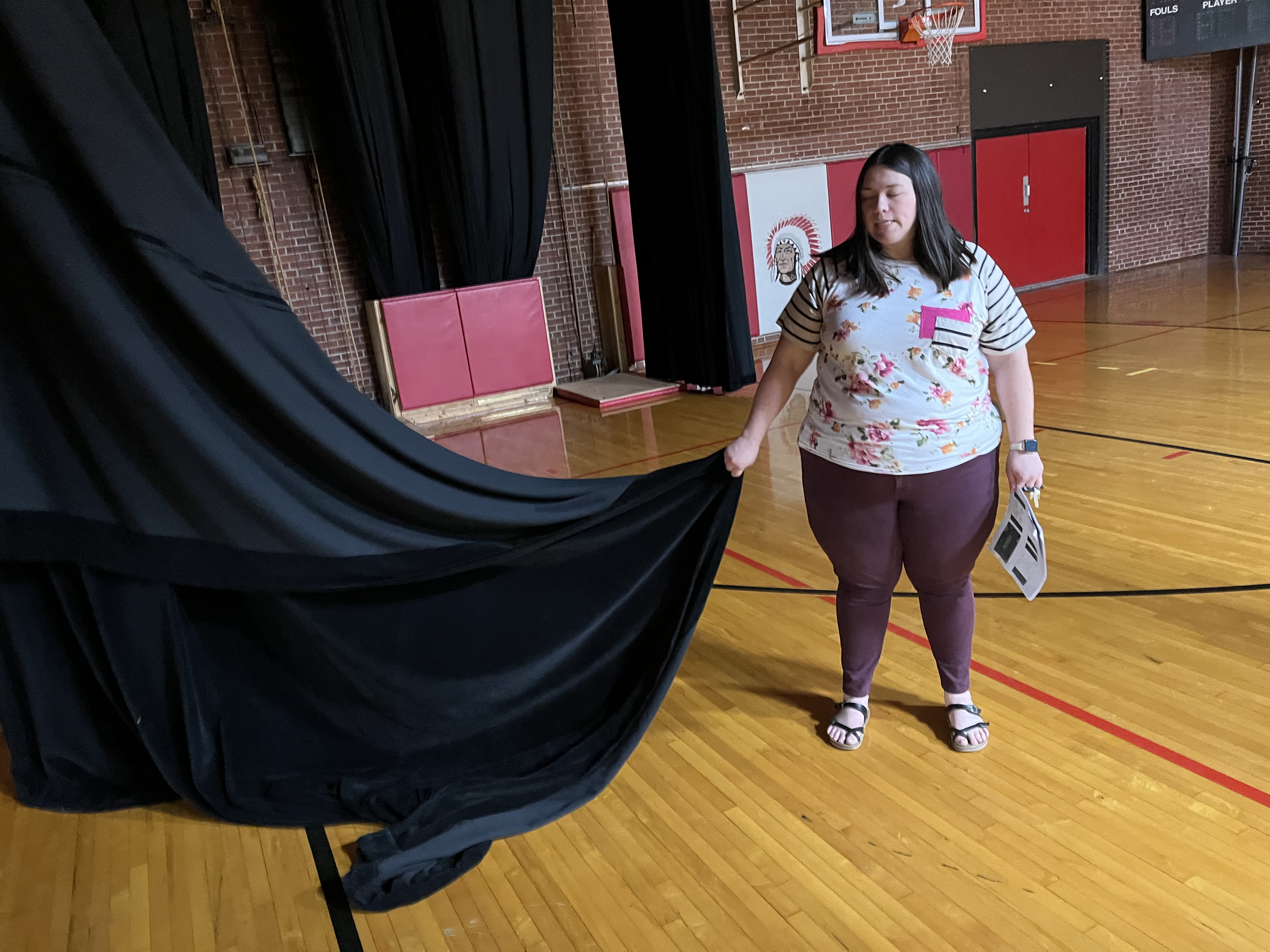
Replacing the whole curtain system, Harms said, could run up to $45,000. Other problems facing Broken Bow’s performing arts include a spotty sound system due to outdated, near-fried technology, and a balcony that is fundamentally dangerous, stopping well short of an adult’s waist.
Assistant Principal and Activities Director Jeff Ellis, in shuttling the group from one gym to another, says that the quality of the school’s athletic facilities is misleading; improvements to the gym floor, its scoreboard, and wall mats have all been made possible by the school’s athletic booster club.
What the booster club hasn’t funded are the necessities for athletic health: the locker rooms, the showers, and perhaps most importantly, Ellis says, medical facilities.
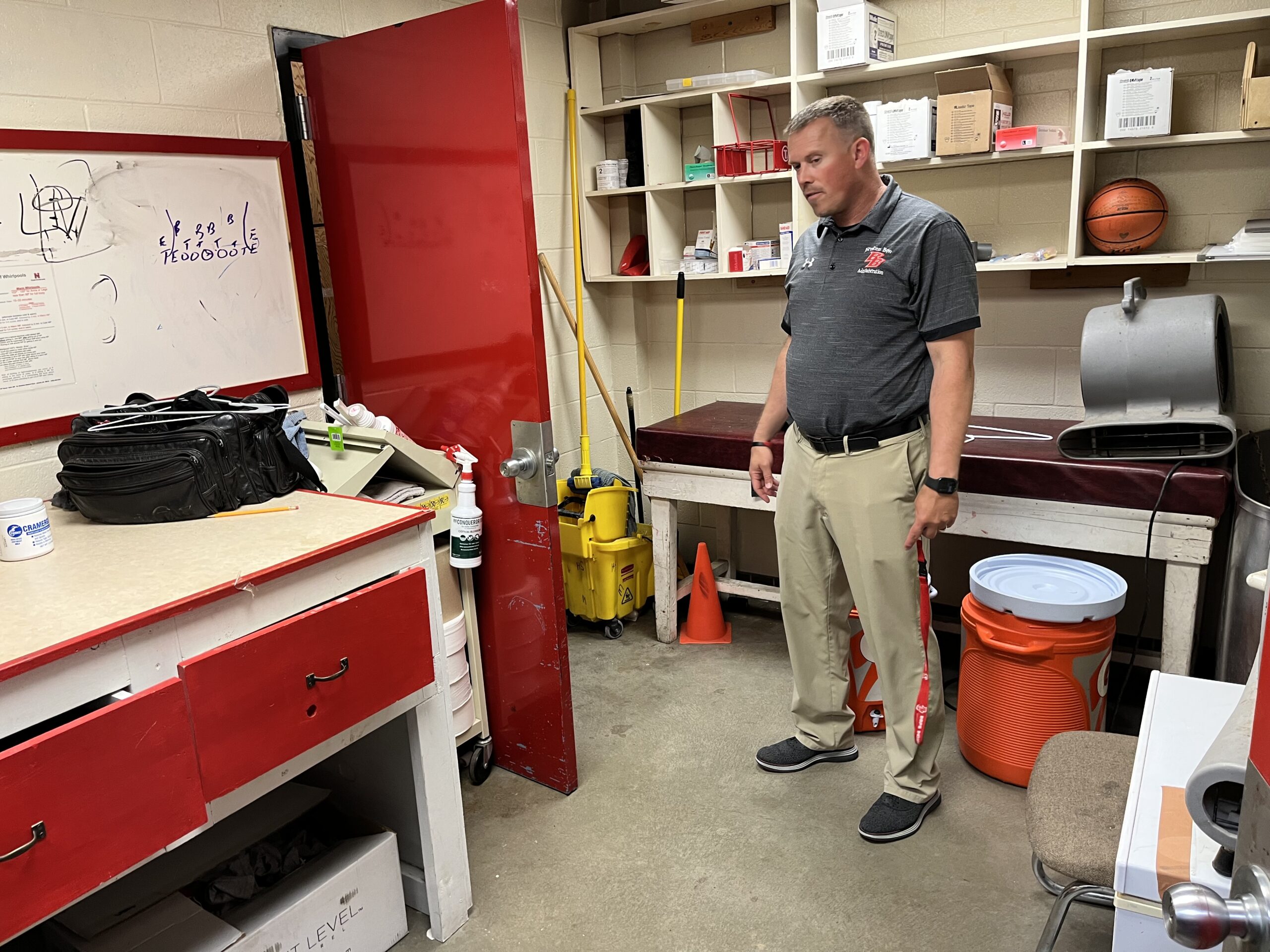
“One thing we lack is a proper training room, to really address injuries, tape ankles, wrists. We have a lot of outside support from doctors at the hospital, but it would be nice if we could support them, too.”
The locker rooms are narrow and cramped with impossibly small lockers, and despite a skeleton of ductwork overhead, seem always to smell damp. The boys’ locker room has only one urinal. All this pales in comparison, Ellis says, to how visiting teams are treated.
“We put them in the middle school locker rooms, and those are our worst facilities; we’re not very gracious hosts to our opponents.”
Those locker rooms, Ellis says, are without hot water entirely.
Questions still hover over the school’s facilities moving forward. Groups returning to the middle school auditorium brought back their own priorities for the future of Broken Bow’s school, with some emphasizing academic infrastructure above all, others stressing the need for safety, and still others expressing concerns about the more practical things: parking, sustainable growth, and available land for expansion.
However, it seemed Broken Bow did reach one consensus from the hour–long walkthrough: nobody wants to see the same school again in 60 years.