(NEW YORK) — Prior to this year, Dr. John Goldman said he’d only seen two cases of measles throughout his career: one in the late 1980s and one in the early 1990s.
Now, Goldman said measles patients are being admitted to the hospital on a regular basis.
“We’ve had patients that have shown up in our outpatient offices. We’ve had patients show up in the hospital. We’ve had patients that have come in for other problems and then develop measles while they’re in the hospital,” Goldman, an infectious disease specialist for the University of Pittsburgh Medical Center in central Pennsylvania, told ABC News.
He went on, “So, we’ve gone from seeing this as an extremely rare disease, one that I literally have not seen in 30 years, to something that is now common, where we’re seeing it literally every day.”
Pennsylvania is facing one of its worst measles outbreaks in recent years, recording 693 cases so far this year with 133 hospitalizations, according to the state department of health.
The epicenter of the outbreak is in Lancaster County, in southeastern Pennsylvania, with 296 cases reported.
At least four measles deaths have been confirmed by the Pennsylvania Department of Health, which is the highest number of deaths recorded in the U.S. since 1992.
‘Almost certainly underestimating cases’
Goldman, who supports about seven hospitals in the greater Harrisburg area, said UPMC Lititz in Lancaster County has had about 50 measles patients this year.
However, he believes the number of cases, both in Lancaster County and in Pennsylvania overall, is an undercount.
“The worst part is we’re almost certainly underestimating the cases,” Goldman said. “What often happens is someone shows up in the emergency room or shows up in the hospital, and they’ll report that they have five or six people at home who were sick with what they think is measles … so we don’t test everybody.”
Dr. Patrick Gavigan, a pediatric infectious disease physician at Penn State Health Golisano Children’s Hospital in Dauphin County, which borders epicenter Lancaster County, said about 10 children have been admitted to the hospital with complications from measles in 2026.
Similarly, Gavigan said most of the children admitted to the hospital with measles came from families where everyone was previously sick with the disease.
“I would say fever, rash and respiratory distress are probably the most common [symptoms],” he told ABC News. “We’ve seen some more like gastrointestinal symptoms with some of our cases as well, including like hepatitis.”
Most of the children are unvaccinated and have come from communities that “don’t vaccinate,” Gavigan said.
He added that hospitals are getting more calls each week about patients infected with measles.
Increasing interest in vaccination
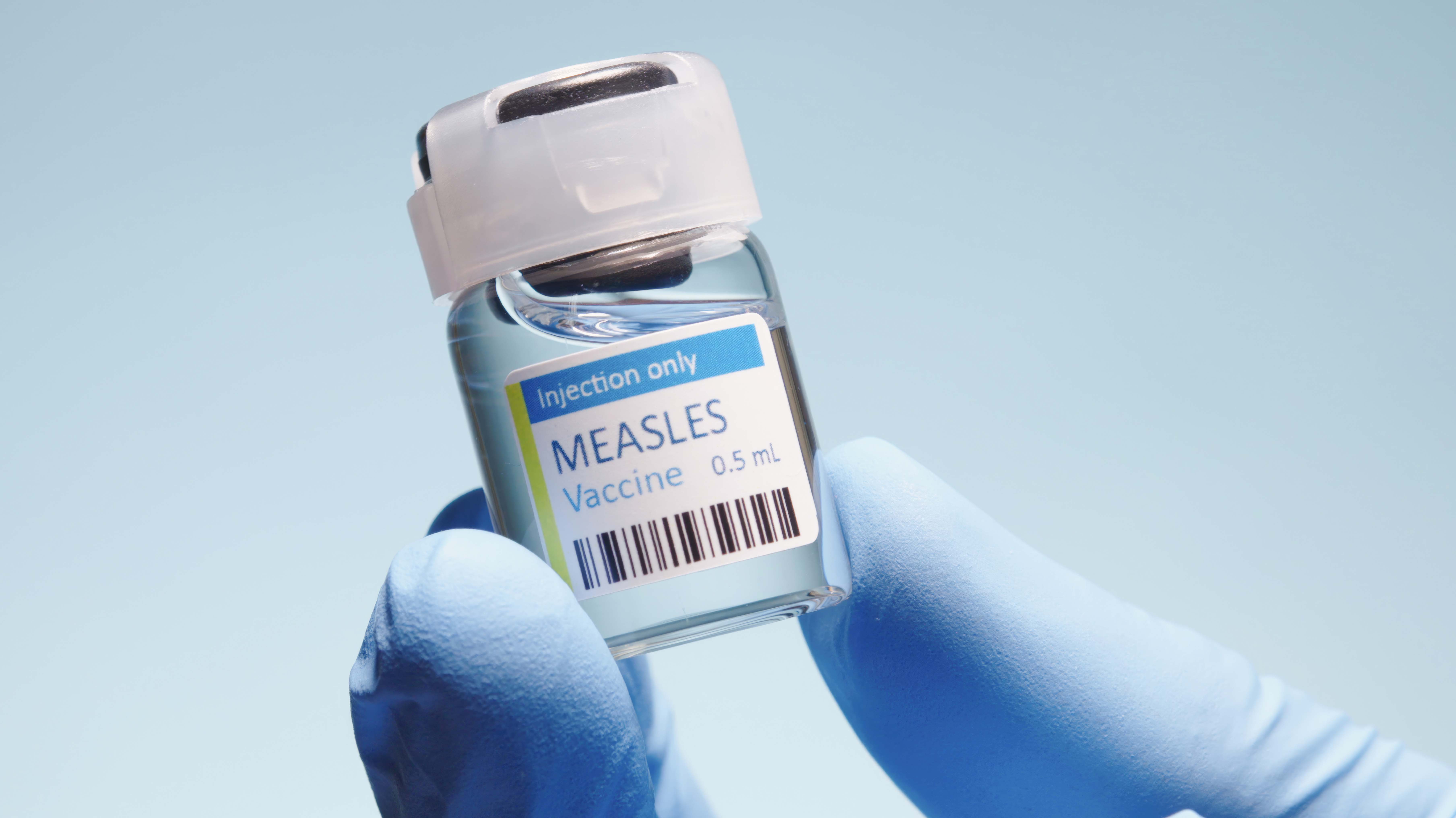
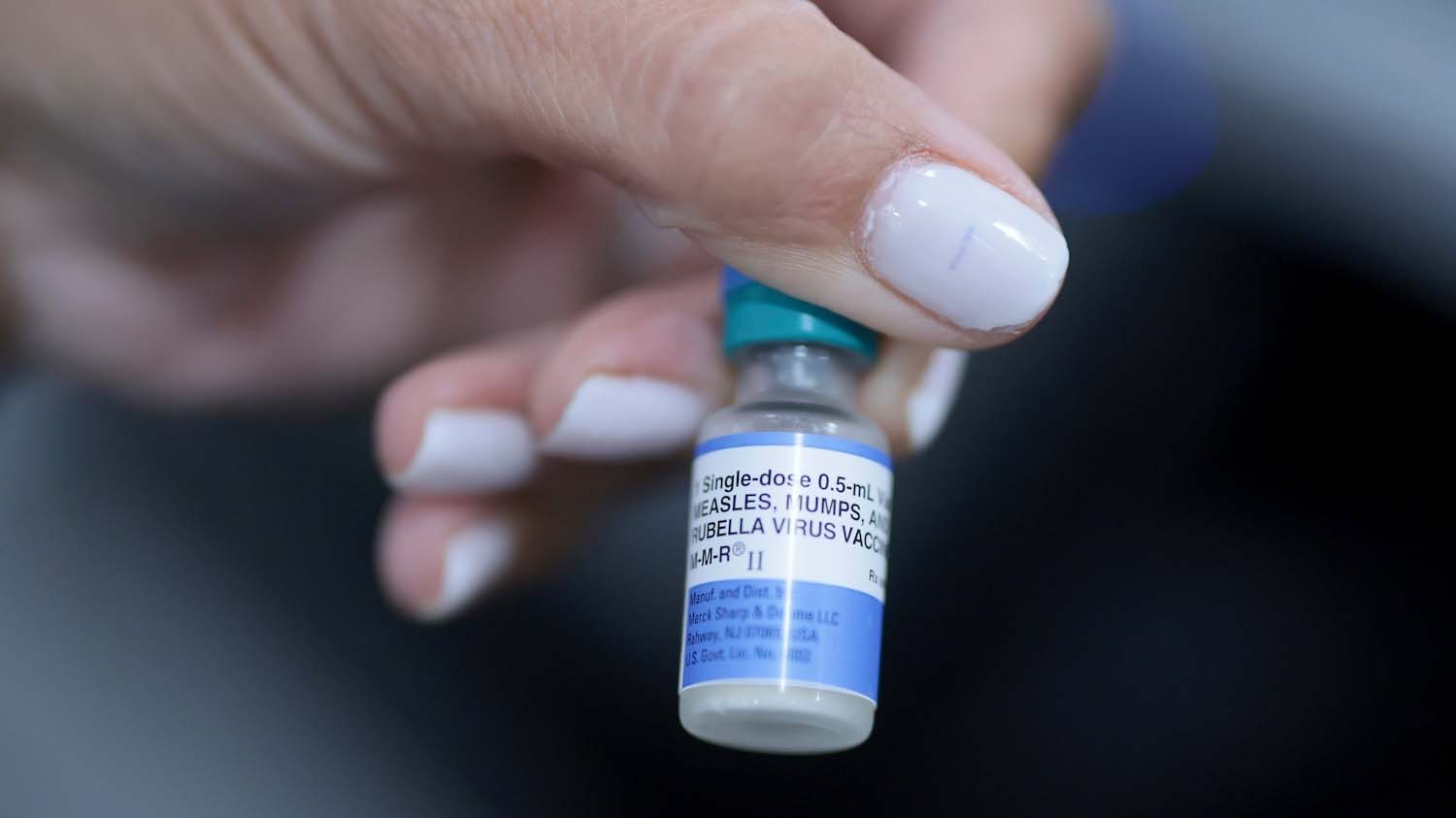
The CDC currently recommends two doses of the measles, mumps, rubella (MMR) vaccine, the first between ages 12 and 15 months and the second between ages 4 and 6. One dose is 93% effective, and two doses are 97% effective against measles, the CDC says.
Data from the Pennsylvania Department of Health shows that 6,725 MMR doses have been administered by health department staff in 2026. Fewer than 1,000 doses were administered each month from January through July but August saw about 3,500 doses administered.
This correlates with a spike in measles cases recorded in August, according to health department data.
The doctors told ABC News there has been an increase in MMR vaccinations at their respective hospitals.
“Talking with our general pediatricians, I think there has been [an] increased desire to get MMR even potentially in some people who aren’t getting other vaccines,” said Gavigan.
Gavigan said pediatricians in the area have also been answering questions from parents about whether their child should get an early third dose.
The CDC said early vaccination for infants living in outbreak areas. This would result in three doses overall: an early dose between age 6 months and 11 months and then the two regularly scheduled doses.
“I think there is definitely more of a perceived threat based on people hearing about all the cases and hearing about cases nearby and potentially even getting letters that they’ve been exposed to measles when they’ve been at the hospital or various places,” Gavigan said.
Local communities have also been offering opportunities to get vaccinated.
In Chester County, which also borders Lancaster and 65 confirmed measles cases, the county government has hosted free MMR clinics for children and adults, some in conjunction with the state health department.
Jeanne Franklin, public health director of the Chester County Health Department, told ABC News that local health care professionals have gone into people’s homes or businesses to vaccinate them with the MMR shot.
“We basically just said, ‘We’ve got to do some at-home vaccinations,'” Franklin explained. “It’s not an everyday type of service … but we’re doing it now and that has been a huge success.”
And some individuals say they’re more comfortable receiving the vaccine at home, she noted.
As of Monday, the Chester County Public Health Department has administered 538 MMR doses, according to Franklin.
The ChildProtect program at Penn Medicine Lancaster General Health has continued to provide free vaccinations for uninsured children in Lancaster County usually at in remote, rural areas.
Goldman said he and colleagues have seen an increase in people visiting UPMC hospitals and clinics for the MMR vaccine, particularly since the measles outbreak began.
Some UPMC staff have partnered with healthcare providers in communities with lower vaccination rates and have offered the vaccine in those areas, Goldman said.
Goldman said he’s heard anecdotally about cases of “semi-clandestine vaccination,” meaning people receiving the MMR vaccine without telling their friends, family or neighbors.
“Neighbors might judge them, or they’re in communities which discourage vaccination, and so they sometimes don’t want to know, let their friends or neighbors know that they’ve been vaccinated,” Goldman said.
More ‘aggressive’ screening
Goldman said UPMC hospitals and clinics are beginning to more aggressively screen people who arrive with measles-like symptoms so other patients aren’t exposed.
This includes patients with symptoms including rash, fever, cough and conjunctivitis, also known as pink eye.
“The problem is that there are some people who will just have a fever and we later find they test positive for measles,” Goldman said. “It will surprise me if we can catch every case.”
avigan said Golisano Children’s Hospital has put signage outside the hospital to increase awareness that there’s a measles outbreak in the hopes of identifying potentially infected patients.
“It’s essentially a sign that lists common symptoms, asks if you’ve been exposed and, if you have, to call into the hospital where they could triage you over the phone so that you’re not sitting in a waiting area potentially spreading measles,” Gavigan said.
Penn Medicine said signs are displayed outside hospitals and some outpatient offices requesting certain individuals to call for guidance before entering, including those who are not vaccinated or have measles symptoms.
Spreading awareness
Penn Medicine said two pediatricians in its Lancaster facilities wrote a series of op-eds for their local newspaper explaining how vaccine-preventable diseases can be dangerous and how vaccines protect both the recipient and those around them.
The two pediatricians said some of the patients have brought printed copies of the articles to discuss at appointments.
Gavigan said he occasionally meets children in clinic who are unvaccinated — not just against measles — and he using this as an opportunity to talk about the importance of vaccination.
“We’ve had lots of, I think, different conversations about the MMR vaccine in different populations,” he said. “It does seem like there has been, at least anecdotally, more willingness to think about vaccines in general and MMR.”
Franklin, from Chester County, said members of the public health department have gone into various communities to meet residents and assess where they are in terms of their knowledge on the disease or vaccination.
“If they think they want the vaccine, then we’re focusing on the vaccine,” Franklin said. “If nobody has talked to these folks, then, we’re going to start at the beginning: ‘What is measles? What does it look like? How does it impact you, et cetera?’ And then we’ll get to the vaccine.”
She added, “If we’re not hitting the right avenues and meeting them where they are at the start, they’re not hearing it, and it’s no fault of their own. So we meet them where they’re at in their understanding.”
Copyright © 2026, ABC Audio. All rights reserved.