Lincoln, NE – The Nebraska Department of Health and Human Services (DHHS) is reporting detections of Heartland (HRTV) and Bourbon (BRBV) viruses in Nebraska. To date, no human cases of HRTV or BRBV have been reported in Nebraska residents.
DHHS started testing tick collections for HRTV and BRBV in 2024. One HRTV-positive tick pool was detected from a Richardson County collection in the 2025 surveillance season, and one HRTV-positive pool and one BRBV-positive pool were detected from Sarpy County collections in the 2026 surveillance season.
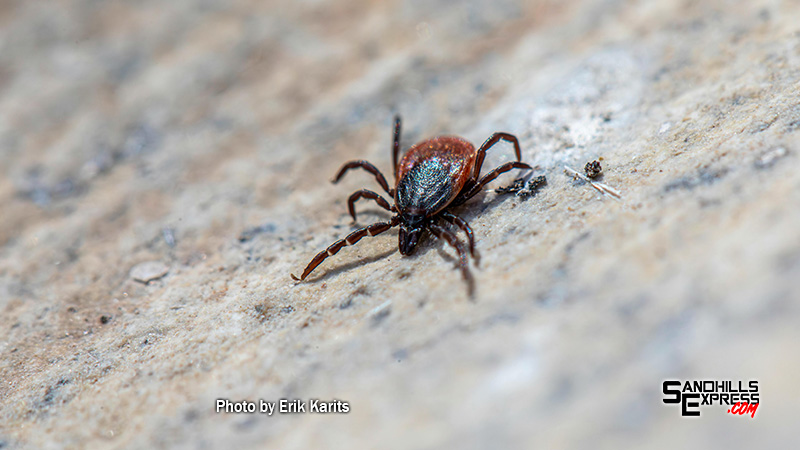
HRTV and BRBV are rare tickborne viruses that can cause illness in people. Both viruses have been detected primarily in the central and eastern United States and are spread by the bite of an infected Lone Star tick. Human infections are uncommon but can cause fever, other symptoms, and, in some cases, severe illness. People who develop symptoms after a tick bite or spending time in tick habitat should contact their health care provider.
Nebraska residents can reduce their risk of tickborne diseases by taking precautions when spending time outdoors:
- Use an EPA-registered insect repellent containing DEET, picaridin, IR3535, oil of lemon eucalyptus (OLE), para-menthane-diol (PMD), or 2-undecanone, according to the product label.
- Wear long pants, long sleeves, and other protective clothing when possible.
- Treat clothing and gear with products containing 0.5% permethrin according to label directions.
- Avoid areas with tall grass, brush, and leaf litter where ticks are commonly found.
- Walk in the center of trails when hiking.
- After spending time outdoors, check your body, clothing, children, and pets for ticks.
- Shower soon after coming indoors and promptly remove attached ticks with fine-tipped tweezers.
Ticks can be active throughout much of the year in Nebraska, but spring and summer months see the highest tick activity. Taking preventive measures whenever exposure to ticks is possible can help reduce the risk of tickborne disease.
Nebraska’s Active Tick Surveillance Program
The DHHS Vector-Borne Disease Program, along with Nebraska Game and Parks and local health department partners, collects ticks from locations throughout the state during the spring and summer months. Collected ticks are processed for species identification and sent to the Nebraska Public Health Laboratory, the Fauver Laboratory, and the Centers for Disease Control and Prevention for selected pathogens testing. This information helps public health officials better understand the risk of tickborne diseases in Nebraska and inform disease prevention, education, and response activities. Tick surveillance and testing results can be found on the Tick Surveillance Dashboard.
For more information, visit https://dhhs.ne.gov/Pages/