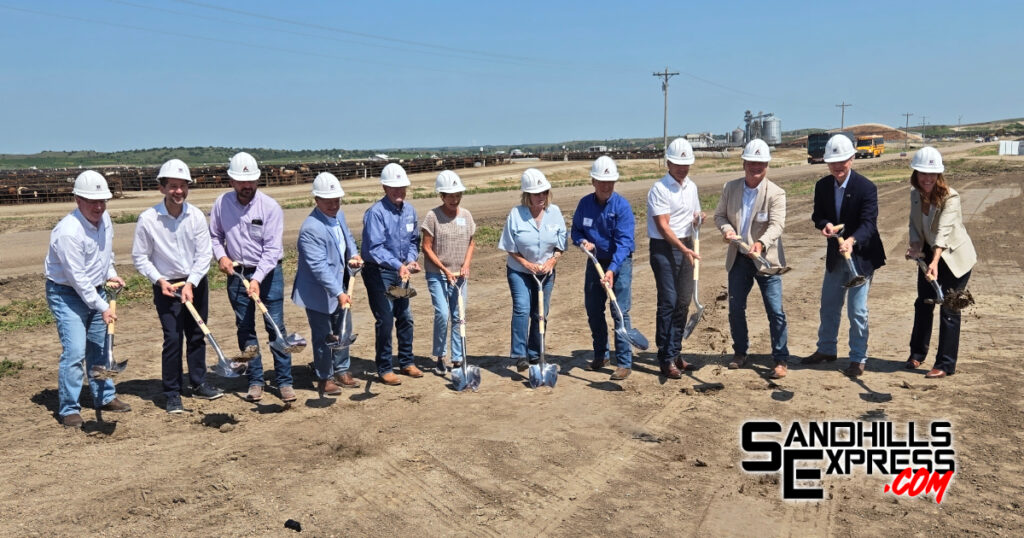
BROKEN BOW, Neb.— Shiny shovels tossed dirt Wednesday afternoon south of Broken Bow as Adams Land & Cattle (ALCC) and Neogenyx Fuels officially broke ground on a renewable natural gas facility that will turn one of the feedlot’s most abundant byproducts into a source of energy, fertilizer and economic opportunity.
Rows of white chairs filled a tent as employees, community members, elected officials and representatives of Adams Land & Cattle, Neogenyx Fuels, and Settje Agri-Services and Engineering gathered to mark the occasion. Behind the stage, cattle as far as the eye can see served as a fitting backdrop for a project that will use manure as its primary piece.
View video from the groundbreaking ceremony at the end of this story
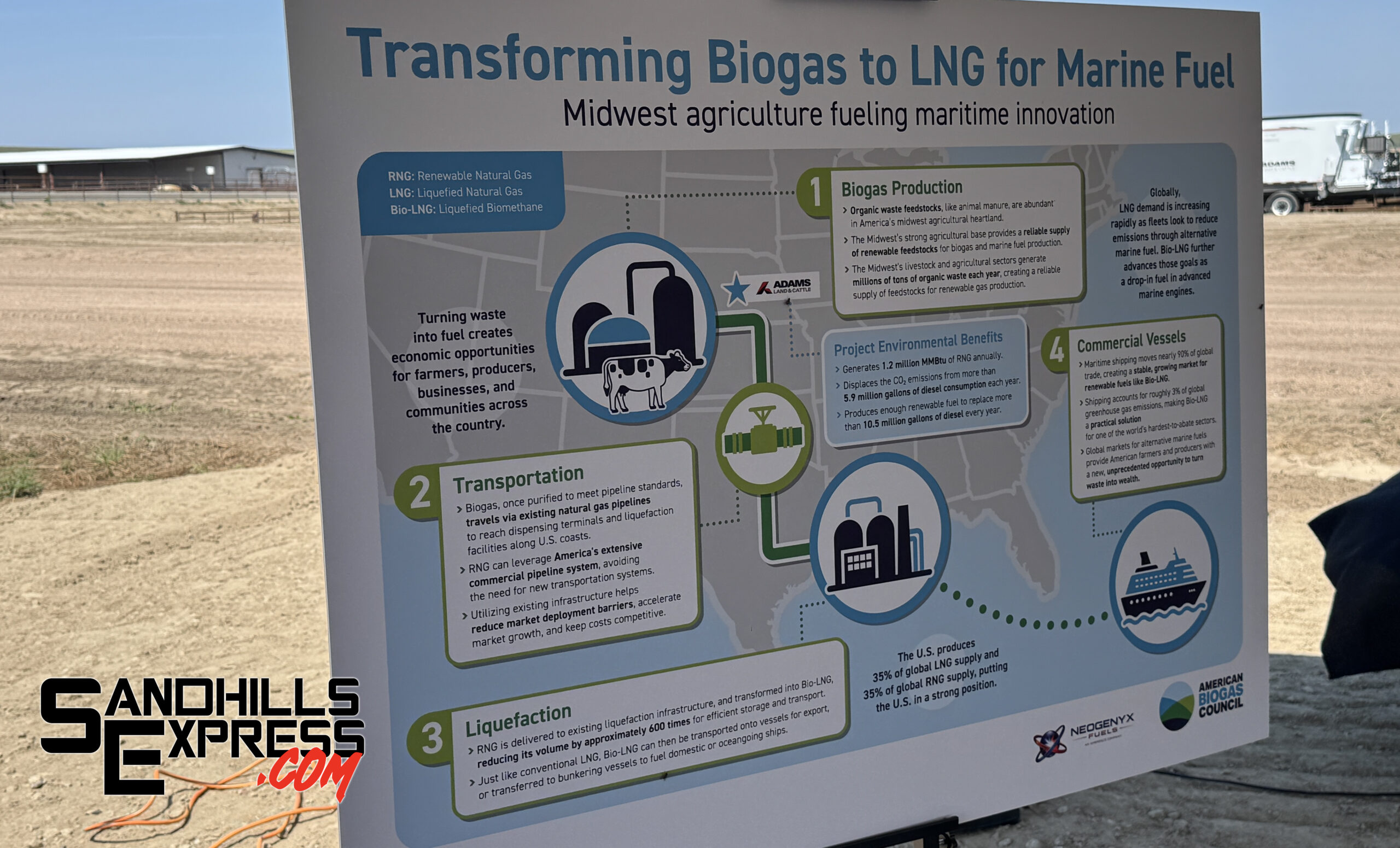
The facility will be Neogenyx Fuels’ first agricultural renewable natural gas project, using eight anaerobic digesters to process manure and produce more than 4,400 standard cubic feet per minute of biogas. That biogas is then upgraded into approximately 1.2 million MMBtu of pipeline quality renewable natural gas (RNG) each year that can be placed into the existing natural gas system.
The project is expected to avoid nearly 64,000 metric tons of carbon dioxide emissions annually, which is about even to the carbon sequestered by nearly 64,000 acres of US forest in a year.
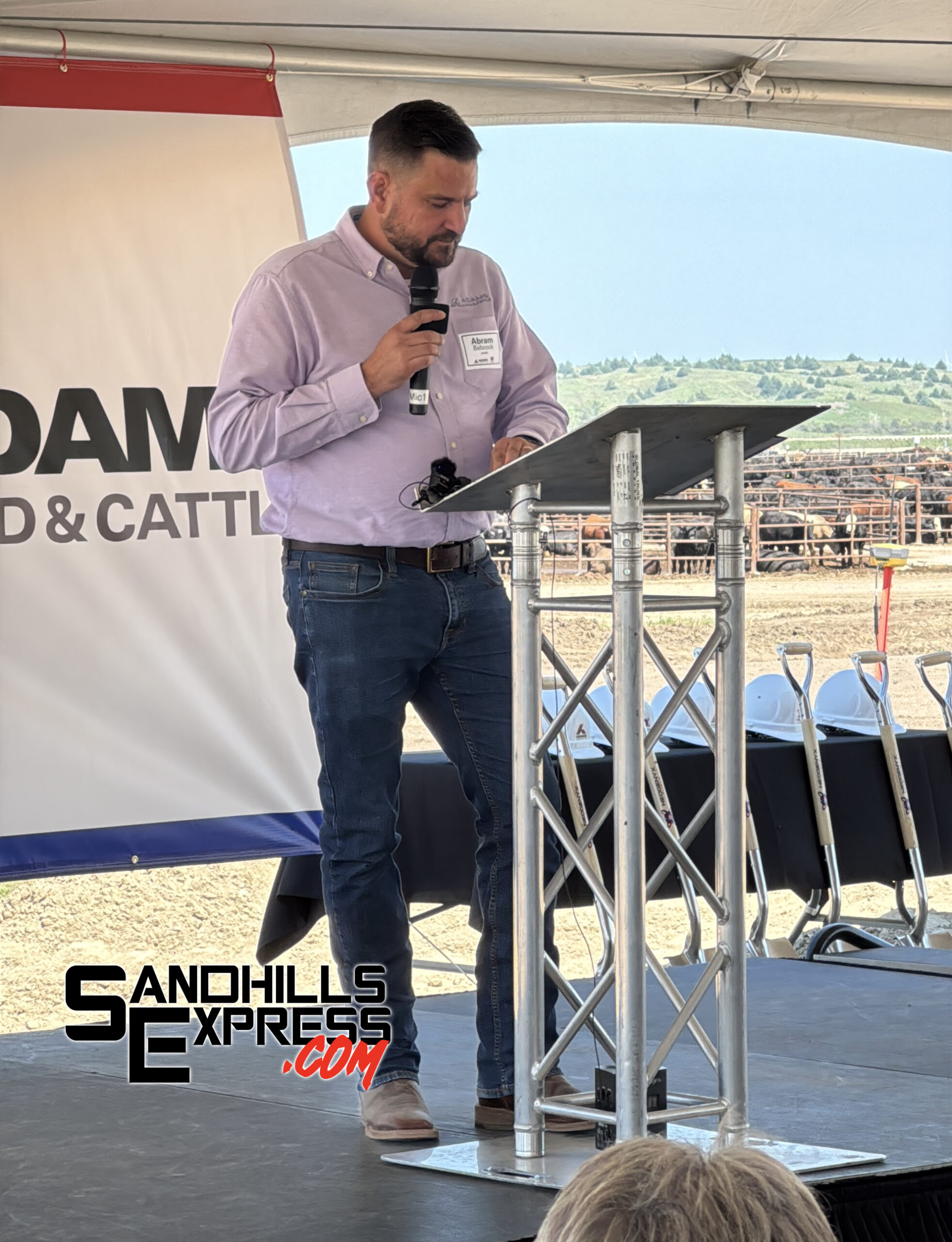
For ALCC, the project is about more than what comes out of the pipeline. CEO Abram Babcock said the facility will take something the feedlot has historically had to manage, manure, and create a consistent usable product from it.
“That’s pretty cool. I started talking about this project to see about the opportunity to create renewable natural gas but also keeping all those nutrients,” said Babcock. “Phosphorus, the nitrogen, are so important to our local farmers but repartitioning those nutrients to give them a consistent repeatable fertilizer product is going to be game changing.”
The RNG project is part of a much larger transformation underway at the ALCC south feedlot.
Adams started working with roller compacted concrete (RCC) in 2023 and launched a three year effort in 2025 to rebuild the feedlot’s pens with the material. The RCC allows the operation to accommodate more cattle while reducing dust, improving pen conditions while and creating the type of surface needed for the manure collection system that feeds the anaerobic digesters.
Once the projects are completed, the south feedlot is expected to have a capacity of approximately 150,400 cattle.
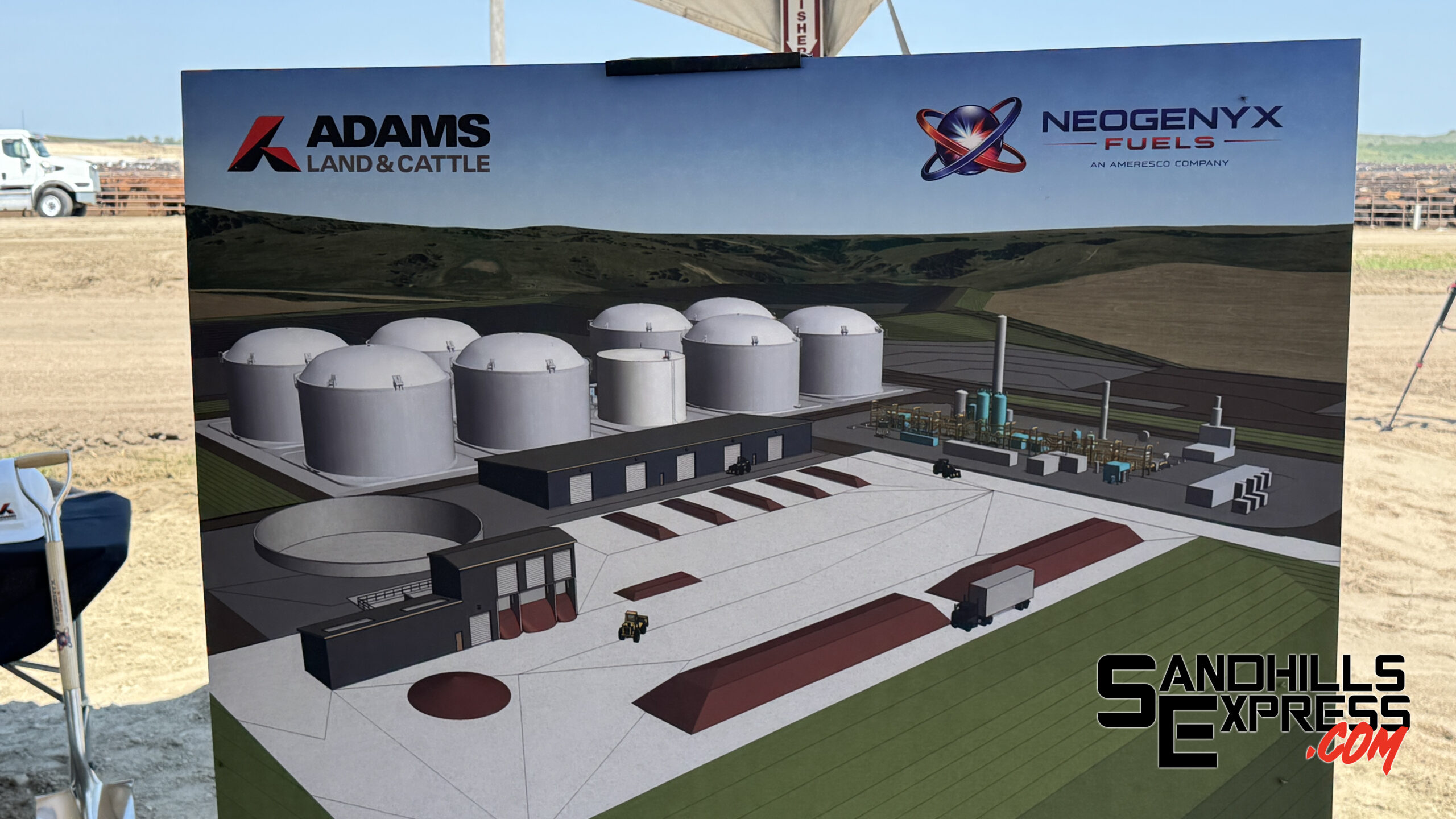
The anaerobic digestion portion of the project will process the manure before separating and recovering nutrients that can be used again. Some of those products will be used by Adams for agricultural and livestock purposes, while other fertilizer products could be made available to area farmers.
Babcock said the RNG facility itself is expected to create approximately 10 to 15 jobs in the Broken Bow area.
U.S. Senator Pete Ricketts pointed to the combination of livestock and renewable energy as an example of the state’s approach to value added agriculture.
“This project here takes the things that we do really well here in Nebraska around livestock and renewable energy, and combines them to create even more value for the people of the state and for our entire country,” said Ricketts.
He added that agriculture accounts for about 20% of Nebraska’s economy and that roughly one in four Nebraska jobs are tied directly to agriculture.
Nebraska Governor Jim Pillen said the project represents another step in the state’s long history of agricultural innovation.
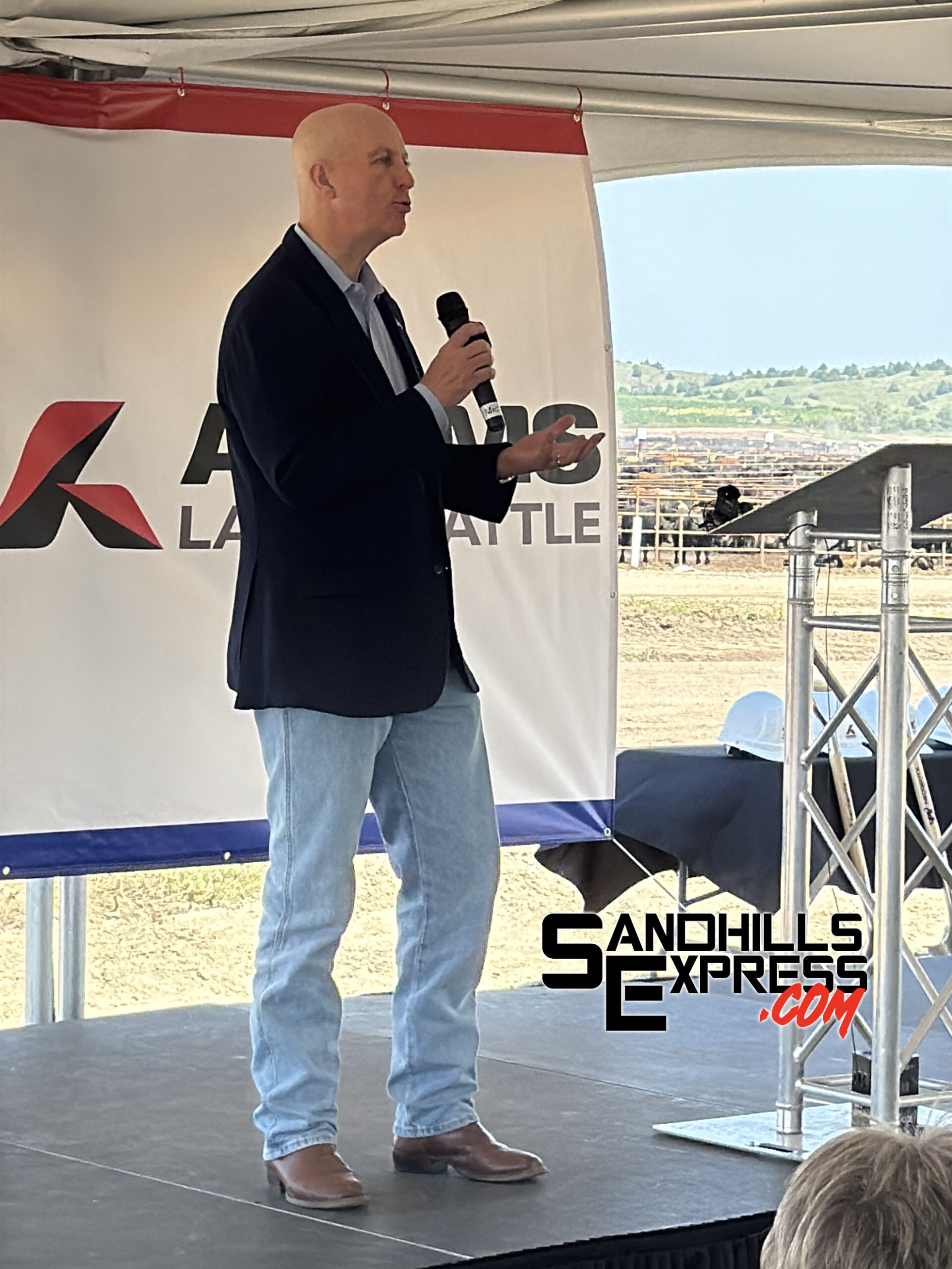
“It’s an extraordinary perspective when you think of what’s happened in this extraordinary state in a hundred years of incredible innovation, risk taking ideas, many that didn’t work,” said Pillen.
He pointed to the evolution of Nebraska agriculture over the past century, saying the state has moved from producing food, to food and fuel, and now toward food, fuel, and energy.
For Neogenyx Fuels CEO Michael Bakas, the significance of the project extends well beyond central Nebraska. The RNG produced at Adams could ultimately be converted into bio-LNG and used in the international shipping industry, which would connect manure produced at a cattle feedlot south of Broken Bow with a global market seeking lower carbon fuels.
“This is more than just a renewable energy plant,” said Bakas. “It’s a one-of-a-kind model that demonstrates how American agriculture can participate in emerging global energy markets.”
Bakas said the combined investment of the project approaches $300 million.
Heather Dziedzic, the Vice President of Policy with the American Biogas Council, said Nebraska has 27 operational projects where organic waste is converted into energy, but only two of those are located on farms.
“This project is a very large step forward in realizing that opportunity, and ABC is just a small part of that. But we’re very excited to make more of these possible for farmers here in Nebraska and across the country,” said Dziedzic.
She added that Nebraska farms produce more than seven million tons of livestock manure each year and that it’s estimated that more than 300 farms in the state could potentially produce biogas. When other organic waste sources like landfills, food waste, and wastewater are included, she said the state could have roughly 400 potential facilities representing more than $8 billion in economic opportunity.
The project on the Adams feedlot has been more than two years in the making. Babcock said Adams first met with Neogenyx in January of 2024, which was followed by countless meetings, emails, research, and coordination all leading up to the day’s events.
Bakas credited Adams Land & Cattle’s willingness to look beyond traditional ag practices to make the project possible. This example of a willingness to look beyond traditional practices is another important chapter in the history of a company that started in 1945 as a small dairy farm east of town.
“It’s never staying stagnant. It’s always challenging the status quo, which is really ingrained in our culture,” said Babcock.