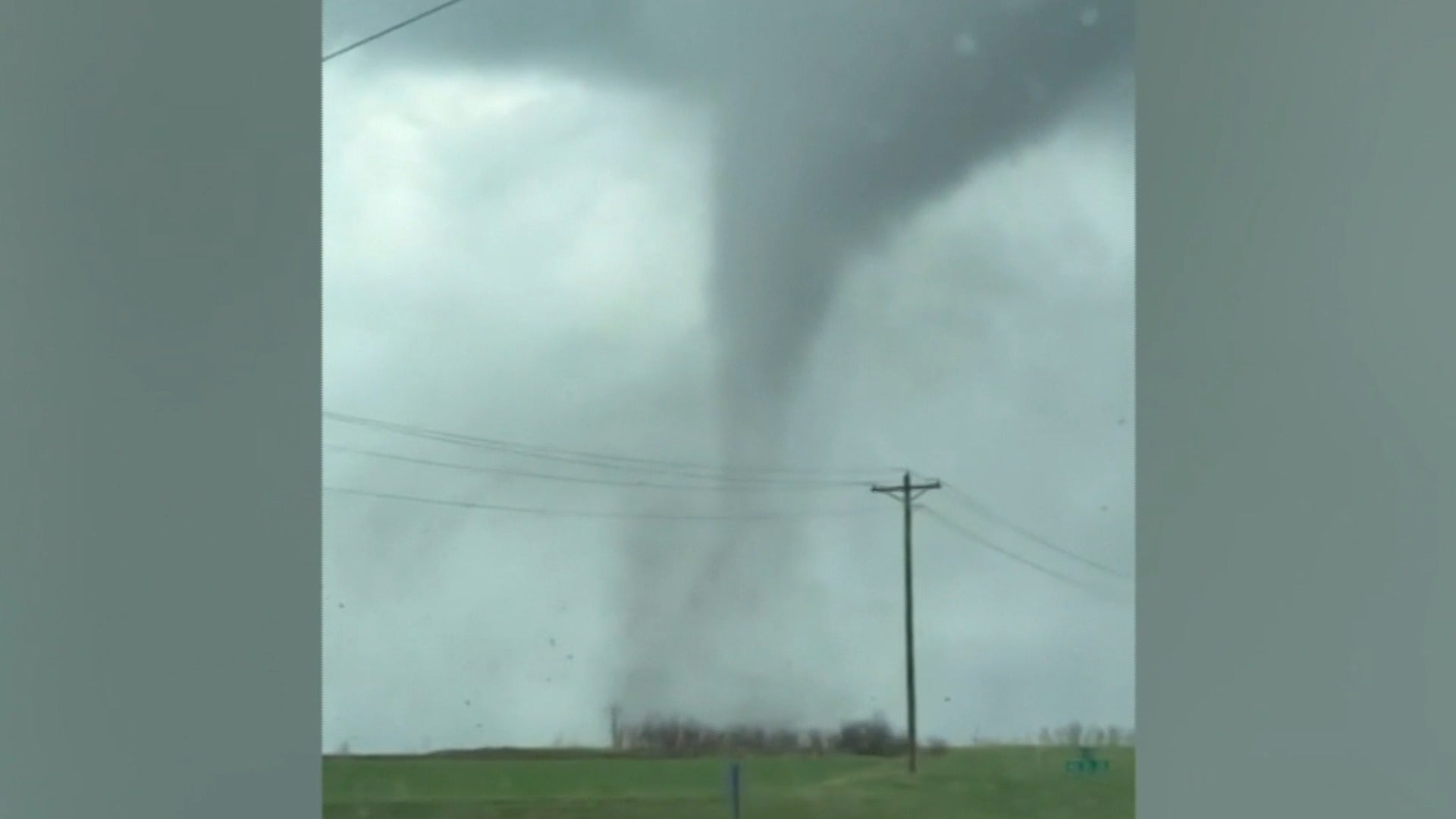
▶ Watch Video: Tornadoes whip across U.S.: A look at the damage and the forecast
Communities across the Midwest were starting the cleanup process Saturday after multiple tornadoes touched down and severe weather struck areas from the Great Lakes to Texas.
Ongoing showers and thunderstorms were forecast to continue across the eastern third of the country on Sunday, prolonging flooding risks in some places, particularly in the Great Lakes region, according to the National Weather Service. They preceded a cold front that had roughly 38 million under a freeze warning, and roughly 32 million under a freeze watch, nationwide.
Elsewhere, forecasters said gusty winds and very dry conditions ramped up the risks of fire weather Sunday for parts of the southern High Plains, especially northeastern New Mexico, southeastern Colorado, southwestern Kansas and the Oklahoma and Texas panhandles. In south and central Texas, forecasts show the possibility of oncoming thunderstorms Monday, potentially leading to flash flooding.
No deaths or serious injuries have been reported in connection with the storms, although officials said it may take time for some areas to recover from the damage.
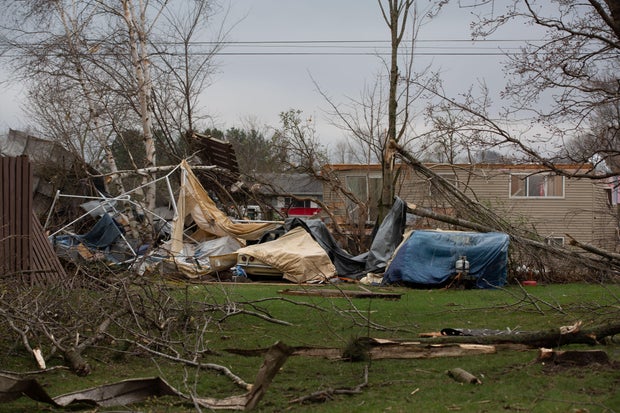
The National Weather Service in La Crosse, Wisconsin, said it issued 26 tornado warnings during Friday’s outbreak, the most for a single day since the office opened in 1995.
“The most tornadoes occurred locally north of Interstate 90 in southeast Minnesota and west-central Wisconsin,” the weather service said.
An EF-2 tornado touched down in Rochester, Minnesota, about 90 miles south of Minneapolis. The Enhanced Fujita Scale rates tornadoes on a scale from EF0, the weakest to EF5, the strongest.
David Vetsch said the storm sounded “like a freight train.” The main part of the tornado hit his 89-year-old father’s house, Vetsch said. While the house took extensive damage, his father was unharmed.
Jennie Murphy said Rochester residents are working together to clear the damage.
“I don’t even know who a lot of these people are that are out helping,” Murphy said. “Our neighborhood is pretty good about watching out for each other.”
Troy Holmberg took video of the Rochester tornado, with peak winds of up to 125 mph whipping through his neighborhood.
“At first it was exciting,” Holmberg told CBS News. “…But then when you watch it roll into your own neighborhood, and you know that your friends and neighbors are in the path of it, it’s very scary.”
More than a dozen homes were damaged or destroyed in Rochester, but there were no reports of serious injuries.
“Step one is we’re trying to get power back on,” Homberg said. “We’re all on wells, so without power, we don’t have water.”
Over 70,000 customers in the Midwest and Great Lakes regions had been without power Saturday morning, according to the tracking site poweroutage.us, but electricity had been restored in most areas by Saturday evening.
In Lena, Illinois, a tornado knocked out power and caused extensive damage on Friday afternoon. Downed trees and wires made the village impossible to enter, according to the Stephenson County Sheriff’s Office. Photos from Lena show massive trees toppled over and blocking roads. A Lena resident identified as Marcia said she heard a tree fall in her front yard.
“The electricity went out, and I took the dog and went down in the basement in the shower, and I heard a big old crash,” she said. She said she first thought the noise was the sound of her roof collapsing.
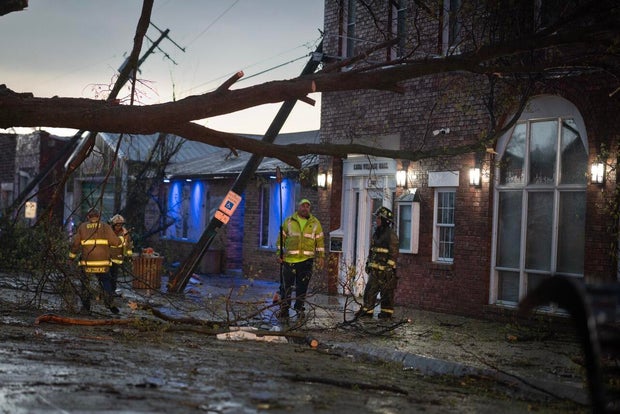
According to radio traffic from public safety officials in Stephenson County, there were reports of “fairly extensive damage” at the village’s elementary and high schools. Both facilities had students inside of them at the time of the tornado. No injuries were reported.
Lena faced more storms throughout the night Friday. Stevenson County Sheriff Steve Stovall said the weather “did not result in loss of life or serious injury.” Lena is about 120 miles from Chicago.
A tornado in suburban Kansas City destroyed homes and knocked out power, but again did not cause any deaths or serious injuries.
Damage was reported throughout Oklahoma, according to the state’s Department of Emergency Management. In Ponca City and Kay County, trees were downed, the department said. Trees and powerlines were also knocked down in Osage County’s McCord area. Some homes in the region also had their roofs damaged, the department said, and a marina was damaged at Kaw Lake.