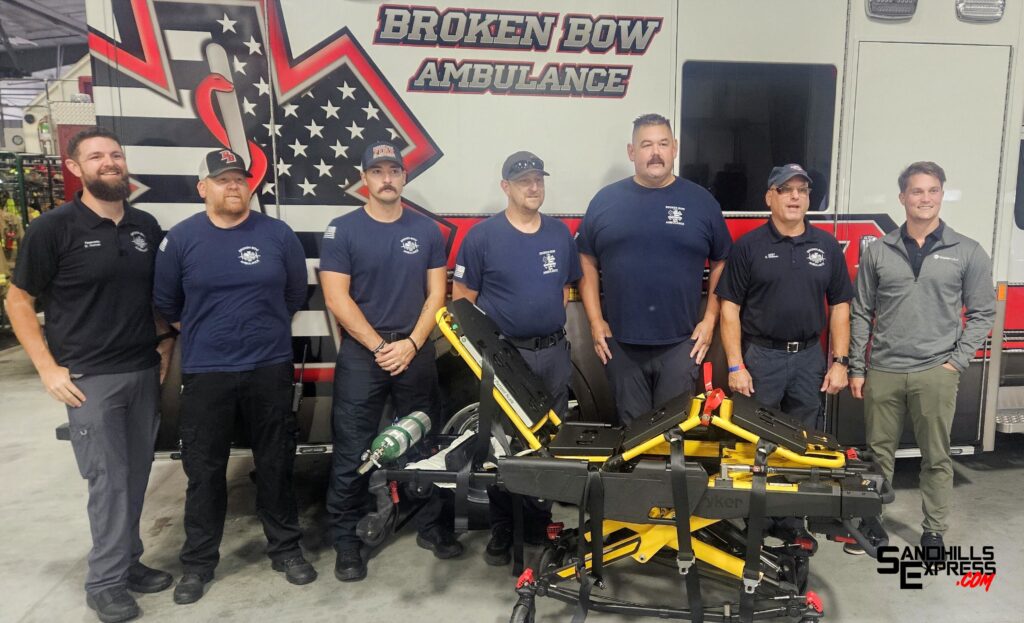
The Broken Bow Ambulance Service recently showed off the very latest in critical care technologies carried in their ambulances to treat patients large and small.
Tristen Hazlett of Hinckley Medical was on hand to show off one of the Ambulance Service’s latest innovative devices – the OneWeight scale system.
While a new scale may not sound impressive, the device in use by the Broken Bow Ambulance Service represents three years of research and development to create a measurement device fully integrated into the ambulance gurney. The OneWeight scale combines measurements from 18 different sensors across the length of the gurney to provide an accurate weight of a patient in any position.
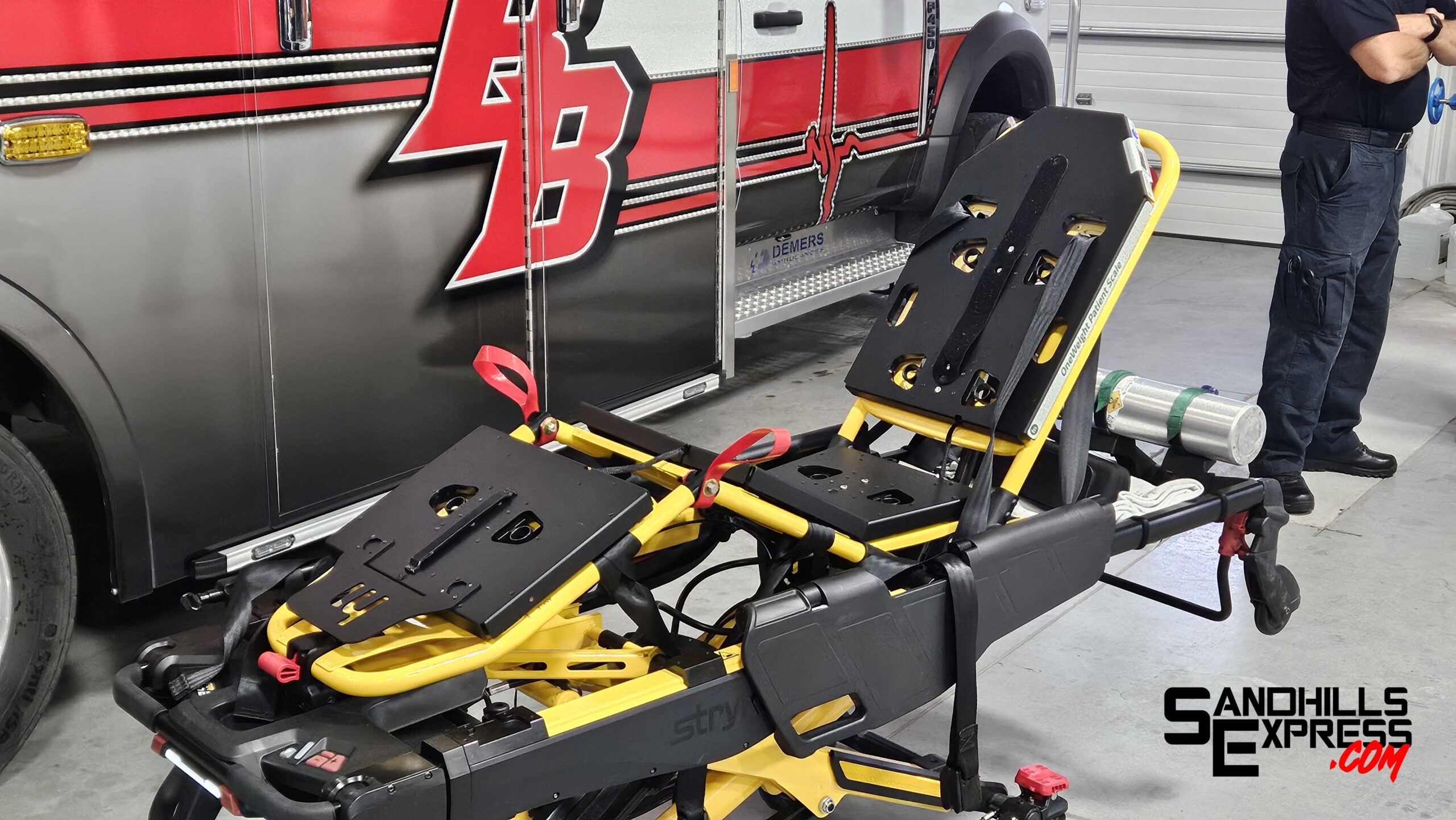
Further, the OneWeight scale communicates directly with an online application Broken Bow’s EMT and Paramedic personnel carry called OneDose. Working together, OneDose and OneWeight take the guesswork out of how to treat patients when life-and-death decisions need to be made in moments.
“Especially in a pediatric population, a lot of the medications for FDA standards are weight based,” said Hazlett. “Meaning that you’re supposed to give this many milligrams for kilograms to do that calculation. So this pairs Bluetooth connection to the scale to send it its weight so it can do that calculation. It’s a huge cognitive offload step, and you see it drastically reduce errors.”
The Nebraska Department of Health and Human Services (DHHS) was the first agency in the nation to implement the use of OneDose for the state’s Emergency Medical Services (EMS) providers.
Broken Bow’s Ambulance Service is the first in the state to install the OneWeight scale in two of its three ambulances. Taking full advantage of these advances makes Broken Bow a national leader in EMS.
Hazlett stated, “Having people like Broken Bow who are two pioneers in the space, you know it’s amazing to see.”
Also on display were the Service’s new Stryker LifePak35 and Hamilton T1 ventilator. The LifePak35 provides emergency medical personnel with many the same patient monitoring capabilities found in a hospital emergency room.
According to Paramedic Mason Holmes, the LifePak35 systems are one of the items that have allowed the service to begin taking critical patients from the area to other hospitals.
“Once they’ve reached their limit of what they’re able to do, we’re able to continue that care on to the Level 1 trauma center, or Level 2 trauma center,” said Holmes. “Specialty care places that can deal with strokes or post-cardiac arrest events, stuff like that, that no small town hospital can effectively manage.
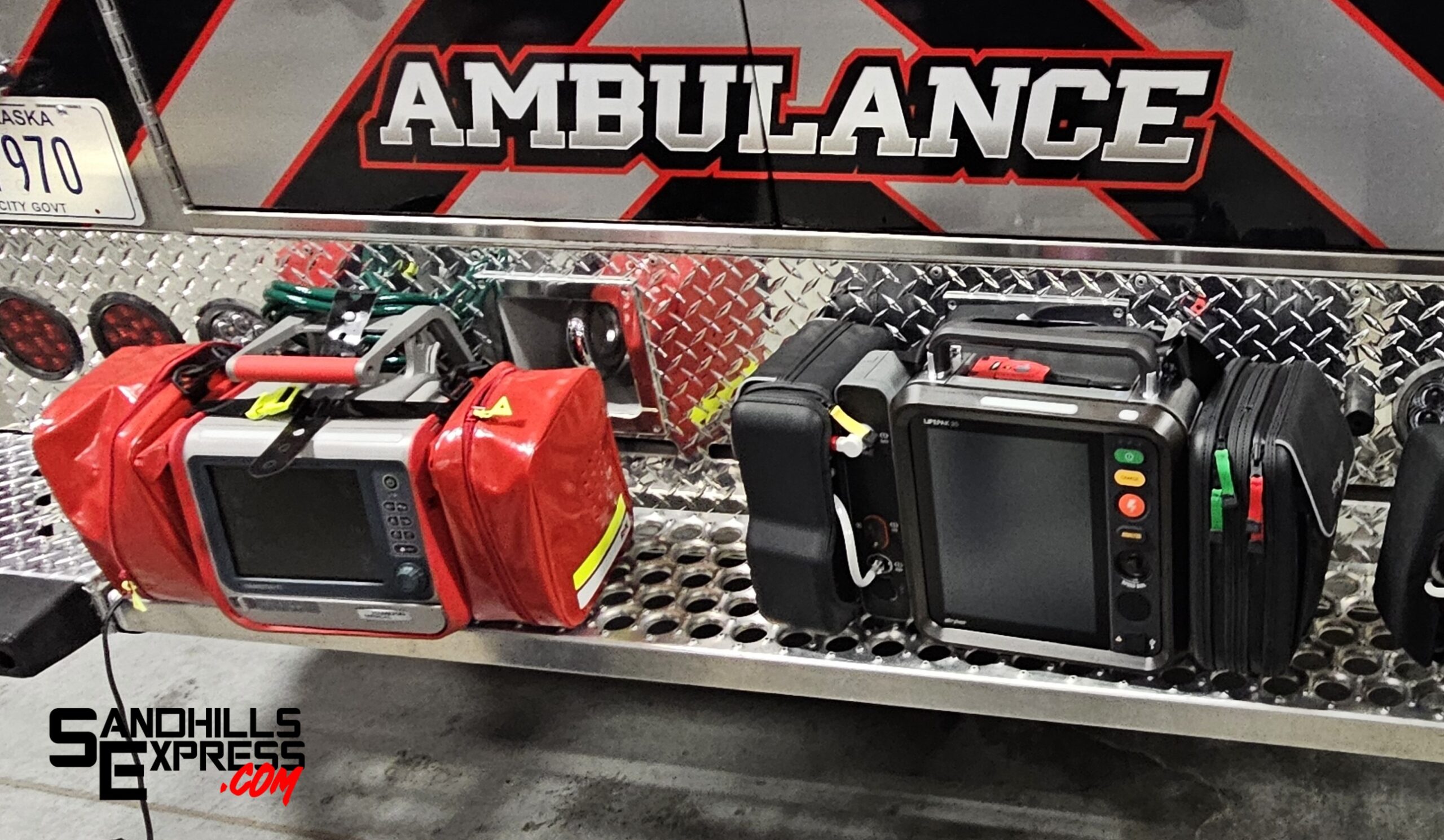
Another capability pointed out by Emergency Services Chief Dave Baltz is the LifePak35’s ability to monitor Carbon Monoxide (CO). This capability is used both in cases of possible CO exposure, as well as to keep Fire Department personnel safe as they move in and out of a structure fire.
The Service’s Hamilton Ventilator though is one of the most advanced pieces of equipment carried by the ambulances. Holmes noted that the system has “definitely saved a life”.
Throughout the demonstration, the forward-thinking support of the City of Broken Bow and the community was lauded as helping keep the Ambulance Service on the leading edge of the science of saving patients.
EMT Kelvin Kreitman stated the City of Broken Bow has been proactive in working with the Ambulance Service to provide the latest equipment. That, along with donations and community support such as through the recent Run 4 Your Life fun-run event have made Broken Bow a leader in life saving measures.